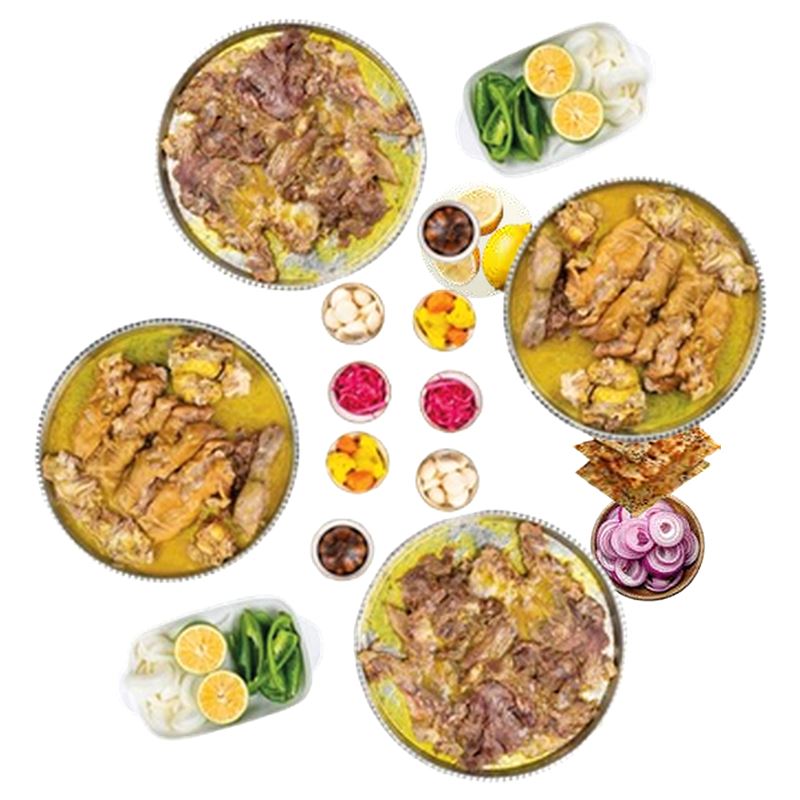
Kalle pache looks like an outlier only until you learn how much company it keeps. It is the Persian member of a very large family: nearly every food culture on earth has taken the cuts that need time — head, trotters, tripe, marrow bones — and given them hours in a pot until they turn soft, glossy and deeply savoury. Different names, different spices, the same patient idea.
This page is the map to that family. We have compared kalle pache with more than twenty of those dishes, and this hub gathers them: the dish, where it comes from, one honest line on what it shares with ours, one on how it differs, and a link to the longer article. No rankings, no winner. If you know one of these dishes, you already understand most of what kalle pache is — and you can order the Persian version in Dubai from our menu.
What is kalle pache, in one paragraph?
Kalle pache is a Persian dish of lamb head and trotters, simmered slowly until every part softens. The heads and trotters are hand-cleaned and trimmed, blanched with that first water thrown away, then simmered about fourteen hours in a copper pot with onion, turmeric and garlic, skimmed again and again. It reaches the table clean-tasting rather than heavy, and the seasoning — lime, cinnamon, garlic — is added by you, not the kitchen. New to it? Start with what kalle pache actually is, then how it is made and what it tastes like.
Which dishes are kalle pache's closest relatives?
The closest relatives share the cuts and the logic: head and trotters, a very long simmer, bread alongside, and much of the seasoning left to the eater.
- Kelle paça — Turkish. Shares the cuts, the long simmer and the habit of finishing the bowl yourself. It differs mainly at the table: in many places the meat is picked off the bones into the broth, with garlic and vinegar to hand. Read the full comparison.
- Pacha — Iraqi. The same family and often the same early-morning habit, eaten with bread torn into the bowl. In many Iraqi households the spread also includes stuffed stomach, which the Persian version does not. Read the full comparison.
- Kalle pacha — Afghan. Nearly the same name and nearly the same pot. The differences sit in seasoning habits and in what is served alongside rather than in the method. Read the full comparison.
- Khash and the wider pacha family — the Caucasus and neighbouring regions. Trotters simmered until the broth turns rich, commonly an early-morning winter meal with garlic and dried bread. It is often deliberately plainer than ours, with less colour and spice in the pot. Read the full comparison.
- Kawareh — Egyptian. Trotters again, given the hours they need until the texture turns silky. It is commonly served as a soup, often with rice, where the Persian version leans on head cuts as much as trotters. Read the full comparison.
- Cow leg pepper soup — Nigerian. The same starting cuts: leg, foot and joints given hours in the pot until the collagen turns to gelatin. Heat is the difference — pepper soup is commonly built on serious chilli, where ours stays gentle and the sharpness is added at the table. Read the full comparison.
We are not authorities on any of these kitchens. Where we were unsure of a regional detail we said so rather than guessing. These dishes are cousins, not competitors.
What sits closest to it on the Persian table itself?
One dish from our own tradition stands close in spirit, though the cuts differ.
- Abgoosht, also called dizi — Persian. The same long simmer and the same ritual: broth first with bread, the solid part after. It is built on lamb with chickpeas, white beans, potato and dried lime rather than head and trotters. Read the full comparison.
- If you are simply deciding what to eat tonight, this piece walks through which of the two to order.
How does kalle pache compare with Gulf and Arab dishes?
Here the shared thing is usually time or timing rather than the cut of meat.
- Harees — Gulf. Shares the hours: meat and wheat cooked and beaten into one smooth thing. Texture is the whole difference — harees is uniform, while kalle pache stays a set of separate parts. Read the full comparison.
- Balaleet — Emirati. A breakfast-to-breakfast comparison rather than a broth one: sweetened vermicelli, commonly with cardamom and saffron and a thin layer of egg. Same morning slot, opposite flavour direction. Read the full comparison.
- Shawarma — the Dubai late-night default. Shares the late hours and the bread, little else: shawarma comes off a vertical spit in minutes, while our pot has been going since the day before. Read the full comparison.
- Thareed — Gulf. Bread and broth again, out of a long slow pot: stewed shoulder or leg with vegetables, spiced with bezar and dried lime. There the bread soaks inside the dish, where sangak is torn and dipped alongside ours, and thareed is commonly an evening dish. Read the full comparison.
- Maraq — Yemeni. Bone-in lamb given hours of slow simmering, the broth treated as the dish itself and bread torn into the bowl. It is commonly built on bone-in lamb or goat pieces generally, where ours is specifically head and trotters. Read the full comparison.
- Bouzelouf — Moroccan. The same sheep's head, taken the opposite way: commonly a dry-ish head, steamed or slow-cooked, eaten with cumin and salt added at the table rather than arriving as a bowl of broth. Read the full comparison.
- Persian and Arabic cooking in general. Sour notes, dried limes, rice habits, the place of bread — where the two traditions differ and overlap. Read the full comparison.
Which Asian bone broths use the same method?
Asia is where the method matches most closely: bones, hours, and a bowl the eater finishes themselves.
- Seolleongtang — Korean. Ox bones simmered long until the broth turns pale and milky, then seasoned at the table with salt and spring onion. That table-side seasoning is exactly our habit. It is beef rather than lamb, and the balance of cuts and garnishes is different. Read the full comparison.
- Ramen — Japanese. Many styles build the broth from bones over long hours, and that is the shared craft. The result is a noodle bowl assembled with toppings, where ours is bone and meat to take apart with bread. Read the ramen and pho comparison.
- Pho — Vietnamese. A beef bone broth commonly built with charred onion and ginger and warm spices, then finished by the eater with herbs and lime. The finishing ritual is a genuine parallel; the broth is aromatic and clear, where ours stays plain until you season it. Read the ramen and pho comparison.
- Bulalo — Filipino. Beef shank and marrow bones simmered until the marrow gives, served with vegetables. Marrow is the shared pleasure; bulalo keeps its broth simple. Read the full comparison.
- Nihari, paya and haleem — South Asian. Paya is the nearest: trotters given long cooking, a morning dish in many places. Nihari is a slow-cooked meat stew and haleem a wheat-and-meat porridge, and all three generally carry far more chilli and spice than ours. Read the full comparison.
- Kalla-pocha — Uzbek and Tajik. The same two words, head and trotter, and much the same pot: sheep head and trotters, hours of slow cooking, a clear rich broth, and bread as the essential partner. Seasoning and side dishes vary by household and by country, so we describe theirs only in general terms. Read the full comparison.
- İşkembe çorbası — Turkish. Turkey's other bowl on this page: tripe on its own, given the same long slow cooking and eaten at the same very late or very early hour. It is commonly pale and creamy, sharpened at the table with garlic and vinegar, where the Persian bowl stays clear until you season it. Read the full comparison.
- Patsas — Greek, and the near neighbour of that Turkish bowl. Built on the same cuts, tripe and trotters, and the same all-night simmer. The finish is the difference: patsas is commonly sharpened at the table with garlic and vinegar, where ours takes lime, cinnamon and garlic. Read the full comparison.
- Sop kaki kambing — Indonesian. Goat trotters given the same long simmer. The broth is commonly distinctly spiced and often eaten with rice, and the dish is built on the feet, where the Persian version leans on the head as much as the trotters. Read the full comparison.
- Paomo — Xi'an, China. A lamb soup the diner finishes by hand: dense unleavened mo bread torn into small pieces into the bowl, which is tilit in another kitchen. Its broth is perfumed with a bag of aromatics, where ours stays nearly bare until you season it. Read the full comparison.
- Congee — East and Southeast Asia. Rice rather than bone is its base in most kitchens, but it does the same breakfast job: something soft and warm you finish yourself. Read the full comparison.
Are there European and American cousins?
Yes, and one of them may be the closest thing to our table ritual outside the region.
- Pot-au-feu and roasted marrow bones — French. Beef simmered slowly with vegetables, the broth commonly served first, and marrow spread on bread with coarse salt. The marrow-and-bread moment is close to ours. Read the full comparison.
- Menudo — Mexican. A tripe soup, chilli-based, in many regions made with hominy, and finished at the table with lime, onion and oregano. We serve tripe and season at the table too — a different chilli, the same instinct. Recipes vary widely by region. Read the full comparison.
- Lampredotto — Florentine. Beef tripe simmered for hours and served in a roll, with the vendor dipping the top of the bread back into the broth before handing it over — the move Persian calls tilit. Both bowls are finished with something sharp: salsa verde there, lime and torshi here. Read the full comparison.
- Haggis — Scottish. The same instinct: use the whole sheep, then turn that thrift into an occasion. Haggis is solid, pepper-forward and eaten at dinner, and it is seasoned inside the mixture before it cooks, where ours is a broth finished at the table. Read the full comparison.
- Barbacoa de cabeza — Mexican. A whole head again, cooked by trapped steam in a sealed pit rather than simmered in water, then pulled apart and eaten inside a tortilla. The broth alongside is a companion to the tacos; in kalle pache the broth is the dish. Read the full comparison.
- The full English breakfast — British. Breakfast against breakfast: a fried plate with eggs, beans, toast, tomatoes and mushrooms, set beside a bowl of broth and bread. Read the full comparison.
- Packaged bone broth — the supermarket shelf. The same starting material, an entirely different object: cartons sold as a cooking base or a hot drink, against a pot cooked to order with the parts on the plate. Read the full comparison.
What if I am only comparing Dubai breakfasts?
If your question is less about broth than about morning food in this city, three pieces answer it.
- Kalle pache and the karak chai and paratha morning — the cafeteria habit most of Dubai grew up with.
- Kalle pache and the hotel breakfast buffet — many small choices against one dish done at length.
- Persian breakfast and Western breakfast compared — the wider habit behind both plates.
Where is the quick table of the whole family?
The dish, its home cuisine, and the one thing it genuinely shares with kalle pache.
| Dish | Home cuisine | What it shares with kalle pache |
|---|---|---|
| Kelle paça | Turkish | Head and trotters, long simmer, finished by the diner |
| Pacha | Iraqi | Same cuts, same early-morning habit |
| Kalle pacha | Afghan | Almost the same name and pot |
| Khash | Caucasus and neighbouring regions | Trotters simmered rich; garlic at the table |
| Kawareh | Egyptian | Trotters given the hours they need |
| Cow leg pepper soup | Nigerian | Leg, foot and joints given hours in the pot |
| Abgoosht (dizi) | Persian | Broth with bread first, the solid part after |
| Harees | Gulf | Hours of slow cooking with meat and grain |
| Thareed | Gulf | Bread and broth out of a long slow pot |
| Maraq | Yemeni | Bone-in lamb; the broth is the dish, bread torn in |
| Bouzelouf | Moroccan | The whole head treated as food, nothing wasted |
| Paya | South Asian | Trotters, long cooking, often a morning dish |
| Nihari and haleem | South Asian | Meat cooked until it gives up entirely |
| Kalla-pocha | Uzbek and Tajik | The same two words: head and trotter |
| İşkembe çorbası | Turkish | Tripe cooked long, sharpened at the table |
| Patsas | Greek | Tripe and trotters, an all-night simmer |
| Sop kaki kambing | Indonesian | Trotters in a long-simmered broth |
| Paomo | Xi'an, China | Bread torn into the bowl by the diner |
| Seolleongtang | Korean | Bones simmered long, seasoned by the diner |
| Ramen | Japanese | A broth built from bones over hours |
| Pho | Vietnamese | Bone broth finished at the table |
| Bulalo | Filipino | Marrow bones simmered until the marrow gives |
| Menudo | Mexican | Tripe, with lime added by the diner |
| Pot-au-feu and marrow | French | Broth first, then marrow eaten with bread |
| Lampredotto | Florentine | Tripe simmered long; bread dipped in the broth |
| Haggis | Scottish | The whole sheep used, thrift made an occasion |
| Barbacoa de cabeza | Mexican | A whole head given hours before it is pulled apart |
| Congee | East and Southeast Asia | A soft warm breakfast you finish yourself |
Do you cook any of these other dishes?
No — we cook the Persian version only. We are one kitchen at 64 Jumeira Street, Jumeirah 1, and what we know well is the Persian pot: the cleaning, the blanch, the fourteen hours, the copper, the skimming. Everything here about another country's dish is written as a careful outsider, hedged where we were unsure, and should be read that way. Our lamb is sourced to the UAE halal standard, explained in this piece on halal sourcing. For how the dish lives in this city, there is kalle pache in Dubai.
I found my dish — what should I order first?
Order the shape that matches how you already eat. If your dish is a broth you sip — seolleongtang, pho, khash, kawareh — start with Soup, or Brain Soup for something richer, with Sangak Bread. If your dish is a shared platter of parts, go to the platters: the Single Dish and Double Dish are the smaller ones, The Full Dish is for a table that wants everything, and The Khan's Platter is the largest — all four in our platter guide.
If you would rather choose the parts yourself, the singles are Eye, Brain, Meat, Tongue, Trotters, Tripe and Lamb Cheek, plus Special Mix for a little of several. Customising here means choosing which parts you order, not sending instructions to the kitchen. Add Sangak Bread or Special Sangak, and Mixed Torshi or Garlic Torshi for the sharp note; Capsicum, Onion, Fresh Chili and Pickled Green Chili are add-ons. There is an Omelette for anyone not ready for offal, and Tea, Black Tea, a Kettle of Tea, Doogh, Lemonade or Water to drink. It is all on the menu.
How do I order, and what happens after I pay?
Ordering is guest checkout — no account, no sign-up, no password. Payment is secure card prepay online only; there is no cash on delivery and no paying on arrival. After payment your order gets its own page: the kitchen accepts it and sets an estimated time, an estimate rather than a promise, and the rider phones you on arrival. If the kitchen cannot fulfil an order it rejects it with a reason and the payment is refunded automatically. The steps are in our ordering guide, and the delivery side in kalle pache delivery in Dubai.
We deliver to 141 Dubai areas, with the fee for your area shown at checkout. Pickup and dine-in are available, and tables can be reserved. You can also place a scheduled order up to about two days ahead, the sensible way to handle a big family breakfast. There is no self-service cancel or edit button, so if anything needs changing, phone 04 321 8882 straight away — that is our only contact channel, and the kitchen is open around the clock, every day.
