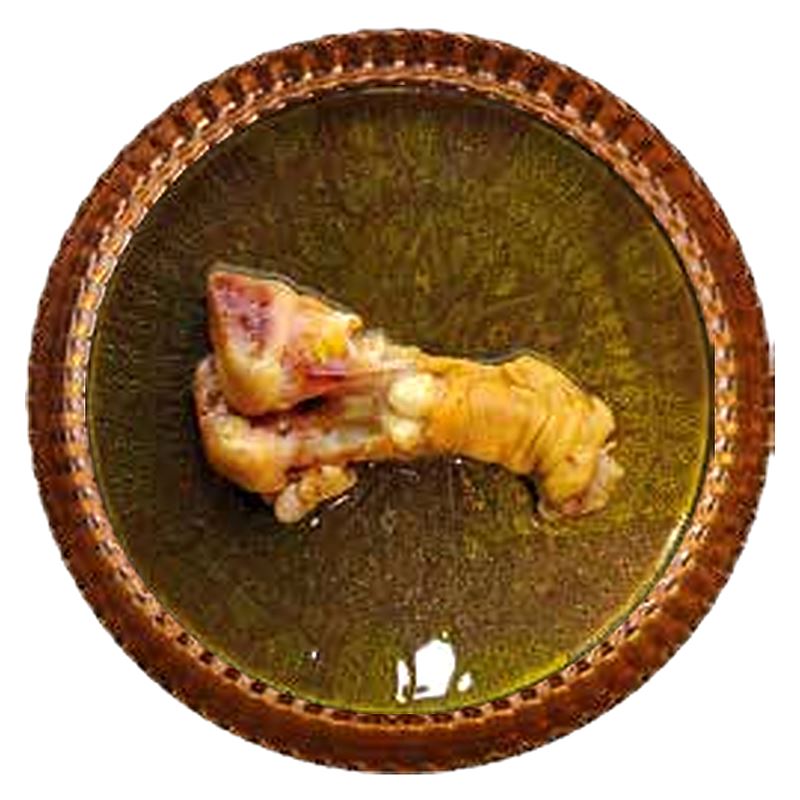
Bulalo and kalle pache are cousins, not competitors: both are bone soups built on marrow, humble cuts and a long, patient simmer, and in both the broth matters more than anything solid floating in it. The difference is the animal and the table around it — bulalo is beef shank cut across the marrow bone in a clear, light broth served with corn, cabbage and rice, while kalle pache is lamb head and trotters cooked far longer into a thick, gelatinous broth eaten with sangak bread, torshi and raw onion.
If you are the person who goes for the marrow before the meat, you already know which part of a kalle pache order you will love. That one instinct is the whole bridge between the two bowls.
One thing to say plainly first: we are a kalle pache kitchen at 64 Jumeira Street, Jumeirah 1, and we do not serve bulalo or any other Filipino dish. What follows is an outsider's respectful description of a soup that belongs to Filipino families and cooks, set beside an honest description of what we actually make.
What do bulalo and kalle pache have in common?
More than the shopping list suggests.
- Bones, not fillets. Neither soup starts with an expensive cut. Both start with the parts that need hours.
- Marrow and gelatin are the reward. In both bowls, the richest thing on the table was once inside a bone.
- The broth is the dish. Filipino cooks call the broth sabaw and treat it as the point of the meal; anyone eating kalle pache says the same about what is left at the bottom.
What is bulalo, described plainly?
Bulalo is a Filipino beef soup built on shank cut across the bone, so the marrow sits in the middle of each slice. The beef simmers gently with onion and peppercorns, seasoned with patis (fish sauce), until the meat gives way and the marrow turns soft; the broth is skimmed and kept clear rather than thickened. Corn goes in as thick rounds on the cob, and leafy vegetables such as cabbage and pechay near the end so they keep some life. It reaches the table with rice, and the last seasoning happens there: patis and calamansi in a small saucer, chili for those who want it.
The name is often associated with Batangas, but that is a visitor's note rather than a lesson. Anyone who grew up with bulalo has a family version with details we would never presume to correct, and we make no claim to expertise in a kitchen that is not ours.
And what exactly is kalle pache?
Kalle pache means head and trotters: the Iranian bone soup of lamb head and lamb feet, cooked overnight. In our kitchen the heads and trotters are cleaned and trimmed thoroughly, blanched with that first water thrown away, then simmered about fourteen hours and skimmed again and again. Collagen from bone, skin and trotters is why the broth sets when it cools, and that wobble is the biggest difference from a clear bulalo. Our lamb is sourced to the UAE halal standard.
It is sold differently too. Instead of one standard bowl it comes apart into singles: Soup (the abgoosht broth), Trotters, Brain, Brain Soup, Tongue, Eye, Lamb Cheek, Meat, Tripe and the Special Mix. Or the platters decide for you — Single Dish, Double Dish, The Full Dish, and The Khan's Platter for about six, which arrives with four lamb cheeks, eight trotters, two brains, three tongues, four eyes and five breads. New to all of it? Start with what kalle pache actually is.
How do the two bowls compare, side by side?
| Feature | Bulalo | Kalle pache |
|---|---|---|
| Animal and cut | Beef shank, cut across the marrow bone | Lamb head (brain, tongue, cheek, eye) and trotters |
| The broth | Clear and light, skimmed to stay clean-tasting | Deep and gelatinous; sets as it cools |
| Served alongside | Corn on the cob, cabbage and pechay, rice | Sangak bread, torshi pickles, raw onion |
| Table seasoning | Patis and calamansi in a saucer, chili if you like | Lemon and the vinegar bite of torshi; fresh or pickled green chili as extras |
| The marrow moment | Marrow scooped straight from the shank bone | A soft trotter worked off the bone; brain spread on warm bread |
Is the marrow moment really the same?
Almost. Bulalo marrow is soft, fatty and concentrated, out of one big bone in a spoonful or two; kalle pache spreads that richness across the whole bowl instead. Trotters are the closest in spirit — soft, sticky, worked off small bones with your fingers and a piece of bread, leaving the same coating on your lips that marrow leaves. Brain is the closest in texture: creamy, mild and delicate, usually spread onto warm bread rather than spooned.
So: order Trotters, and add Brain when curiosity arrives. For the full map before you commit, the texture guide walks through each part.
What should a bulalo lover order first?
- Trotters (pacheh) — the direct translation of the marrow moment, and the test of whether gelatin is your thing.
- Meat (goosht) — nearest to the shank meat you pull off a bulalo bone: plain, tender, no drama.
- Soup — the abgoosht broth alone, the lightest way in and the closest thing to drinking sabaw first; there is a whole soup-only guide for that instinct.
- Lamb Cheek (bonagoosh) — slow-cooked cheek, tender the way the best part of a shank is tender.
- Brain (maghz) — creamy and mild, the one to add once the first order has gone well.
Eye, Tongue, Tripe and the Special Mix are there when you want them; nobody has to prove anything on a first order. Choosing for a table? This guide to the singles helps.
What replaces rice, corn and calamansi at our table?
Bread does the job rice does. Sangak is the flat Iranian bread that comes with the soup — there is a Special Sangak too — and you tear it, dip it, and use it to lift things out of the bowl. Torshi is the acid: mixed or garlic, vinegar-sharp pickles that cut the richness the way calamansi cuts bulalo, though sour rather than citrus-bright. Raw onion ticks on as an extra, with capsicum, fresh chili, pickled green chili and extra sangak; many people finish with a squeeze of lemon.
To be clear about what is not here: no rice, no corn, no pechay, no fish sauce. To drink there is doogh, a salted yogurt drink that plays a similar cooling role, plus lemonade, tea, black tea, water and soft drinks. A kettle of tea is dine-in only. There is breakfast too — an omelette, with extras such as capsicum, onion and fresh chili ticked on separately.
Is either of these recovery food?
Both cultures talk about their bone soup that way — something you eat when you are cold or worn out — and that shared belief is part of why the two feel like cousins. We are a kitchen, not a clinic, so we make no claim that kalle pache treats, prevents, heals or aids recovery from anything. If you are watching cholesterol, gout, blood pressure, pregnancy or anything else, this is not medical advice — ask your doctor or a dietitian. What we can honestly say is that it is rich, filling and best eaten slowly.
How do you order kalle pache in Dubai?
Everything happens on the website, so start at the home page. There is no account to create, no password and no app. Choose delivery, pickup or dine-in (a table can be reserved), pick your bowls, and leave a name and phone number. For delivery you choose your Dubai area from the list and drop a pin on the map; both are needed. Delivery is free over AED 300.
Payment is by secure online card at checkout, prepaid, and that is the only method. If you have any question about paying, phone 04 321 8882 and ask. After payment the kitchen confirms and sets an estimated time, and the order gets its own page. When the rider arrives they phone the number on the order, so keep that phone with you. If the kitchen cannot take an order, it is refunded automatically to the card that paid, with the reason shown on that page.
Finishing a night shift? The kitchen is open 24 hours, every day, and you can schedule an order for a future time up to about two days ahead. The site is in English, Arabic and Farsi, with a switcher at the top. If anything is still unclear, phone 04 321 8882 — our only contact channel.
Two soups, two countries, one lesson: the bone was always the best part.
