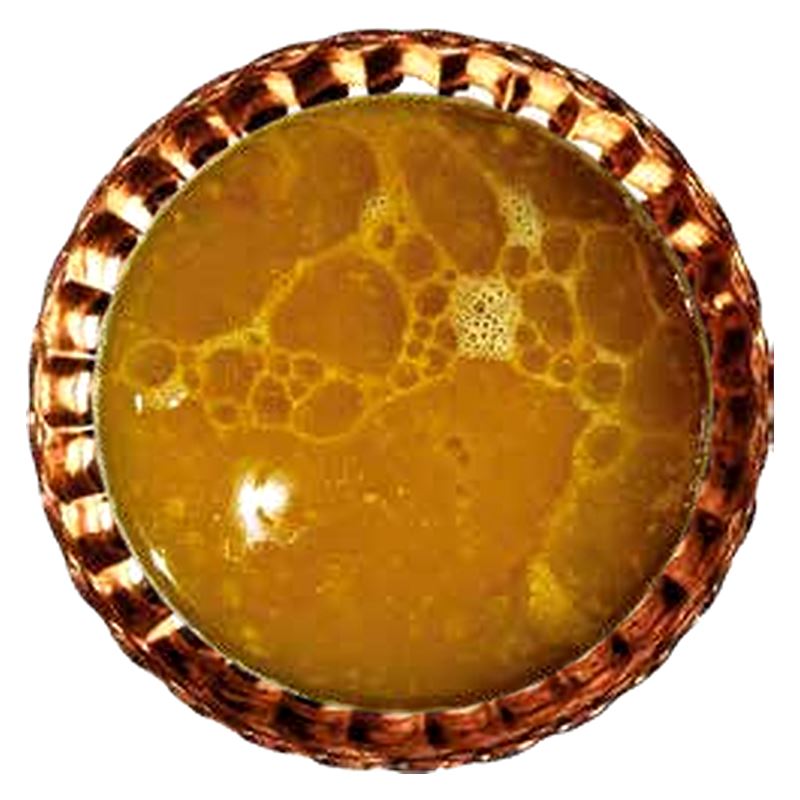
Kalle pache and seolleongtang are the closest cousins in the world of bone soup: both are bones simmered for many hours until the liquid carries real body of its own, and both reach the table deliberately under-seasoned so the person eating finishes the bowl. The differences are just as real. Seolleongtang is ox bone, boiled hard until the broth turns milky white, and it is eaten with rice; kalle pache is lamb head and trotters, clearer and far more gelatinous, and it is eaten with sangak bread, torshi and raw onion.
If you grew up on one of them, the other is not a leap into the dark. It is the same instinct in a different accent: bones, water, patience, an early start. This guide is for Dubai's Korean community, and for anyone who loves a long-boiled bowl and wants to know exactly what they are walking into.
What do the two soups genuinely share?
The pot does the work. Neither soup can be faked with a quick stock. In our kitchen the heads and trotters are cleaned and trimmed thoroughly, then blanched with that first water thrown away, then simmered for about fourteen hours and skimmed again and again. That repeated skimming is what makes the broth taste clean rather than heavy. A Korean cook building seolleongtang gives ox bones the same order of patience.
The eater finishes the dish. This is the part Korean regulars notice first. Seolleongtang famously arrives almost unseasoned: salt, pepper and chopped spring onion sit on the table, and the bowl becomes yours only once you have seasoned it. Kalle pache follows the same logic: the broth is plain on purpose, and the sharpness, acidity and heat are things you add yourself, spoonful by spoonful.
Both belong to the early hours. Kalle pache is traditionally a breakfast, eaten before the day starts. Seolleongtang is eaten at any hour in Korea, but carries the same reputation as a cold-weather, morning-after bowl. Dubai offers little cold weather, but plenty of very late nights and very early starts, which comes to the same thing.
Both are treated as restorative. Two cultures a continent apart arrived at one idea: when someone is tired, you hand them bone broth. That is a cultural reputation, not a medical claim; there is an honest section on it below.
How do they differ, side by side?
Here is the short version.
| Seolleongtang | Kalle pache | |
|---|---|---|
| Base animal | Ox leg and knuckle bones, often with brisket | Lamb head and trotters. Lamb is sourced to the UAE halal standard |
| Colour and body | Milky white and opaque; silky rather than sticky | Clearer and golden, noticeably gelatinous; sets when it cools |
| How it is seasoned | Barely at all in the kitchen; salt, pepper and spring onion at the table | Restrained in the pot; citrus sharpness and cinnamon-family spice belong to the tradition |
| Served alongside | Rice, often tipped straight into the bowl, with radish or cabbage kimchi | Sangak bread, mixed or garlic torshi, raw onion, fresh or pickled green chili |
| The occasion | Any hour, but famously a restorative bowl on a heavy morning | Traditionally breakfast; in Dubai, ordered around the clock |
Why is seolleongtang milky white and kalle pache not?
It is mostly the boil. Seolleongtang is cooked at a hard, rolling boil, and that vigour is the point: fat and very fine particles from the bone are driven into the water and held there, so the broth turns opaque and almost creamy. It is one of the few soups where cloudiness is the goal rather than a fault.
Kalle pache goes the other way. It is simmered gently rather than hammered, and skimmed repeatedly, which keeps it comparatively clear. What it gains instead is texture. Collagen from bone, skin and trotters dissolves into the liquid and stays there, so the broth clings a little to the spoon and to your lips, and a bowl left to cool will set. If you know the silky feel of seolleongtang, this is that turned up a notch: less creamy, more gelatinous. Our texture guide goes further into it.
Does bread instead of rice change the meal?
More than you would expect. Rice goes inside the bowl; tipping it in is part of eating seolleongtang, and it pulls everything into one soft, unified spoonful. Sangak stays outside. It is torn by hand, used to lift a piece of cheek or tongue, and dipped rather than dissolved, so the meal keeps two textures running at once: hot liquid, and chewy bread with a faint sourdough tang.
The other difference is where the sharpness comes from. At a Korean table, kimchi does that job at the side. Here it is torshi, mixed or garlic, plus raw onion and green chili, fresh or pickled. The work is identical: cut the richness, reset the palate. What a Korean eater usually misses is not kimchi itself but the crunch, and torshi answers that. The extras you can tick alongside an order are the ones listed on the menu, so if you want something specific on the table, phone 04 321 8882 and ask.
Do you serve seolleongtang in Dubai?
No, and better to say so plainly than let you discover it at checkout. Shaun the Sheep is a kalle pache kitchen and nothing else: one kitchen at 64 Jumeira Street, Jumeirah 1, delivering across Dubai, with no branches. No ox-bone soup on the menu, no rice bowl, no kimchi. What we can offer a seolleongtang lover is the nearest relative in the family, cooked properly.
If seolleongtang is your soup, what should you order first?
Start with Soup, the abgoosht broth, by the bowl. It is the closest thing on the menu to what you already know: liquid first, meat second, a bowl you finish yourself with bread and something sharp. It is also the gentlest way in, which is why we wrote a whole guide to ordering the soup on its own.
If you want something in the bowl, singles are ordered one at a time. Lamb Cheek (bonagoosh) and Tongue (zaban) are usually the fastest friends for a Korean eater: slow-cooked, tender muscle, and Korean cooking already knows tongue well. Meat (goosht) is straightforward. Brain (maghz) is the softest thing on the menu; Trotters (pacheh) are pure gelatin and hands-on. The singles guide maps them all, and the full menu guide covers the platters, up to The Khan's Platter for six. Add Sangak Bread whatever you choose, and a Doogh alongside if you like a salty, savoury drink.
Is bone soup good for you?
Honestly: it is a warm, rich, protein-heavy meal that many people find deeply satisfying, and two cultures have leaned on it for generations. We will not tell you it cures a cold or fixes a joint, because we do not know that. This is not medical advice. If you have a health condition, or a question about fat, salt, cholesterol or portion size, ask your doctor or a registered dietitian rather than a restaurant. We wrote about it at more length here.
How do you order it in Dubai?
From the website, at any hour, because the kitchen is open 24 hours, every day. Choose delivery, pickup or dine-in, and you can reserve a table for dine-in. There is no account, no sign-up and no app: a name and a phone number, and for delivery your Dubai area from the list plus a pin on the map, because both are needed to find you. Delivery is free over AED 300.
Payment is by secure online card at checkout, the only method, taken before the kitchen starts. Once your order is confirmed the kitchen sets an estimated time, your order gets its own page to follow, and the rider phones you on arrival. If an order cannot be taken it is refunded automatically to the card that paid, with the reason shown on that page. You can also schedule an order up to about two days ahead, useful if you want a bowl waiting at six in the morning. Step by step, it looks like this. If you would rather ask a person first, call 04 321 8882, our only contact channel, answered around the clock.
Two soups, two continents, one idea: bones, time, and a bowl you finish yourself. If seolleongtang taught you that patience tastes like something, kalle pache will not surprise you.
