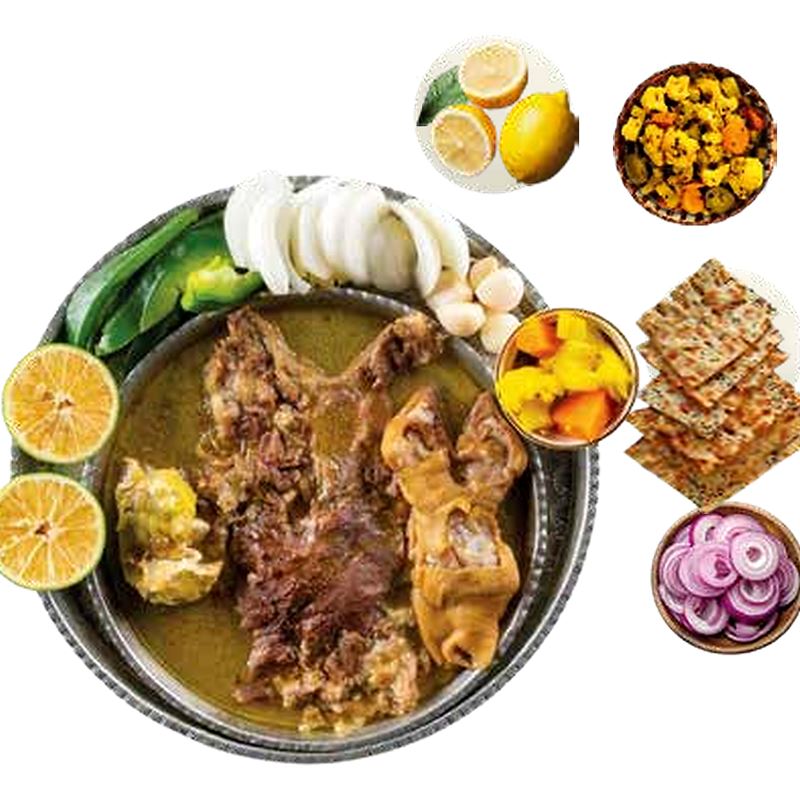
Two ways to start a Dubai morning
Breakfast in Dubai is a city of accents. Walk down one street and you smell butter and toast; turn a corner and you catch steam rising off a copper pot at dawn. Two very different bowls of comfort share the same early hour: the Full English fry-up that so many expats grew up on, and kalle pache, the Persian dawn bowl that has warmed Tehran mornings for generations. This is a friendly, respectful comparison of the two, not a contest with a loser.
What is a Full English breakfast in Dubai?
The Full English is a plate you eat with your eyes first. In Dubai it arrives in its halal form: fried or scrambled eggs, baked beans, grilled tomato, sautéed mushrooms, hash browns, buttered toast, and chicken or beef sausage. There is no pork anywhere on a Dubai table. It is fried, plated, colourful and quick, built for a leisurely weekend brunch with coffee and conversation.
Its charm is variety and crunch. Every forkful is a different texture, and it pairs happily with a flat white and a sunny terrace. It is a breakfast of abundance you assemble bite by bite.
What is kalle pache, the Persian dawn bowl?
Kalle pache is the opposite philosophy. Rather than fried and plated, it is slow-simmered and sipped. The dish is lamb head and trotters cooked for about fourteen hours in a copper pot with onion, turmeric and garlic, skimmed hourly until the broth turns the colour of strong tea. The lamb is halal, as UAE law and custom require. The flavour is mild and savoury, warm rather than spicy, never chili-hot.
You do not build kalle pache; you finish it. At the table you brighten the bowl with a squeeze of lime, a clove of seven-year garlic pickle, a pinch of cinnamon and a little salt, then tear soft sangak bread to carry the broth. It is rich in collagen and gelatin by nature, though how rich depends on the cut and portion. If you are curious about the wider morning ritual, our guide to Persian breakfast in Dubai goes deeper.
Persian vs English breakfast: a side-by-side table
| Feature | Full English (halal) | Kalle Pache |
|---|---|---|
| Cooking method | Fried and plated | Slow-simmered broth, ~14 hours |
| How you eat it | Cut and forked, bite by bite | Sipped and scooped with bread |
| Main flavour | Savoury, buttery, smoky | Mild, garlicky, turmeric-warm |
| Heat level | Not spicy | Not spicy, warming |
| Best moment | Weekend brunch, mid-morning | Cold or very early morning |
| Bread | Buttered toast | Fresh sangak |
| Drink | Coffee, tea | Doogh or black tea |
| Feeling after | Bright and full | Deeply warmed and settled |
Which breakfast fits your Dubai morning?
For a cold or very early start
When a Dubai winter dawn turns the air cool, or when you are up before the city, the broth wins. Kalle pache is quiet, warming food that settles you from the inside. The Full English, bright and busy, is better suited to a leisurely, fully-awake table.
For a group
Both breakfasts love company, but they gather people differently. A fry-up is individual plates side by side; kalle pache is a shared sofreh, with communal platters that serve one, two, three or six, plus a Special Mix sampler for the curious. Order a kettle of tea, some torshi and doogh, and the table becomes the event.
For the first-timer
If offal is new to you, start gentle. Plain broth with sangak is the friendliest doorway, and you can add trotters, tongue or lamb cheek as your confidence grows. The Full English will always feel familiar; kalle pache asks for one open-minded morning, and usually earns a second.
Where to try both worlds in Jumeirah
Shaun the Sheep is a Tehran-style kalle-pache restaurant at 64 Jumeira Street, Jumeirah 1, open 24 hours, 7 days a week, with Dubai-wide delivery, pickup and dine-in. Whether you want the best breakfast in Dubai at first light or a warming bowl at midnight, you can browse the menu and order page or reserve a table for the family. The fry-up and the fireside broth can both belong to your Dubai mornings; this is simply an invitation to try the slower, older one.
This article is about food and culinary tradition, not medical advice.
