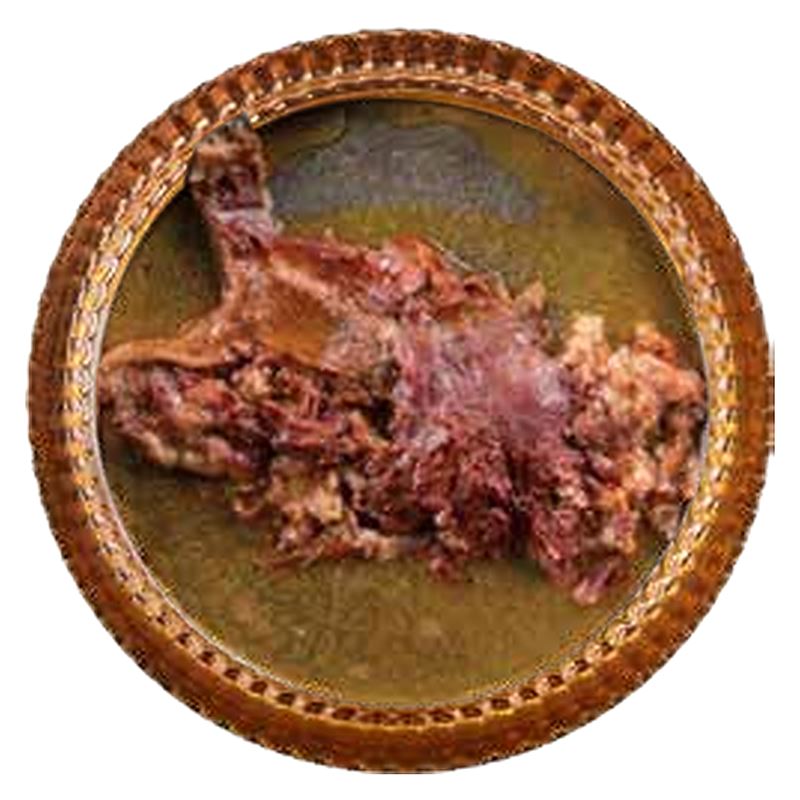
One broth, many homelands
Before dawn, in cities that could not be farther apart — Tehran and Yerevan, Baghdad and Lahore, Sofia and Istanbul — the same quiet ritual repeats. A pot that has murmured all night is finally ladled out. Steam rises, garlic is crushed, bread is torn. Somewhere, a sheep's head and trotters have surrendered hours of patience into a broth the colour of strong tea. In Iran we call it kalle pache (کلهپاچه). Elsewhere it wears other names — but it is unmistakably family.
This is a celebration of that family: the global clan of head-and-trotter and offal broths. They were born of thrift, eaten at dawn, and they share a soul — collagen, warmth, and the conviction that the humblest cuts, given time, become the richest food on the table.
What unites the head-and-trotter dishes around the world?
Four things, really. Thrift: they turn the head, the feet and the stomach — parts once too precious to waste — into a feast. Time: every one demands a long, gentle simmer that coaxes gelatin and collagen from bone and skin. Dawn: many are traditionally breakfast or pre-dawn foods, fuel for cold mornings and hard work. And togetherness: they are almost always shared, ladled from one pot into many bowls, with bread, garlic and something sharp alongside.
A note on wellbeing, not medical advice: broths like these are qualitatively rich in collagen, gelatin, protein and minerals, but the exact nutrition depends entirely on the cut and the portion. Enjoy them as tradition, not as medicine.
A tour of the cousins, country by country
| Dish | Where | Main parts | How it is eaten |
|---|---|---|---|
| Khash | Armenia & Georgia | Cow feet, tripe | At dawn in deep winter, with crushed garlic and dried lavash |
| Kelle paça | Turkey | Sheep head & trotters | A hot soup sharpened with garlic, vinegar and chilli |
| Pacha / الباجة | Iraq & the Gulf | Head, trotters, stuffed tripe | Ladled over torn bread (tashreeb) as a weekend feast |
| Paya | Pakistan, India, Bangladesh | Goat, lamb or beef trotters | A spiced curry-broth for breakfast with warm naan |
| Škembe / iškembe | Bulgaria, the Balkans, Turkey | Tripe | A peppery soup finished with garlic and vinegar |
| Seolleongtang | South Korea | Ox bones & feet | A milky bone broth with rice and scallions |
| Kalle pache | Iran | Lamb head & trotters | A dawn bowl with sangak, torshi and doogh |
Khash, paya and the dawn broths
Armenian and Georgian khash is perhaps the most ceremonial cousin: made from cow's feet and tripe, it is eaten only in the coldest months, at first light, with mountains of crushed garlic and brittle dried lavash to crumble in. Turkish kelle paça keeps the sheep's head and trotters but serves them as a fragrant soup, sharpened with garlic, vinegar and chilli. Across Iraq and the Gulf, pacha (الباجة) is a weekend event — head, trotters and rice-stuffed tripe ladled over torn bread in the dish called tashreeb. On the subcontinent, paya turns trotters into a silky, spiced curry-broth for breakfast, mopped up with naan. Even Bulgaria's peppery škembe and Korea's milky seolleongtang belong to the same instinct: nothing wasted, everything warmed.
Where does Persian kalle pache fit?
The Tehran-style version we serve is the dawn bowl of Iran. Lamb head and trotters — kalle (head) and pache (trotters) — simmer for about fourteen hours in a copper pot with onion, turmeric and garlic, skimmed hour after hour until the broth glows the colour of strong tea. The Gulf and Iraq know the wider family as baja (الباجة); the trotters alone are paye (پایه). It arrives with sangak bread to tear and dip, seven-year garlic pickle and torshi to cut the richness, and a cold glass of doogh. Curious how it stands beside the great noodle broths of the world? Our kalle pache vs ramen and pho piece is a fine companion read.
Taste the whole family in one Dubai restaurant
At Shaun the Sheep — a Tehran-style kalle-pache house at 64 Jumeira Street, Jumeirah 1 — you can taste this global tradition in its Persian form, twenty-four hours a day, seven days a week. Order plain broth, or a full Special Mix (majoon) sampler; add trotters (paye), tongue (zaban), cheek “meat & fat” (banagoosh), brain (maghz), tripe (sirabi) or eye; and share a platter built for one, two, three or six. Our lamb is halal. Browse the menu and order page for Dubai-wide delivery, pickup or dine-in, or reserve a table and call 04 321 8882. However far the cousins roam, the welcome is the same: one pot, many bowls, everyone fed.
