What is the origin of kalle pache?
Kalle pache is an ancient Persian nose-to-tail dish of slow-cooked lamb head and trotters, born centuries ago out of thrift and respect for the whole animal. Its name comes from Persian kalle (head) and pache (trotter or leg), and the tradition stretches back through the kitchens of old Persia, where nothing edible was wasted and long, gentle simmering turned humble cuts into a rich, restorative broth.
Long before refrigeration, families and cooks understood that bones, feet and heads yielded some of the most nourishing and flavourful food available. Simmered slowly overnight, these parts release collagen and gelatin that give the broth its silky body. What began as frugal, resourceful cooking became a beloved dish in its own right, prized far beyond its humble economics.
Where does the name baja come from?
The dish travelled widely, and its names travelled with it. Across the Gulf and Iraq it is known as baja (الباجة), in Iran as kalle pache (کلهپاچه), while trotters served on their own are called paye (پاچه). In Turkey the close cousin is kelle paça. These shared names trace a single culinary idea moving across Persia, the Caucasus, Mesopotamia, the Arabian Gulf and Anatolia over many generations.
| Name | Region | Refers to |
|---|---|---|
| Kalle pache (کلهپاچه) | Iran | Head & trotters together |
| Paye (پاچه) | Iran | Trotters alone |
| Baja (الباجة) | Gulf & Iraq | Head & trotters |
| Kelle paça | Turkey | Head & trotters |
Why was it a dawn and breakfast food?
Kalle pache has traditionally been a dawn dish, cooked overnight and served at first light. The long cook time made it a natural morning food: the pot went on in the evening and was ready by sunrise. Dedicated kalle-pazi (kalle-pache houses) opened before dawn, filling with workers, travellers and early risers who wanted a hot, sustaining bowl before a hard day. That ritual of a shared, steaming breakfast in the cold early hours is part of the dish's identity to this day.
Why has kalle pache endured for so long?
Kalle pache has lasted because it is deeply nourishing, richly flavourful and woven into communal ritual. The broth is traditionally valued as a restorative, and many people find it warming and satisfying, especially in cold weather. Culturally, it is a dish shared around a table with sangak bread, garlic pickles and doogh, an occasion as much as a meal. That combination of nourishment, flavour and togetherness explains why a dish born of thrift still draws devoted crowds.
How is this ancient dish made today?
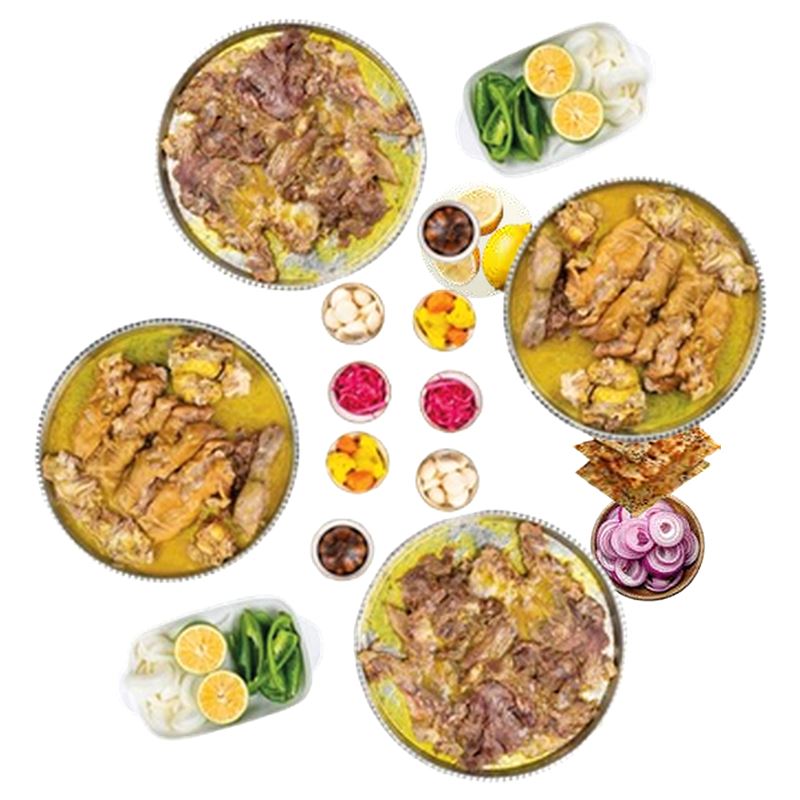
The method has changed remarkably little. At Shaun the Sheep in Jumeirah 1, Dubai, the parts are hand-cleaned before dawn and simmered for around fourteen hours in a copper pot with onion, turmeric and garlic, skimmed hourly until the broth turns the colour of strong tea. The menu keeps the old repertoire whole: brain, tongue, trotters, tripe, lamb cheek, plain broth and a Special Mix, with communal platters for one to six people. The lamb is halal, as all meat sold in the UAE is by standard.
You can taste this living history around the clock. The restaurant is open 24 hours at 64 Jumeira Street, with delivery across Dubai, pickup and dine-in. Order online or reserve a table to share a dish that has fed the region for centuries.
