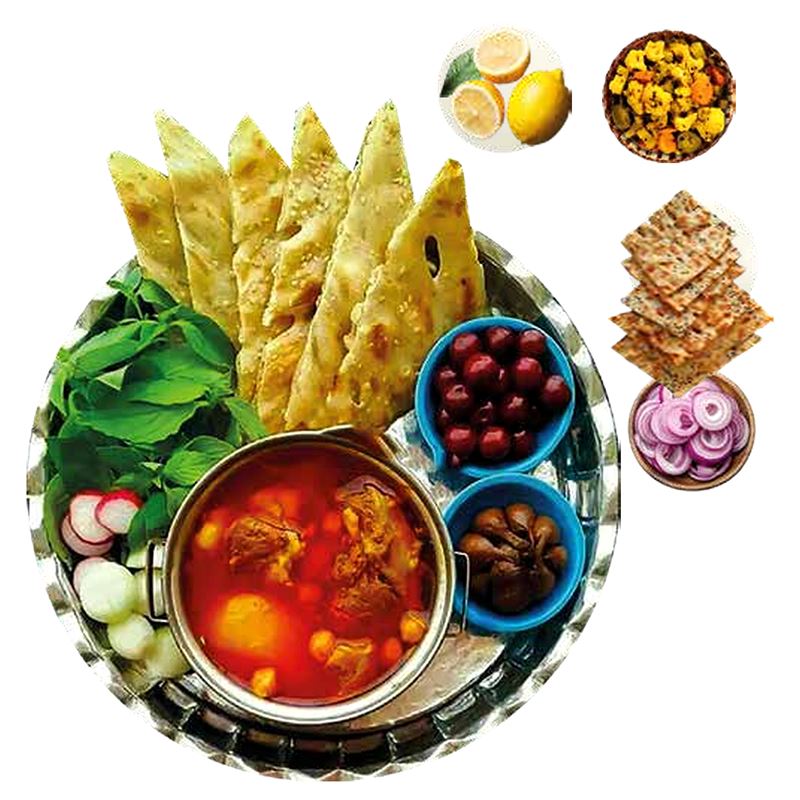
Abgoosht vs Kalle Pache: Two Persian Slow-Cooked Classics
Persian cooking rewards patience. Its most beloved dishes are not fried in a rush but coaxed over long, quiet hours until meat surrenders to bone and broth turns deep and fragrant. Two of these slow-cooked icons stand shoulder to shoulder in Iranian kitchens: abgoosht, the humble lamb-and-legume stew known affectionately as dizi, and kalle pache, the pre-dawn broth made from lamb head and trotters. If you have wondered how they compare in cuts, ritual, texture and mood, this guide walks you through both and where to find them in Dubai.
What is abgoosht, and why is it called dizi?
Abgoosht is a rustic stew of lamb on the bone simmered with chickpeas, white beans, potato, onion, tomato and dried lime, tinted gold with turmeric. The name literally means "water-meat," a nod to its two lives on the plate. It is often called dizi after the stone or clay crock it is cooked and served in, a vessel that holds the heat and lets the flavours settle. As a dizi Persian stew, it is comfort food at its most unpretentious: honest cuts, pantry legumes, and time.
What is kalle pache?
Kalle pache (Persian کلهپاچه) is a different animal, quite literally. It is a clear, collagen-rich broth built from lamb head and trotters, simmered gently for around fourteen hours in a copper pot with onion, turmeric and garlic, skimmed hour after hour until the liquid glows the colour of strong tea. In the Gulf and Iraq you may hear it called baja; trotters served alone are paye. It is traditionally a breakfast or late-night dish, prized for its richness rather than its heft.
Abgoosht vs kalle pache: how do they differ?
Both are slow-cooked and served with bread, yet they sit at opposite ends of the Persian table. Here is a quick comparison.
| Feature | Abgoosht (Dizi) | Kalle Pache |
|---|---|---|
| Main cuts | Lamb on the bone, chickpeas, white beans, potato | Lamb head and trotters |
| Cooking vessel | Stone or clay crock (dizi) | Copper pot |
| Texture | Hearty mashed paste plus broth | Silky, collagen-rich broth |
| Ritual | Strain the broth, then mash the solids with a goosht-koob | Spooned over bread with lime and garlic |
| Best time | Lunch or dinner | Dawn breakfast or late night |
| Served with | Sangak, onion, herbs, torshi | Sangak, torshi, doogh |
The dizi ritual: strain the broth, then reach for the masher
Half the joy of dizi is in the eating. First you tip and strain the thin, savoury broth into a bowl, tear sangak bread into it, and sip it like a soup. Then comes the ceremony: the solids, meat, chickpeas, beans and potato, are pounded in the crock with a goosht-koob, a heavy masher, into a soft, spreadable paste called gusht-koobideh. You scoop this onto bread with raw onion, fresh herbs and torshi. Kalle pache has its own ritual, spooned hot over torn bread with a squeeze of lime and a clove of garlic, but the two-course, mash-it-yourself theatre belongs to dizi. If you are new to either, our guide on how to eat kalle pache as a first-timer is a friendly place to start.
Texture, flavour and when to choose each
Abgoosht is earthy and hearty; the beans and potato give body while the dried lime lends a gentle tang. Kalle pache is silkier and more delicate, its pleasure all in the gelatinous broth and tender morsels. Choose dizi when you want a filling, sit-down meal to linger over; choose kalle pache when you want warmth, richness and that unmistakable dawn ritual. And if you prefer something simpler, we also serve plain broth, the pure, restorative soup on its own.
Where to eat Persian slow-cooked food in Dubai?
Shaun the Sheep is a Tehran-style kalle-pache house at 64 Jumeira Street, Jumeirah 1, open 24 hours a day, seven days a week. Our lamb is halal, as UAE law and standard require. Alongside plain broth you will find trotters (paye), tongue (zaban), brain (maghz), lamb cheek "meat and fat" (banagoosh), tripe (sirabi) and a Special Mix sampler, rounded out with sangak bread, seven-year garlic torshi and doogh. Communal platters serve one, two, three or six, ideal for sharing this Persian slow cooked food Dubai loves. Browse the full menu and order page for delivery across Dubai, pickup or dine-in, or reserve a table for a group. Whichever classic calls to you, it is waiting on Jumeira Street. Call 04 321 8882.
This article is about culinary tradition and is not medical or nutritional advice.
