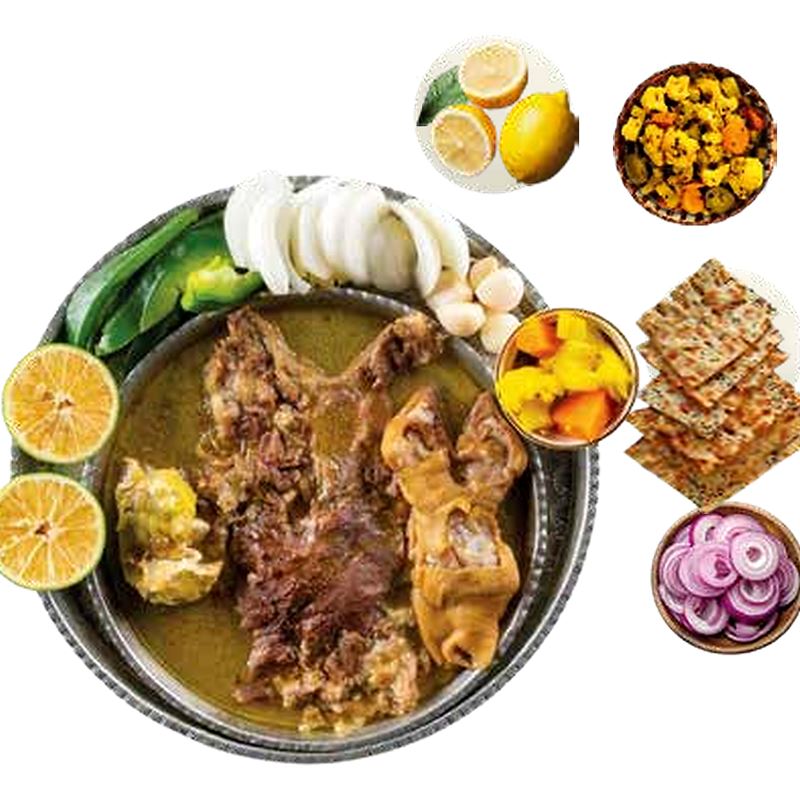
To eat kalle pache like a local, start with the lightest part first, tear warm sangak bread into a bowl of the broth, and balance every rich, gelatinous bite with sharp garlic pickle, a squeeze of lemon, and a sip of cold doogh. That simple rhythm, light to rich, broth and bread, then something sharp to reset your palate, is the whole secret, and it turns a dish that can look intimidating into one of the most comforting meals you will ever have.
Kalle pache is traditional Tehran-style slow-cooked lamb head and trotters, known across the Gulf and Iraq as baja. At Shaun the Sheep in Jumeirah, it is hand-cleaned before dawn and simmered about 14 hours in a copper pot with onion, turmeric, and garlic until the broth turns the colour of strong tea. Here is exactly how to enjoy it your first time.
What should a first-timer order first?
Start light. If you are nervous about offal, begin with plain broth or brain soup rather than a full mixed platter. The broth is gentle, savoury, and deeply warming, and it lets you meet the flavour before the texture. From there you can graduate to softer, familiar cuts like lamb cheek and tongue, which taste close to slow-braised meat, before trying trotters (paye), tripe, or brain.
If you are dining with friends, the communal platters that serve 1, 2, 3, or 6 people are the easiest way in, because you can share a little of everything and find your favourite without committing to one cut. You can browse the full range on the menu.
How do you eat sangak bread with the broth?
Sangak is the partner kalle pache was made for. Tear the warm flatbread into bite-sized pieces with your hands, drop them into the broth, and let them soak for a few seconds until soft but not falling apart. This soaked-bread step, called tilit, is how locals eat it: the bread carries the broth and softens the richer pieces. Scoop a little meat and soaked bread together in each spoonful for the ideal bite.
What are the garlic pickle, lemon, and cinnamon for?
They are your balancing tools, and using them is the mark of someone who knows the dish. Kalle pache is rich and collagen-heavy, so three things cut through it:
- Seven-year garlic pickle (torshi): sharp and tangy, it slices straight through the fat. Take a small piece between bites, not with every mouthful.
- Lemon: a good squeeze over the broth brightens everything and lifts the aroma.
- Cinnamon: a light dusting is traditional, adding warmth and rounding out the flavour, especially with the brain.
And keep a glass of cold, salted doogh nearby. The tangy yogurt drink refreshes your palate and makes the meal feel lighter as you go.
Which parts are easiest for beginners?
Here is a simple guide to ease in, from the most familiar textures to the most adventurous.
| Part | Persian / Gulf name | Best for beginners because |
|---|---|---|
| Plain broth | Ab / maraq | Pure flavour, no challenging texture |
| Lamb cheek | Banagush / khadd | Tastes like tender braised meat |
| Tongue | Zaban / lisan | Smooth, mild, very soft |
| Trotters (paye) | Pache / baja | Silky, gelatinous, mild flavour |
| Brain | Maghz / mokh | Creamy and delicate, best with lemon |
How do locals pace the meal?
Slowly. Kalle pache is not a rushed dish. Traditionally it is a dawn or breakfast food, eaten unhurried while the broth is piping hot. Alternate spoonfuls of soup, bites of bread, and a piece of pickle, and pause often. The dish is traditionally valued as a restorative, warming meal, and many people find it especially comforting in cooler weather or after a long night, thanks to its protein and collagen-rich broth.
Is it halal, and is it beginner-friendly at Shaun the Sheep?
Yes. All meat sold in the UAE is halal by law, and the lamb used here is halal. Shaun the Sheep Cafe and Restaurant sits at 64 Jumeira Street, Jumeirah 1, and is open 24 hours, 7 days, so you can come for a traditional dawn bowl or a late-night meal. You can order for delivery or pickup across Dubai, or reserve a table to try it in the room where the copper pots are always simmering.
