Four Great Slow-Cooked Dishes, One Dubai Table
Dubai is a city that eats before dawn. Long before the traffic wakes, a handful of kitchens are already at work over pots that have been simmering all night. Among the most beloved of these slow-cooked traditions are four dishes that newcomers often confuse: Persian kalle pache, and the South-Asian favourites nihari, paya and haleem (close cousin of the Gulf's harees). They share a philosophy — patience, whole cuts, deep broth — but each speaks in a different accent. If you have ever wondered about kalle pache vs nihari, or the difference between paya and nihari, this is a friendly orientation for Dubai's wonderfully mixed table.
What Is Kalle Pache?
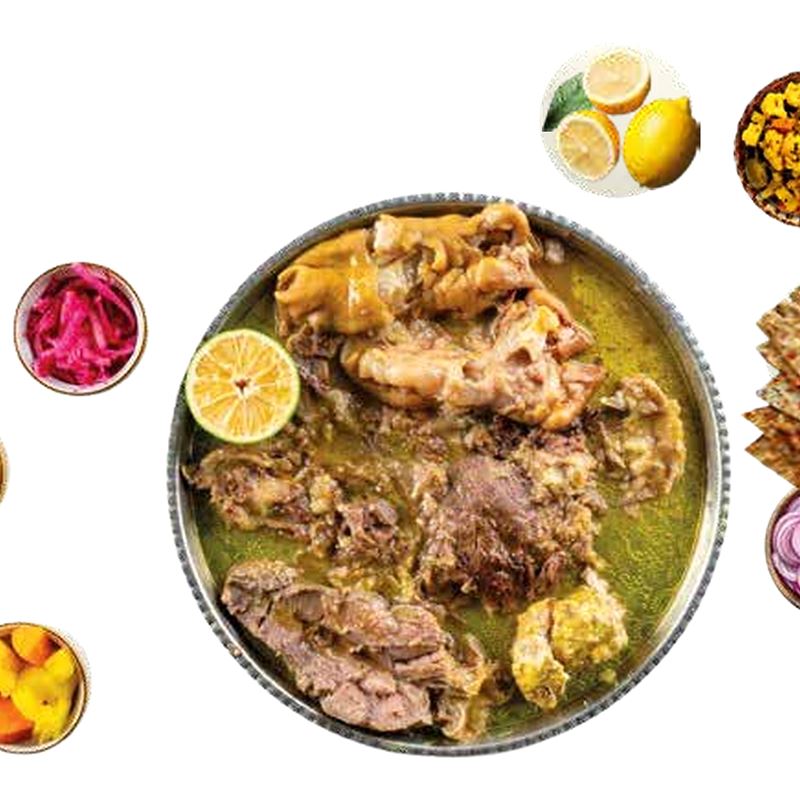
Kalle pache (Persian کلهپاچه; known in the Gulf and Iraq as baja / الباجة) is a broth of slow-simmered lamb head and trotters. At Shaun the Sheep in Jumeirah, it is cooked Tehran-style in a copper pot for roughly fourteen hours with onion, turmeric and garlic, skimmed hourly until the liquid turns the colour of strong tea. Trotters served alone are called paye (پایه). The result is clean and aromatic rather than fiery — a broth you sip, not a curry you scoop. It is typically rich in collagen, gelatin and protein, though the exact amounts depend entirely on the cut and portion. Traditionally it is a dawn dish, ladled into bowls with warm sangak bread and a bracing garlic pickle.
What Are Nihari, Paya and Haleem?
Nihari is a slow-spiced beef or lamb stew from the Indian subcontinent, its name rooted in the Arabic word for morning. It is thickened with flour and layered with ginger, chilli and a warm masala, then finished with fried onions and fresh ginger. Paya (the South-Asian trotters stew) is nihari's lighter relative, built on the same gelatinous foot cuts but often eaten as a weekend breakfast. Haleem — and its Gulf sibling harees — is different in texture altogether: wheat and meat cooked down for hours and pounded into a smooth, savoury porridge, especially cherished in Ramadan.
How Do They Compare?
| Dish | Origin | Main ingredients | Spicing | Texture | Typical time |
|---|---|---|---|---|---|
| Kalle pache | Iran / Persia | Lamb head & trotters, broth | Mild: onion, turmeric, garlic | Light, glossy broth | Dawn / breakfast |
| Nihari | South Asia | Beef or lamb, flour-thickened | Bold: chilli, ginger, masala | Thick, silky gravy | Breakfast / any time |
| Paya | South Asia | Trotters | Medium-warm masala | Gelatinous stew | Weekend breakfast |
| Haleem / harees | South Asia / Gulf | Wheat & meat | Gentle, aromatic | Smooth porridge | Ramadan / evening |
The Persian vs Pakistani Stew Question in Dubai
When Dubai diners ask about Persian vs Pakistani stew, the honest answer is that they are not competitors so much as different dialects of care. Nihari and paya are built to be assertive — the chilli and masala are the point, and they marry beautifully with naan. Kalle pache moves in the opposite direction: it strips spice back so the pure flavour of the broth and the silky textures of tongue, cheek and trotter come forward. One warms you with heat; the other soothes you with depth. Neither is more authentic than the other; they simply come from different mornings.
How to Try Kalle Pache in Dubai
If nihari and paya are already familiar and you are curious to taste the Persian side of this slow-cooked family, Shaun the Sheep at 64 Jumeira Street makes an easy first step. The kitchen is open twenty-four hours, seven days a week, and the menu lets you explore at your own pace: plain broth or abgoosht, brain soup, trotters (paye), tongue (zaban), lamb cheek, or the Special Mix sampler if you would rather taste a little of everything. Add sangak bread, seven-year garlic pickle and a glass of salted doogh, and you have the full dawn ritual. First-timers may enjoy our guide on how to eat kalle pache before ordering.
You can browse the full menu and order page for delivery across Dubai, pickup or dine-in, or reserve a table for a group — communal platters serve one, two, three or six people. The lamb is halal, as UAE law and standard require. However you arrive at the table — from nihari, from paya, or simply curious — kalle pache offers a gentler, quieter chapter in Dubai's great slow-cooked story. This article is culinary and cultural in spirit and is not medical or nutritional advice.
