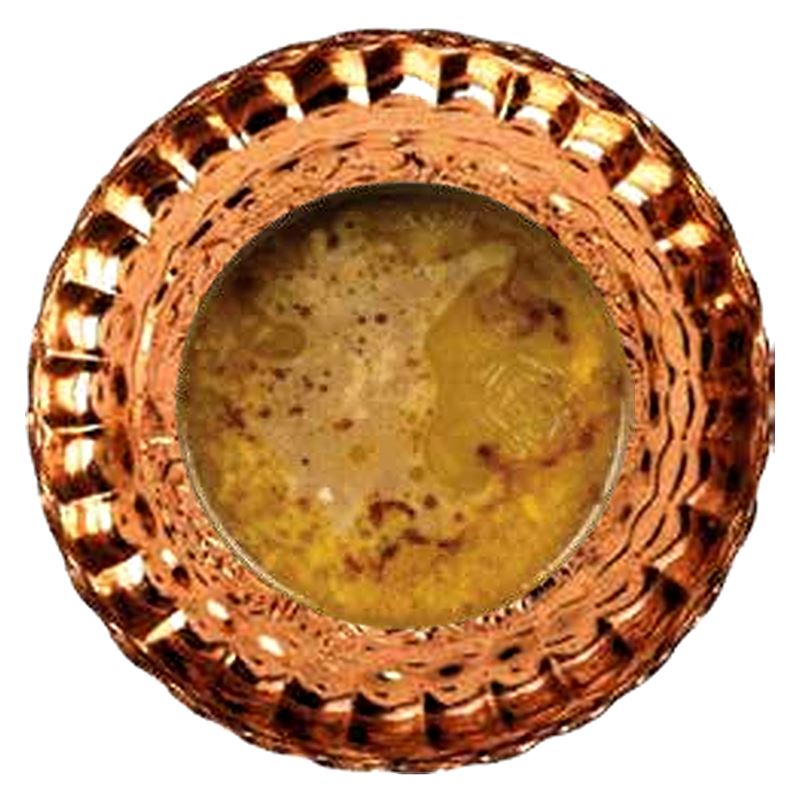
Are kalle pache and pot-au-feu the same idea in two languages?
They are cousins rather than twins. Both are built on a long, patient simmer that turns bone and collagen-rich cuts into broth; in both, that broth is tasted on its own before anything else; and both find a small luxury in marrow. What separates them is the animal, what else goes into the pot, and the moment the bread arrives. If you grew up with pot-au-feu, most of a kalle pache bowl will already make sense to you; you simply meet it in a different order.
One thing to say plainly: we are a kalle pache kitchen in Jumeirah and we serve no French dish at all. This is written for a reader who knows pot-au-feu and is curious about the Persian bowl. It is not a ranking, and where we were not confident of a French detail we left it out.
What is pot-au-feu, kept to what is certain?
Pot-au-feu is one of the emblematic home dishes of France: beef simmered slowly in water with root vegetables such as carrots, turnips, leeks, onion and celery, along with aromatic herbs. The cuts are chosen for what they give up over hours rather than for speed: gelatin, depth and softness. The pot is skimmed as it goes so the liquid stays clear, and marrow bones are often part of it. Cooks disagree about the details, as cooks do everywhere.
What makes it a ritual is the serving. The strained broth comes to the table first, on its own, sometimes poured over a slice of toasted bread. The beef, the vegetables and the bones follow, with coarse salt, mustard and small pickles alongside. The marrow is coaxed out of the bone with a narrow spoon, spread on toast, salted and eaten hot. Anyone who has ordered marrow bones as a starter knows that pleasure: soft, rich, gone in three bites.
What is kalle pache, and how is ours made?
Kalle pache is a Persian dish traditionally eaten early in the morning, built from a lamb's head and trotters. In our kitchen they are cleaned and trimmed thoroughly, then blanched with that first water thrown away, and what follows is about fourteen hours of low simmering, skimmed again and again. The collagen drawn out of bone, skin and trotters is concentrated enough that the broth sets when it cools. The lamb is sourced to the UAE halal standard. If the dish is entirely new to you, start with what kalle pache actually is.
The service is less formal and more communal than a French table. Broth and parts arrive together in one bowl, and the first spoonfuls of broth are taken plain: the Persian answer to the French first course, folded into the opening mouthfuls instead of served as a separate plate. Then sangak is torn and pushed under the surface to soak, and you begin on whichever part you chose: trotters, brain, tongue, lamb cheek, eye, tripe, meat, or the Special Mix. Our menu guide walks through each one.
How do the two traditions line up, side by side?
| Pot-au-feu | Kalle pache | |
|---|---|---|
| The animal | Beef, in cuts chosen for gelatin and depth | Lamb, the head and the trotters, sourced to the UAE halal standard |
| What goes in the pot | Beef with root vegetables and herbs; marrow bones are often included | Cleaned, trimmed heads and trotters; the first water thrown away, then about fourteen hours of simmering and skimming |
| How the broth is served | Strained and served first, as a course of its own | In the same bowl as the parts; the first spoonfuls taken plain |
| The marrow moment | Marrow lifted from the bone onto toast with coarse salt | No marrow bone on the side; the melting pleasure comes from trotters and brain, and from broth that sets when cold |
| The bread | Toasted, beside the bowl | Sangak, torn and pushed into the bowl to soak |
| What sharpens it | Coarse salt, mustard, small pickles | Torshi, mixed or garlic, and raw onion |
Where is the marrow moment in a Persian bowl?
The honest answer first: we do not serve a split marrow bone with a spoon and toast, and nothing on our menu imitates it. It turns up here in two other places. Trotters are the closest cousin: after the long simmer they are yielding and faintly sticky on the lips, and the gelatin does to a torn piece of sangak roughly what marrow does to toast. Brain is the other: mild, custard-soft and spreadable, recognisable at once to anyone who orders marrow for the texture as much as the taste.
A third bridge is one cooks notice first: because the collagen is so concentrated, our broth firms up as it cools, the way a well-made stock does in the fridge. The texture guide describes each part in plain language.
What is genuinely different at the table?
Two things, mainly. The first is vegetables. Pot-au-feu is as much about the carrots, leeks and turnips as the beef, and they are eaten as part of the dish. Kalle pache has no root vegetables in the pot at all: head, trotters, water and time.
The second is how the richness is cut. In France that job belongs to coarse salt, mustard and small pickles at the side of the plate. In Iran it belongs to sourness and bite, which means torshi and raw onion, and many people want something citrus-sharp as well. On our menu the role is filled by Mixed Torshi or Garlic Torshi, with Onion, Fresh Chili and Pickled Green Chili as extras you tick alongside your bowl. Neither approach is more refined than the other. They are two answers to one problem: a bowl simmered for hours wants a cut of acidity somewhere.
If you love marrow on toast, what should you order first?
For the gentlest start, order broth alone: Soup, the abgoosht broth, or Brain Soup. Our soup-only guide covers it, and it maps neatly onto the French habit of taking the bouillon first.
If you are ready for the parts, singles come by the bowl: Trotters for the gelatin, Brain for the softness, Lamb Cheek, Tongue or Meat for straightforward meat, Eye or Tripe if you are curious, and Special Mix for a tour of several at once. Platters scale it up: Single Dish, Double Dish, The Full Dish, and The Khan's Platter for six, with four lamb cheeks, eight trotters, two brains, three tongues, four eyes and five breads. Add Sangak or Special Sangak, with Doogh, tea, lemonade or water alongside; a Kettle of Tea is dine-in only.
It is a rich bowl, much as marrow on toast is rich. This is not medical advice: for anything to do with health, digestion, diet or nutrition, ask your doctor or a dietitian, not a menu.
How do you order kalle pache in Dubai?
One kitchen, at 64 Jumeira Street, Jumeirah 1, open 24 hours a day, every day, delivering across Dubai. There are no branches. You order from our website with no account, no sign-up and no password: your name and phone number, plus your Dubai area from the list and a map pin for delivery. Payment is by secure online card at checkout, prepaid, and that is the only method; with any question about paying, call 04 321 8882 and ask. Delivery is free over AED 300. Pickup and dine-in are available too, and dine-in tables can be reserved. You can also schedule an order for a future time, up to about two days ahead. The steps are in this ordering guide.
Once payment goes through, the kitchen confirms the order and sets an estimated time. Your order gets its own page, and the rider phones the number on the order when they arrive. If an order has to be rejected, it is refunded automatically to the card that paid, with the reason shown on that page. To ask a person anything at all, call 04 321 8882, which is our only contact channel.
Two kitchens, far apart in language and history, arrived at the same conclusion: put bone in water, keep the heat low, skim, and wait. The French serve it in two acts with marrow at the centre; we serve it in one bowl with bread torn into it. If one of those is already yours, the other is closer than it looks.
