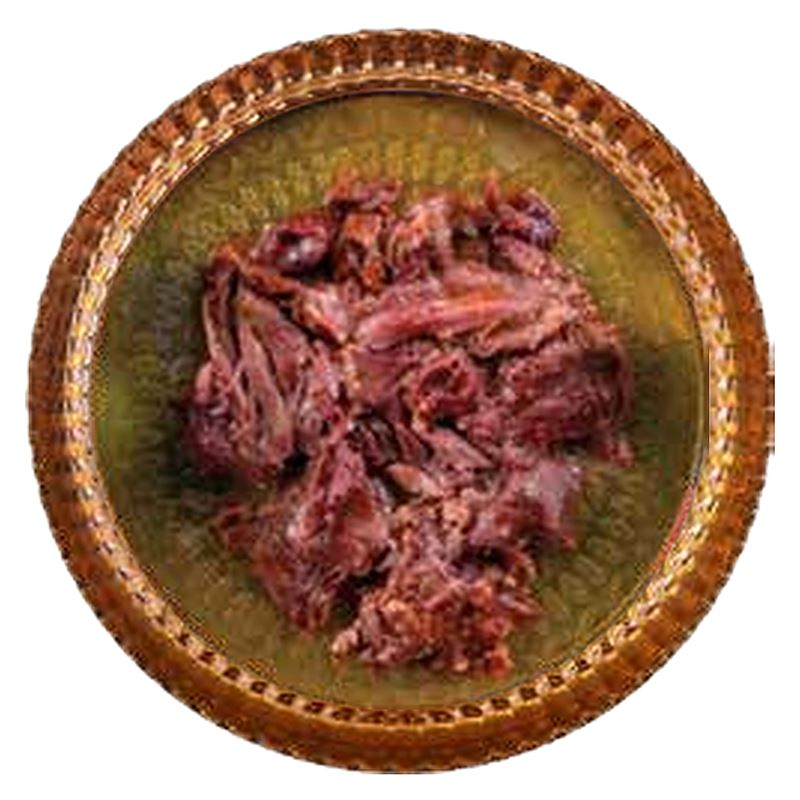
Kalle pache and Yemeni maraq come from the same instinct: take lamb on the bone, give it hours in water instead of minutes, and let the broth itself become the meal. If you grew up eating maraq, you already understand nearly everything about kalle pache — the patience, the bone, the bread going into the bowl, the way a hot bowl early in the day sets a person straight. The one genuinely new thing is which parts of the animal go into the pot.
Here is the short answer. Maraq, as it is commonly served, is built on bone-in lamb or goat pieces in general, and which pieces depends on the kitchen. Kalle pache is narrower and more literal: it is the head and the trotters, and the name says exactly that — kalle is head, pache is trotters. From the head come cheek, tongue, brain and eye. From the feet comes the gelatine that gives the broth its body. Same fire, same patience, different cuts.
What do kalle pache and Yemeni maraq have in common?
Almost the whole logic. Both begin with bone rather than boneless meat, because bone and connective tissue are what turn water into broth. Both are simmered long and slow, and that is not a stylistic preference — it is the only way collagen softens and the liquid gains body. Both treat the broth as the dish itself rather than a sauce poured over something else, and both are meant to be eaten properly hot.
Then there is bread. In neither tradition is bread a side item. It is the spoon, the thickener and half the pleasure. Both dishes also occupy a particular slot in the day rather than being all-purpose restaurant food. Kalle pache is traditionally an early-morning dish. Maraq is commonly served early in the meal, alongside or before the main dish — the warming course rather than the showpiece. Someone who knows one of those rhythms recognises the other straight away.
There is shared thrift in there too: neither dish is built on the expensive cut. If you want the longer account of the Persian dish and where it sits in Iranian eating, we set it out in what kalle pache actually is.
What is the clearest difference between maraq and kalle pache?
The cuts. That is genuinely the whole difference, and everything else follows from it. A maraq pot commonly takes bone-in pieces from around the animal, and which pieces depends on the kitchen, the butcher and the day. A kalle pache pot takes the head and the feet, and in most Iranian kitchens nothing else.
That narrowing changes texture more than it changes flavour. Feet are close to pure collagen, so the broth turns silky, coats the spoon, and sets firm if you leave it to cool. The head gives you four or five completely different eating experiences inside one bowl: cheek is dense and meaty, tongue is firm and clean, brain is soft almost to the point of being a custard, and the eye is its own category — small, rich, and the part people either love outright or quietly pass to whoever wants it.
So the honest summary is this. Someone who eats maraq will find the broth familiar and the textures new. Nothing about the method will surprise you. What is in the bowl might.
What actually goes into the bowl at your kitchen?
The parts you choose. Our menu is built so you pick the pieces rather than accept a fixed mix — customising an order with us means choosing which items you want.
- Lamb Cheek — the meatiest part of the head, and the easiest start for anyone.
- Tongue — firm, clean-tasting, sliceable, often the favourite of a first-timer.
- Brain — very soft and very mild; best with plenty of lime and bread.
- Eye — the one people talk about. Small and rich. Order it if you are curious.
- Trotters — the feet themselves: gelatine and cartilage, and the reason the broth behaves as it does.
- Meat — plain lamb, for whoever wants something straightforward.
- Tripe — not from the head, but from the same family of slow cooking.
- Soup and Brain Soup — the broth on its own, or the broth with brain in it.
- Special Mix — a little of several parts, for a table that wants to try across the board.
Alongside those: Sangak Bread and Special Sangak, Mixed Torshi and Garlic Torshi, and the add-ons people reach for at the table — capsicum, onion, fresh chilli, pickled green chilli. If you would rather order by the platter, they are Single Dish, Double Dish, The Full Dish and The Khan's Platter.
How is the broth made, and what gives it body?
Time, and the feet. Heads and trotters are hand-cleaned and trimmed first — the slow, unglamorous part of the job, and the part that decides whether the finished broth is clean or not. They are then blanched, and that first water is thrown away completely. Only after that does the real cooking begin: about fourteen hours of simmering in a copper pot with onion, turmeric and garlic, skimmed again and again as it goes.
One detail surprises anyone used to a broth finished in the kitchen: we do not season it for you. Lime, cinnamon and garlic go in at the table, by the person eating. The broth arrives deliberately mild, so if you like a sharper bowl, use more lime than you think you need. The full method is written out in how kalle pache is made, and what to expect on the palate is in what kalle pache tastes like.
Is the bread the same idea, and what is tilit?
Yes, and this is where the two tables look most alike. Yemeni tables carry more than one bread, and the names and shapes vary by region and by household, but the gesture is constant: bread is torn, dipped, and used to carry broth to the mouth.
Iranians do the same thing and have a word for it. Tilit is bread torn into small pieces, dropped into the broth, left to soften for a moment, then eaten with a spoon. Our bread for it is sangak, the plain Persian flatbread, and there is a Special Sangak on the menu as well. Order extra bread if there are two of you — one flatbread does not survive a serious bowl. The ritual is described properly in the tilit ritual, and why lamb sits at the centre of all of this is in why lamb in Persian cooking.
How do kalle pache and Yemeni maraq compare side by side?
| What we are comparing | Kalle pache (Persian) | Maraq (Yemeni, in general terms) |
|---|---|---|
| Main cuts | Head and trotters specifically: cheek, tongue, brain, eye, feet | Bone-in lamb or goat pieces more generally; the cut varies by kitchen |
| How the broth is built | First water discarded, then about fourteen hours in a copper pot with onion, turmeric and garlic, skimmed repeatedly | Long simmering of bone-in meat; aromatics vary by region and household |
| Broth character | Gelatinous from the feet, and deliberately mild until the diner seasons it | Varies by kitchen — we will not generalise about someone else's pot |
| Seasoning | Added at the table by the diner: lime, cinnamon, garlic | Commonly finished in the kitchen; table condiments vary |
| Bread | Sangak, torn into the bowl — tilit | Several breads, varying by region; also torn and dipped |
| When it is eaten | Traditionally very early morning; with us, any hour | Commonly early in the meal, alongside or before the main dish |
| What to order here | Soup first, then a Single Dish | Not on our menu — we cook the Persian version only |
Is a bowl of lamb broth good for you?
People in both cultures speak about a hot bowl of lamb broth as restorative, and that is a real and old part of how these dishes are eaten. But it is culture, not a health claim. We do not claim this food treats, prevents, heals or improves any condition. This is not medical advice — if you have questions about your diet, ask your doctor or a registered dietitian.
Do you serve maraq, saltah or fahsa?
No. We cook the Persian version only, and we are not authorities on Yemeni cooking. Everything said here about maraq is deliberately general, because a Yemeni reader knows that food far better than we do and would spot a confidently wrong detail immediately. Yemeni cooking has its own well-known dishes built on or around a broth base, and describing them properly is not our job. Ours is the head and the trotters, cooked the Iranian way.
If you like this kind of comparison, we have also put kalle pache beside harees and beside the Emirati breakfast table. These dishes are cousins, never a contest.
What should someone who eats maraq order the first time?
Start with Soup. It is the broth alone, the closest thing on our menu to what you already know, and it lets you decide whether you like where our pot lands. Then order a Single Dish — the smallest of our platters, a sensible portion of parts with bread — rather than a large platter you may not finish.
Add Sangak Bread, and Mixed Torshi or Garlic Torshi. Torshi is our pickle, sharp and sour, and it does what any sharp condiment does at the table: it cuts through a rich bowl. To drink, black tea, or doogh, the salted yoghurt drink. If you come back for more, the larger platters — Double Dish, The Full Dish and The Khan's Platter — are explained in our platter guide, and the whole menu sits on the order page.
Is the lamb halal?
Our lamb is sourced to the UAE halal standard, and we have written more about how this kitchen approaches the question in is kalle pache halal. Head and trotters are ordinary traditional eating across a great many cuisines in this region — less common on restaurant menus in this city than in home kitchens, but not exotic.
How do I order kalle pache in Dubai?
We are one kitchen at 64 Jumeira Street, Jumeirah 1, and we are open twenty-four hours a day, seven days a week. You can have it delivered anywhere in Dubai, collect it yourself, or eat in — dine-in tables can be reserved in advance. Delivery is free on orders over AED 300; below that it varies by area.
Ordering is guest checkout: no account, no password, nothing to sign up for. Payment is secure online card prepay only, so there is no cash on delivery and no paying the rider at the door. After payment your order gets its own page, the kitchen accepts it and sets an estimated time there, and the rider phones you when he arrives. If we cannot fulfil an order we reject it with a reason and the payment is refunded automatically. You can also place a scheduled order and pick a time up to about two days ahead. The walkthrough is in how to order step by step, delivery details are in kalle pache delivery in Dubai, and the wider picture of this food in the city is in kalle pache in Dubai.
What if I need to change or cancel an order?
Phone 04 321 8882 immediately. There is no cancel or edit button, and no notes field for the kitchen or the rider. 04 321 8882 is our only contact channel and it is answered around the clock — special requests, and questions about the parts or the payment, all go by phone.
Two pots, two languages, one idea: bone, water, time and bread. If maraq is already part of your week, kalle pache will not feel foreign. It will only feel more specific.
