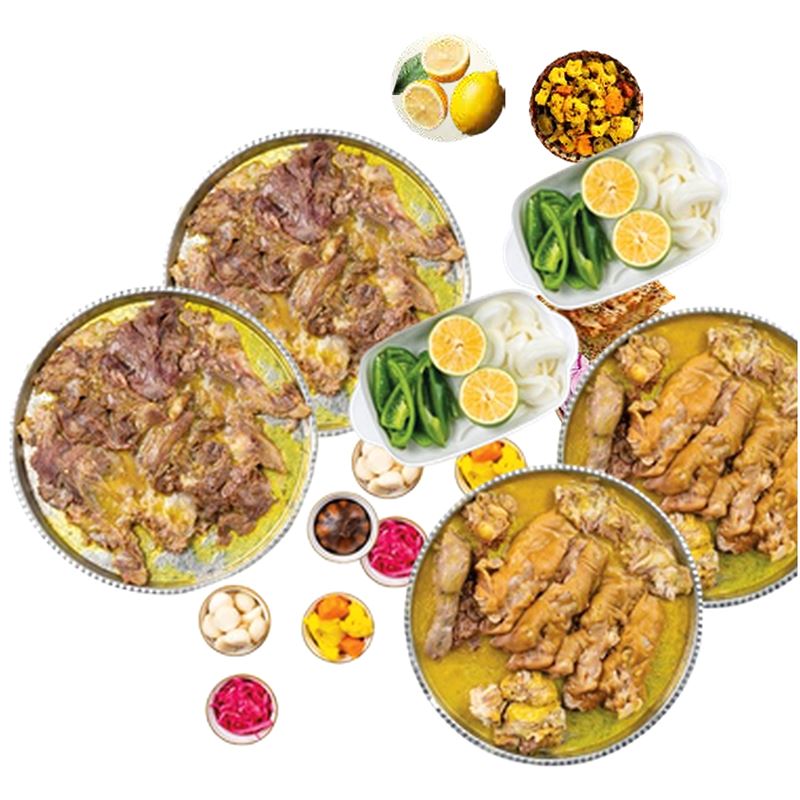
Honest answer: for most first dates, no. Kalle pache arrives as a shared platter set in the middle of the table, it is eaten with your hands and torn bread, and each person seasons their own bowl. That asks two people who met an hour ago to be comfortable with one another before they have had the chance to be. It is a warm, generous, slightly messy meal, and both the warmth and the mess land better once the first layer of politeness has worn off.
The more useful answer: kalle pache makes a very good second date and an even better fifth. It is one of the warmest tables you can share in this city, once you both actually want to be sitting at it. What follows is the case for and against, and what to order if you come anyway. If the dish is new to you, read what kalle pache actually is first.
Why is kalle pache a hard first date?
Because the format is intimate before the two of you are. This is not a plate each with a polite gap in the middle; the platters are built for a table rather than a person. The Single Dish is lamb cheek, one trotter, half a brain and half a bread. The Double Dish is that plus a second trotter, tongue, one eye, and a whole bread rather than half. You reach into the same dish, you tear bread and pass it across, and you finish with fingers that need a napkin. Lovely with someone you know well. With someone you met an hour ago, it is a lot of closeness arriving before any of it has been earned.
Then there is the menu itself. We do not soften the names: Eye, Brain, Tongue, Trotters, Tripe, Lamb Cheek, Special Mix. If your date has never met this food, their first few minutes here turn into a run of decisions made in front of somebody they would like to impress. Most people would rather meet an unfamiliar dish with less at stake, alone or with an old friend who will laugh with them either way.
And it is slow. Heads and trotters are hand-cleaned and trimmed, blanched with that first water thrown away, then simmered about fourteen hours in a copper pot with onion, turmeric and garlic, skimmed again and again; the method is here in full. Food made that slowly tends to be eaten slowly too, with tea and with pauses. A long, unhurried meal is a gift on date five. On date one it can feel like a stretch of time neither of you has agreed to yet.
Is it the food that is the problem, or the situation?
Mostly the situation. The flavour is milder and rounder than the names suggest: deep and savoury, softened by the long cooking, then lifted at the table by whatever each person adds. Seasoning here is the diner's job rather than the kitchen's: lime, cinnamon and garlic go in at the table, to your own taste. A pleasure once you know what you like, and one more small decision when you do not. We have written a plain description of the flavour and a guide to the textures, because texture surprises newcomers far more than taste ever does.
So the food is not the difficulty. The choreography around it is: shared platters, hands, bread, seasoning choices, and a pace that assumes you have the evening. Which happen to be the four things a first date is least equipped for.
When is kalle pache genuinely a great date?
When you both already know it and like it. Then it stops being a test and becomes what it is meant to be: two people at a table with a kettle of tea, taking their time. If the person you are meeting grew up with this dish, or has had it before and loved it, bringing them here is one of the kinder invitations available in this city. You are not performing a restaurant at them. You are offering something you actually love, somewhere nobody will be startled by what is on the plate.
It also says something true about you, which is worth more than a safe choice. It says you are not working from a checklist, that you know where you like to eat, and that you would like them to be part of it.
Why is it a better second, third or fifth date?
Because by then you have earned the format. On a second date you already know the conversation works, so the meal can be a meal instead of an audition. You can say "the brain is the soft one, try a little on bread first" without it sounding like a dare. You can admit you are not sure about the tripe, and nobody has to be gracious about it.
Shared food also works best when both people serve themselves without asking permission, and that instinct usually turns up around meal three. Here is the sequencing we would suggest, which you are free to ignore.
| The occasion | What we would do | Why |
|---|---|---|
| First meeting, neither of you has tried it | Go somewhere else, and mention this place for next time | Too many first impressions arriving at once |
| First meeting, one of you knows it well | Soup and one Single Dish, eaten in | Small, gentle, nobody negotiating over a platter |
| First meeting, you both already love it | Come. Double Dish, Sangak Bread, torshi, tea | You are not first-dating the food, only each other |
| Second or third meeting | Double Dish with Mixed Torshi and bread | Enough to share properly without over-ordering |
| Fifth and beyond, or with friends | The Full Dish, or The Khan's Platter for a crowd | The big-table version, when this food is at its best |
Is it a fair test of whether someone is curious?
It tells you something real, but only if you play fair. How a person meets an unfamiliar table is genuinely informative, often more so than any question you could ask. There is a difference, though, between inviting someone into something you love and setting a trap to see whether they flinch. Say what the food is before you go. Send them the menu guide so they arrive knowing what a trotter is. Let them choose the gentle option without commentary. The wording of that first description matters more than most people expect, and what to say when you recommend kalle pache to a friend collects the lines that actually land.
And take the answer graciously either way. Someone declining a head-and-trotter stew on a Tuesday evening has not revealed anything about their character. Someone who says "I have no idea what that is, but yes" has told you something worth knowing.
What should you order if you are coming anyway?
Soup and a Single Dish. That is the whole recommendation. Start with Soup, plain for a cautious beginning or Brain Soup if the person you are with already knows they like it, then one Single Dish between you: lamb cheek, one trotter, half a brain and half a bread. Small enough that nobody is negotiating over a whole brain on evening one, complete enough that you both understand the dish by the end of it.
Add Sangak Bread or Special Sangak, and Mixed Torshi or Garlic Torshi to cut the richness. Order a Kettle of Tea, or Doogh if either of you already drinks it. If one of you would rather sit the main event out, the Omelette is on the menu and there is no shame in ordering it. Leave The Full Dish and The Khan's Platter for later: two lamb cheeks, meat, four trotters, a whole brain, tongue, two eyes and two breads is a wonderful thing to face with four friends and a strange thing to face with a stranger.
Should you eat in or order delivery?
Eat in. This is a table-and-conversation dish. We deliver across Dubai, and delivery is free over AED 300, but a coffee table changes what the meal is. With the platter in the middle of a proper table, bread within reach and tea on the way, the food organises the evening for you. On a sofa with a screen on, it becomes something you are getting through.
We are at 64 Jumeira Street, Jumeirah 1, and the kitchen runs 24 hours a day, seven days a week. You can book a table through the reservation page on our site, or by phone on 04 321 8882, which is our only contact line: no chat, no email, no form. There is more in our dine-in guide. If you do want it at home for a different sort of evening, the delivery guide explains how that works: you pay securely by card online, the kitchen accepts the order and sets an estimated time, and the rider phones you on arrival.
What time should you come?
Whenever suits the two of you, because we are open around the clock. In many households this is a morning dish, eaten early with bread and hot tea, which is why the idea of it at eight in the evening strikes some people as odd. It works at both ends of the day, and an early breakfast is, if anything, an easier meal to meet over than dinner: shorter by nature, and this is a dish many people know best in the morning. If you would rather fix a time in advance, you can schedule an order for a future time up to about two days ahead.
What if it does not go well at the table?
Then it does not, and that is fine. Not everyone likes this food and we have never pretended otherwise; we wrote a whole piece on what to do if you do not like it. Order Soup, bread and tea, or the Omelette, and let the evening be about the person rather than the plate. The one thing not to do is push. Nobody in the history of eating has been talked into liking a texture.
How do you book a table or place an order?
Phone 04 321 8882 for a table or for anything you need to ask; it is our only contact channel, and someone is there at any hour. To order online you need no account, no password and no app: you choose your items, pay securely by card, and the order gets its own page. The kitchen accepts it and sets an estimated time. To change or cancel anything, phone straight away, because there is no self-service button for it. If we cannot fulfil an order, we reject it with a reason and refund it automatically. The process is in the ordering guide, and the lamb is covered in the halal question.
So when should you bring someone here?
When you already know they will enjoy it, or when you know each other well enough that it will not matter if they do not. Bring the friend who has been asking about it for a month. Bring the person you have already had four good evenings with. Bring your family at seven in the morning, which is how a great many people first met this food. For the practical version of the above, our guide to sharing kalle pache between two covers the ordering in detail, and where the dish sits in Dubai gives the wider picture.
We are here on Jumeira Street whenever you are ready, at any hour you like. We would much rather you came at the right moment than came once, at the wrong one, and never came back.
