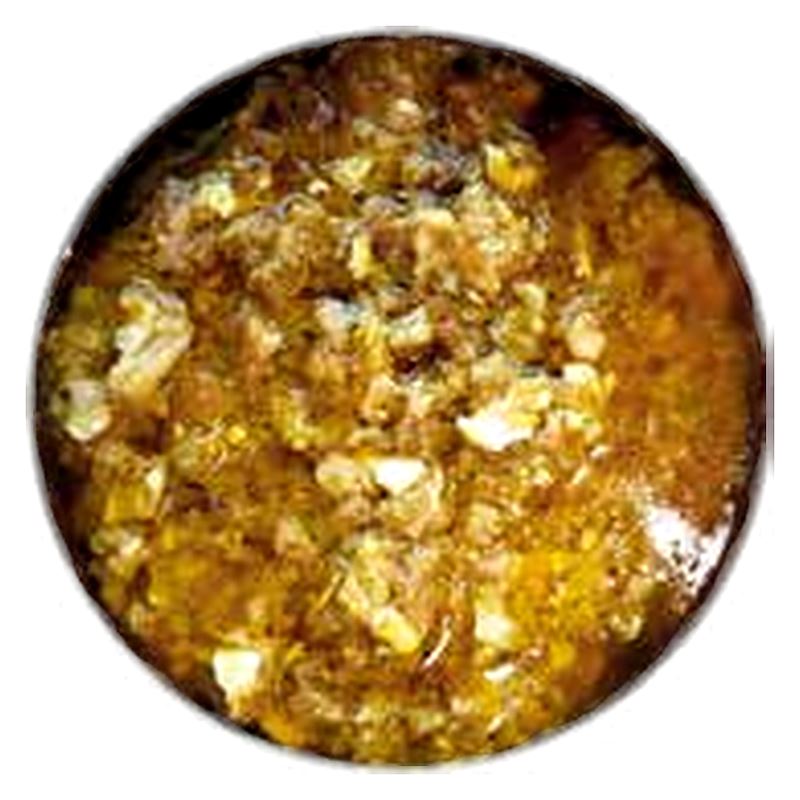
Is Iranian food different from Persian food?
No. They are two words for one thing. Persian is the older cultural label that English has used for centuries; Iranian is the modern national one. The same cook, the same pot and the same bowl of broth can be described either way, and neither word tells you anything about how the food tastes.
So if you are deciding which one to type or say in Dubai, the short version is that both are correct. The longer version is worth a few minutes, because it explains why two words exist, which one a dish like kalle pache tends to sit under, and why the third word people reach for is the one to drop.
Where does the word "Persian" come from?
From a province. Pars, or Fars in modern pronunciation, sits in the south-west of the country, and it was the home of the dynasty that built the empire the Greeks wrote about. The Greeks named the whole of it after the part they knew: Persis. Latin borrowed that, French passed it on, English kept it.
Which is why Persian behaves in English like a cultural adjective rather than a passport. Persian carpets. Persian poetry. Persian gardens. The Persian language, which is spoken in Afghanistan and Tajikistan as well, under other names. The word reaches back past any modern border and covers more ground than any single country.
Food inherited the habit. English menus have said Persian for a very long time, and the word points at a tradition rather than at a republic.
Why did the world start saying "Iranian"?
Because that is what the country calls itself, and has for a very long time. In Persian the name is Iran; Persia was largely the outside world's name for the place. In the 1930s the government asked other governments to use Iran in official correspondence. Diplomatic English changed, newspapers changed, and ordinary English mostly followed.
What settled afterwards was a split rather than a replacement. Iranian took the nationality, the passport and the news. Persian kept the culture, the language, the carpets and the cooking. You rarely see "Persian embassy". You see "Persian rice" all the time. Both habits are good English and both are in daily use.
For food, that makes the choice one of tone. Iranian points at where the people are from. Persian points at what the kitchen belongs to.
Is "Farsi food" a thing?
This is the one worth correcting. Farsi is a language. It is simply the Persian word for Persian, and it is Farsi rather than Parsi for a reason usually given as sound: Arabic has no p, so Pars became Fars a long time ago and the pronunciation stayed.
A language name is not a cuisine name. You don't hear anyone ordering Deutsch food or Nihongo food, and Farsi food works the same way. In English the language happens to be called Persian too, which is exactly why the two get tangled.
If you have said it, no harm done; most people who cook this food will know what you mean. The language does matter in one practical place, which is ordering. Our guide to ordering kalle pache in Arabic or Farsi covers what actually changes when you switch the site's language, and that is the one context where Farsi is the right word.
Why does one kitchen turn up under either word?
Because the word on the sign was chosen by whoever wrote the sign. A family who left Tehran may describe their place as Iranian, because that is what they are. A kitchen naming itself after the tradition it cooks from may say Persian. A third will use both in the same sentence and think nothing of it.
None of that is a quality signal. The word tells you about the person who chose it, not about the broth. What does tell you something is the menu, the hours and whether the pot is a genuine slow simmer or a shortcut, which is the subject of our buyer's guide to choosing a Persian restaurant in Dubai. And if you want to know what the label is actually pointing at, what makes Persian cooking different gives the honest answer: sourness, herbs, restraint with chilli, and time.
Which word does kalle pache sit under?
Persian, comfortably. The name is two Persian words, and the dish belongs to a tradition older than any modern label, so the complete guide to Persian lamb-head soup is where to start if the dish itself is new to you. Iranian is not wrong for it. It is just a narrower word for something that predates the borders it describes.
What do you type when you don't know the dish's name?
This is the real problem for most people, and it has nothing to do with Persian versus Iranian. If you ate this once at a friend's house and never caught the name, you are left describing it, and English gives you a blunt vocabulary for that. Head and trotters. Lamb head soup. Sheep head and feet.
Those phrases are accurate and they sound worse than the food is. Persian compresses the dish into two soft words; English hands you an anatomy lesson. That gap is why the descriptive phrase feels harsher than what actually arrives, which is a clear long-simmered broth, soft meat and warm bread.
The fix is to stop describing and start naming. Two words, kalle pache, and you are past the description problem for good. Add Dubai to the end of it if you want it near you.
So which word should you use?
Either of the first two. Here is the whole argument in one table.
| Word | What it names | Use it for |
|---|---|---|
| Persian | An old cultural and linguistic label | The cuisine, the language, the tradition behind a dish |
| Iranian | The modern national label | The country, the nationality, how a family describes itself |
| Farsi | The language's own name for itself | The language only, never the food |
Shaun the Sheep at 64 Jumeira Street, Jumeirah 1 answers to either of the first two. It is a halal kalle pache house with a Persian breakfast menu, open around the clock, seven days a week, for dine-in, pickup and delivery across 141 Dubai areas. Use whichever word comes to you first. If you need to ask something a web page cannot answer, call 04 321 8882 and ask.
