A Persian menu describes; it does not advertise
Persian dish names almost never try to sell you something. They tell you what went into the pot, what the pot was made of, or what the cook did with the heat. Once that pattern is clear, a menu written in transliterated Persian stops being a wall of odd syllables. This kitchen in Jumeirah cooks one dish, and its name is the plainest example of the rule.
Kalle pache: the contents, listed
Kalle is head. Pache is the trotters, the lower legs. Together they are an inventory of what goes into the water: nothing about taste, nothing about history, just the parts, simmered until they give in, about fourteen hours here. The long version is set out in how kalle pache is made, and the dish itself in what kalle pache is.
The singles keep the habit. Maghz is brain, zaban is tongue, cheshm is eye, and bonagoosh, the lamb cheek, is literally "the base of the ear", which is where that muscle sits. Beside the parts, the menu carries mojoon, a compound or a mixture, and that is what the bowl holds: a little of everything from the pot.
When the pot names the food
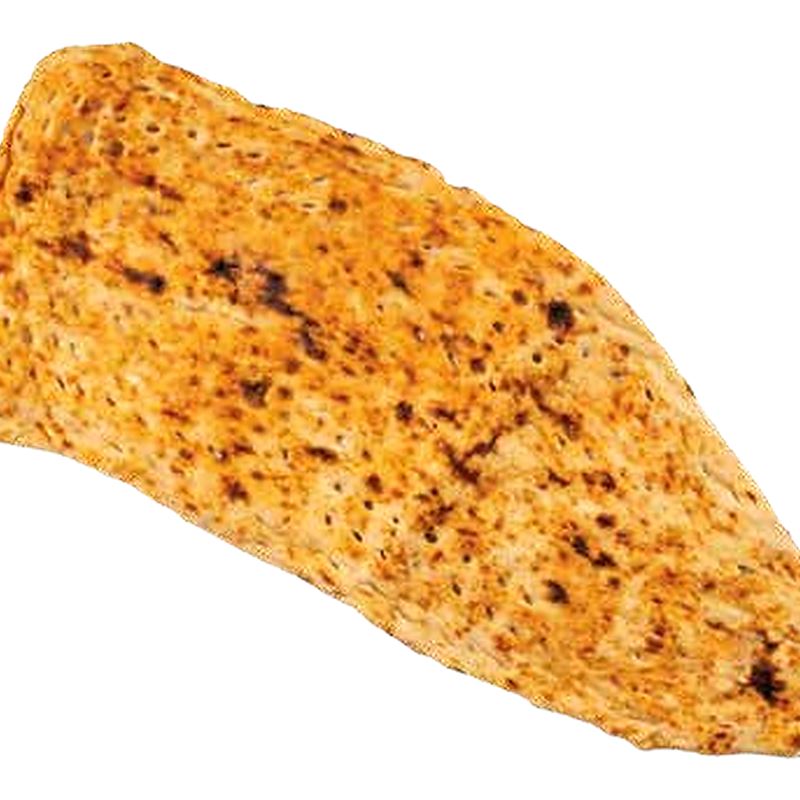
Abgoosht is ab, water, plus goosht, meat: meat-water. Dizi is not a food at all. It is the narrow stone or clay pot that same broth is cooked and carried to the table in, so ordering dizi is ordering the vessel. Tahdig is tah, bottom, and dig, pot: the crust of rice that forms on the floor of the pan. Sangak grows out of sang, stone, with a small diminutive ending, because the bread is baked on a bed of hot pebbles. Torshi comes from torsh, sour, so the pickles are the rare thing named for a taste.
Words that are really techniques
Khoresh comes from khordan, to eat: the thing you eat rice with. Ash is a thick pottage old enough to have named the trade, since an ashpaz is an "ash-cooker", a cook, and the ashpazkhaneh is the kitchen. Kateh is rice cooked until it has drunk all its water, with no draining. Chelo is rice parboiled, drained and steamed plain, while polo is the same rice steamed with something folded through it, which is why the something is bolted to the front of the word: baghali polo is fava bean rice. Kuku names a form rather than an ingredient, eggs set around a filling and cooked flat, so kuku sabzi is the herb one.
Kababs are adjectives
Kubideh means pounded, for meat worked by hand onto the skewer. Barg means leaf, for meat cut thin. Joojeh means chick, a young bird. The marinade rarely gets into the name; the shape and the animal do.
Reading a name you have never met
| Name | Literally | What it is |
|---|---|---|
| Kalle pache | head and trotters | the parts, simmered long |
| Abgoosht | meat-water | lamb and chickpea broth |
| Dizi | the pot | abgoosht, named for its vessel |
| Sangak | little stone | bread baked on hot pebbles |
So the method is: cut the name in two and look for a container, a body part, a cooking word or a shape. A word ending in -polo is rice with the first half stirred through it; a word starting with ab- has broth in it. Exceptions exist, and mirza ghasemi is said to carry the name of the man who first made it, but they stand out because everything around them is so literal.
Bring that habit to a Persian table in Dubai and the menu reads as a description, not a brand. Our own list is explained one by one in the full menu guide. The kitchen runs around the clock for dine-in and for delivery across Dubai, orders on the site are card prepay only, there is no cash on delivery, delivery is free over AED 300, and an order can be set for a future hour. The phone is 04 321 8882.
