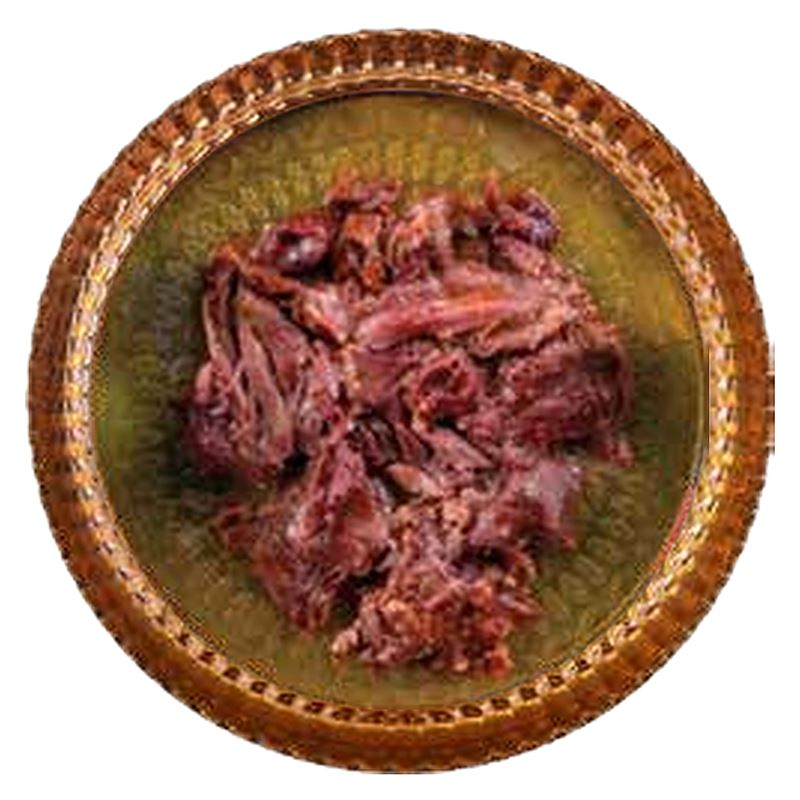
Why is lamb the meat at the centre of Persian cooking?
Because of the ground it comes from. Iran is a plateau — a high, dry table of land fenced in by the Zagros and Alborz mountains and hollowed out in the middle by two enormous salt deserts. Most of it receives very little rain, and only a small share of it will grow a crop without irrigation. What it does have, in almost unlimited quantity, is rough grazing: thin grass, thorny scrub, stubble left standing on harvested fields, and mountain slopes far too steep for a plough. None of that is food for a human being. A sheep converts all of it into milk, fat, wool and meat. That single act of conversion is the reason lamb sits at the centre of the Persian kitchen while beef, for most of history, stayed at its edge.
The relationship is also extremely old. The foothills of the Zagros are among the places where sheep were first domesticated, roughly ten thousand years ago. So the bond between Iranians and sheep is not a preference that developed alongside the cuisine — it is older than the cuisine, older than the cities and the poetry. The cooking assembled itself around an animal that was already standing there.
Herding shaped the calendar as much as the menu. Tribal confederations such as the Bakhtiari and the Qashqai spent centuries moving their flocks twice a year between qeshlaq, the warm winter pasture, and yeylaq, the cool summer pasture high in the mountains — a migration of hundreds of kilometres on foot, with the whole household walking beside the animals. A cuisine built by people who move keeps what travels: dried herbs, dried whey (kashk), rendered fat, salted preserved meat — and a live animal that walks to the next camp on its own legs and stays fresh until the day it is needed.
What can a sheep do on the Iranian plateau that a cow cannot?
Nearly everything that matters. The comparison is not about which animal tastes better. It is about which animal survives the arithmetic of a dry country.
| What the land demands | Sheep | Cattle |
|---|---|---|
| Water | Modest needs; can graze a long way from a river | Heavy needs; must stay near reliable water |
| Forage | Thrives on thin grass, thorny scrub and stubble | Needs rich pasture or grown fodder |
| Terrain | Climbs rocky, steep, broken mountain ground | Suited to flat, green, well-watered land |
| Seasonal migration | Walks hundreds of kilometres between winter and summer pasture | Poorly suited to long annual movement |
| Household scale | One animal feeds a large gathering — the right size for a family event | Far more meat than one household could use before refrigeration |
| By-products | Wool, milk for yoghurt and kashk, tail fat for cooking, skin, bone, gelatin | Milk and hide, but much less useful to a household on the move |
One detail deserves its own sentence. Many Iranian sheep are fat-tailed breeds, carrying a heavy reserve of fat — dombeh — at the base of the tail. Before bottled oils, that rendered fat was the cooking medium of much of the plateau. It is why so many traditional Persian dishes carry a lamb flavour even when there is barely any meat in the pot: the fat was doing the seasoning.
Why does a sheep appear at every Persian celebration?
There is a Persian saying that the guest is beloved of God, and the plateau has a very literal way of proving it. Slaughtering a sheep is the largest single gesture an ordinary household can make. It feeds dozens of people, it cannot be done quietly, and it cannot be taken back. That is exactly what makes it meaningful. So the sheep became the currency of important moments: a wedding, the birth of a child, the safe return of a traveller, a vow fulfilled, a move into a new house, and above all the votive nazri cooking of Muharram, when whole neighbourhoods are fed from pots lit long before dawn.
Even when the whole animal is not slaughtered, it is still the organising idea. A few small pieces of lamb give a khoresh its depth. A skewer is the centre of a kabab. A bone and a handful of chickpeas make abgoosht, which is the philosophy in miniature: you drink the broth first, then mash what is left and eat it second — two meals out of one pot, and nothing thrown away.
Is nose-to-tail cooking a sign of poverty, or a sign of respect?
It reads as poverty to people who have never had to think about where an animal comes from. On the plateau the arithmetic is different. That animal represents a year of pasture, a shepherd walking behind it, water in a country where water is never wasted, and a family's own labour. To take the loin and throw the rest away would insult all of it. Persian has a heavy word for waste — esraf — and it is not a neutral, budgetary word. Wasting is treated as a flaw of character.
So every part was given a name, a technique and a proper occasion. Bones went into broth. Trotters gave gelatin. Tail fat became the cooking fat. Tripe was cleaned patiently for hours. The head was simmered whole. Tongue, brain and cheek each found their own admirers. Wool was spun, skin was tanned, sinew was used. The result is not a poor man's cuisine but a body of knowledge — dishes that take longer, demand more skill, and are valued more highly than a fast grill.
Look at where those parts ended up socially. Brain and tongue are the pieces offered to the guest, the elder or the child — the people you are trying to honour, not the ones you are trying to fob off. It is the same logic that turned the cheek into a prized cut in fine European kitchens after generations of being considered scrap. Difficulty plus time plus skill equals status, in every cuisine that has ever taken itself seriously.
How does all of this end up as kalle pache?
Kalle is the head. Pache is the trotters. It is the philosophy at its most literal: a complete dish, with its own vocabulary, its own etiquette and its own hour of the day, built entirely out of the parts a careless kitchen discards. And it is built the only way those parts can be built — with time. Bone, cartilage, skin and connective tissue do not soften with heat alone. They need long hours in slow water to release their gelatin and collagen, to turn something hard into something you can eat with a spoon. That is why kalle pache is cooked overnight and eaten at first light: the timetable was written by the ingredients, not by fashion. The old broth houses of Tehran opened when the bakers did, because both had been working while the city slept.
What we cook at Shaun the Sheep on Jumeira Street is Tehran-style, and it follows that timetable exactly. Everything is hand-cleaned before dawn, then simmered for around fourteen hours in a copper pot with onion, turmeric and garlic, and skimmed every hour until the broth is the colour of strong tea. Copper for steady, even heat. Onion, turmeric and garlic for depth rather than heat — this is not a spicy dish. And the skimming above all, because the difference between a broth that tastes clean and one that tastes muddy is mostly what you take off the top, hour after hour, while nobody is watching.
What does a Persian nose-to-tail table look like in Dubai?
Much as it looks in Tehran. Communal platters come for one, two, three or six people, so the table shares instead of each person owning a plate. Singles let everyone claim the piece they actually love: brain (maghz), tongue (zaban), trotters (paye), lamb cheek (bonagoosh), meat, tripe (sirabi), brain soup, plain soup, or the Special Mix. The sides carry half the meal — sangak or special sangak for tearing and dipping, mixed torshi, and the seven-year garlic pickle, black and sweet from patience of its own. Tea throughout, doogh for those who grew up on it, lemonade for the children. It is all on the menu and order page, and if you would rather bring the family to Jumeira Street you can reserve a table.
Is the lamb halal, and is this dish right for everyone?
Yes to the first: in the UAE meat is halal by law and standard, and the lamb we serve is halal. As for the second — kalle pache is a rich dish, and Iranians have always treated it as a restorative rather than an everyday plate, eaten slowly, in the morning, with bread, lime and tea rather than in a hurry. We offer that as culinary tradition, not medical advice, and we make no health claims or promises of any kind. If you have a medical condition or you are watching something specific in your diet, talk to your doctor. If you have a food allergy, contact the restaurant directly before ordering and we will tell you exactly what is in a dish.
How do I try it in Dubai?
Shaun the Sheep is at 64 Jumeira Street, Jumeirah 1, open 24 hours a day, seven days a week. Delivery covers Dubai with the fee chosen by area at checkout, and pickup and dine-in are always open. If it is your first time, keep it simple: a small platter, a side of sangak, a glass of tea, and start with the broth before anything else. Ten thousand years of a dry plateau are dissolved in it.
