Are tomato and potato really newcomers to Persian cooking?
Yes, and by a long way. Both plants are native to the Americas — that much is not in dispute — so for most of the long history of Persian cooking neither one was there to be used. They travelled east well after the shape of the cuisine was set: the slow stew, the layered rice, the sour note held against richness. Yet today a gheime without its crown of fried potato looks unfinished, and a dizi without tomato tastes like something has gone missing.
That tension is worth sitting with. Two of the most recent arrivals on the Iranian table are also two of the least negotiable.
How did something this new come to feel ancient?
Partly because the cuisine had a place ready for both. Persian cooking is built on long, quiet simmering, on colour and body developed slowly, and on a starch that carries everything else. Tomato and potato each stepped into a job the kitchen already understood, so nothing had to be redesigned around them.
The names still carry the evidence. The usual reading of gojeh farangi, the Persian for tomato, is the farangi — foreign — plum, and sib zamini, potato, is simply the earth apple. Both names describe something that turned up and had to be explained. Both are still in daily use, and neither sounds foreign to anyone now.
What carried the sourness before tomato?
Here is the correction most people need: tomato is not the sour element in a Persian pot and never took that job over. Sourness in this cuisine comes from dried lime, verjuice pressed from unripe grapes, pomegranate, fresh lime and sumac — a pantry generally traced to a much older layer of the cooking, and one still doing the work today. Gheime and dizi both lean on dried lime for their tang, tomato or no tomato. For the full argument on why that sour note matters at all, our guide to what makes Persian food different from Arab, Turkish and Indian cooking sets it out.
So what does tomato actually do?
Colour, body and a low background sweetness. In a stew the paste is fried in the oil at the edge of the pot until it darkens and smells sweet rather than sharp, and that single step is what turns a thin, orange-tinted sauce into a deep red one. It is a Persian technique applied to an imported ingredient, not an imported sauce dropped into a Persian pot. That is what absorption actually looks like.
In abgoosht, the lamb-and-chickpea stew also called dizi, tomato does that work alongside chickpeas, white beans, potato, onion and dried lime. The dish as it is made today carries both late arrivals, and that is worth saying plainly: a stew can be one of Iran's oldest one-pot meals and still hold ingredients that reached it late. The two facts sit together without much trouble.
What does the fried potato do in gheime that nothing else does?
It is the only crisp thing in the bowl. Gheime is soft the whole way through — split peas gone glossy, small cubes of lamb, a sauce that pours. Shoestring potatoes fried until golden and scattered over at the last moment give the dish an edge to break through, and they keep that edge while you eat. Nothing else on the Persian shelf does the job as well. Fried onion goes sweet and limp in sauce, nuts are wrong, and bread is already on the side.
Our gheime recipe calls the fried-potato crown the signature rather than a garnish, and that is the honest position. Leave it off and you have made a good split-pea stew; you have not really made gheime.
Why does estamboli polo want potato when it is already a rice dish?
Because potato is doing two different jobs there, and neither of them is simply more starch. Sliced across the base of the pot it becomes the crust, a tahdig that comes out gold and sturdy where rice alone is more delicate. Cubed through the body of the rice it stays soft and takes on the tomato, giving you pieces to find instead of one uniform texture. It also lets the meat be optional: estamboli polo works as a meatless dish precisely because the potato and the beans carry it.
Which Persian dishes never took either one on?
Plenty, and that is the other half of the picture. Kalle pache is the clearest case. The pot stays short, and neither tomato nor potato goes into it, because a broth that should read like strong tea against the light does not want acid, sugar or starch clouding it. Sangak, the herb plate and the tea owe nothing to the New World either. Torshi is the interesting exception: the chilies and capsicum that so often go into a mixed pickle came from the same direction the tomato did. A cuisine can absorb something without absorbing it everywhere.
Does an ingredient arriving late make a dish less authentic?
No, and the idea that it does gets the history backwards. Cuisines are not sealed rooms. Persian cooking took these two plants the way it has taken a good deal else — by putting them to work on its own terms and then forgetting they were ever new. A tradition that stops absorbing is not purer, only stopped.
The useful test is not where an ingredient came from but whether it earns its place in the pot. Fried potato on gheime earns it. Tomato in dizi earns it. In kalle pache neither does, which is exactly why neither is there. That is a kitchen making decisions, not a tradition losing its way.
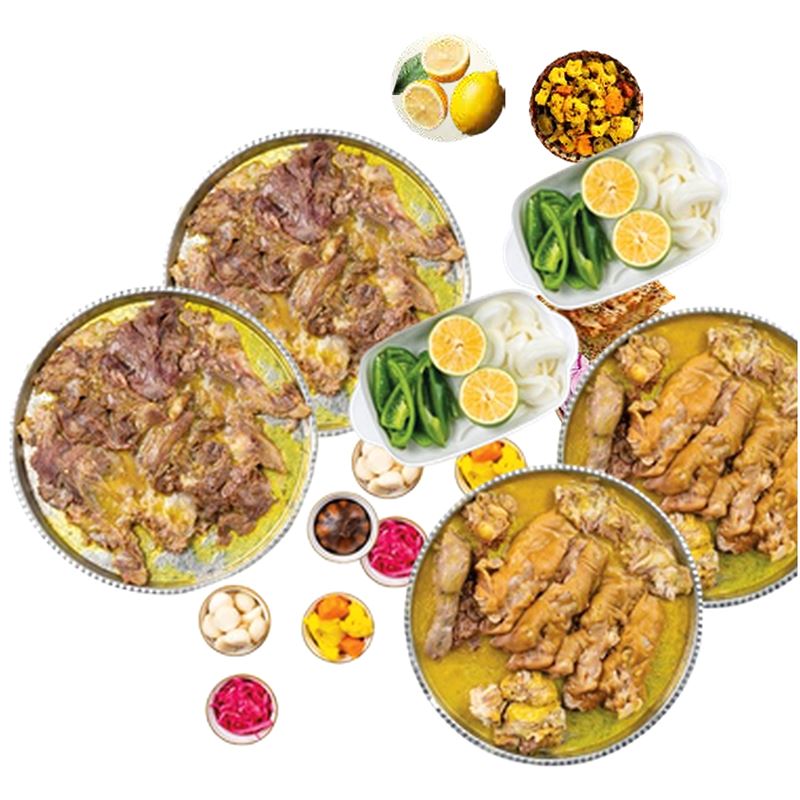
At Shaun the Sheep, 64 Jumeira Street in Jumeirah 1, the work goes into that other tradition: lamb head and trotters simmered about fourteen hours, eaten with sangak and torshi, around the clock, seven days a week. Delivery reaches 141 Dubai areas with the fee for your area shown at checkout, pickup and dine-in are both open, and you can schedule an order for a later time. For anything the menu does not answer, call 04 321 8882 and ask.
