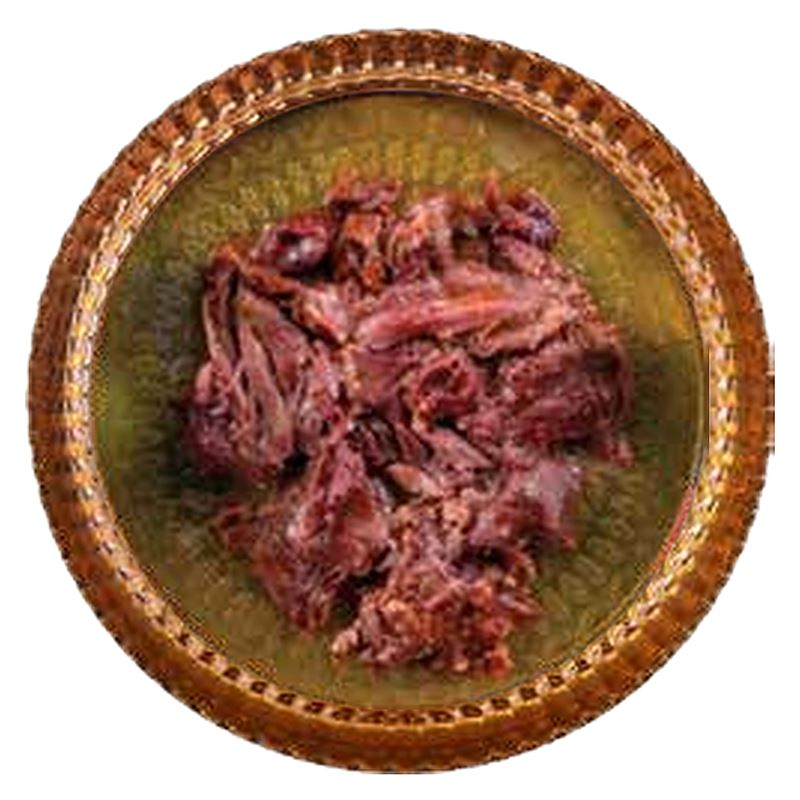
We do not publish an iron figure for kalle pache, and this page will not give you one. Our food has never been laboratory-tested, so we hold no data on iron, and a restaurant that invents a nutrition number is doing something worse than a restaurant that admits it has none. No milligrams here, no percentage of a daily value, no line calling our bowl a good source of anything.
What we can do is describe the dish accurately, say which items on the menu are meat-forward and which are lighter, and be plain about the rest. Anaemia is a medical diagnosis. It belongs to your doctor and, if you have one, to your dietitian. It does not belong to a kitchen on Jumeira Street, however long we keep the pot going.
This is not medical advice. If you have been told your iron is low, or you are thinking of changing what you eat or starting a supplement because of a blood result, speak to your doctor or a registered dietitian first. Iron taken without medical advice can be harmful, which is exactly why this is a doctor's question and not a menu question.
Why is there no iron number on this page?
Because we do not have one, and a figure printed by a restaurant carries an authority it has not earned. It would be easy to lift a number from a general food database, put our name above it and let it travel. People would quote it back to us for years. It would also be a fabrication, because that number describes someone else's sample, cooked another way, in another country.
There is a second reason, and it would survive even if we tested a bowl tomorrow: variation. Soup and The Khan's Platter are not the same food in any useful sense. Even two orders of the same item differ. Cuts differ, trimming differs, how much broth ends up in the bowl differs, and how much Sangak Bread you eat alongside it differs. One printed figure would be false precision dressed as science, and we would rather write a paragraph like this one. It is the same position we take on protein and collagen and on cholesterol and heart health.
What can honestly be said about the dish?
That it is a lamb dish built on meat and organ meats, and that red meat and organ meats are the foods most often discussed when iron comes up in general nutrition guidance. That sentence is doing careful work. It describes a category of food, not a measurement of our bowl. It tells you which conversation this dish sits inside. It does not tell you what a serving delivers, and it should not be read as though it did.
The other honest thing we can offer is transparency about contents. We can tell you exactly what arrives: lamb cheek, tongue, brain, eye, trotters, tripe, meat, broth and bread, in whatever combination you choose. If you are working with a dietitian, that list is more useful to them than any number we could invent, because a real description can be applied to a real plan. If the dish is new to you, our introduction to kalle pache explains what each part is.
Can dinner fix anaemia?
No, and we will not imply otherwise. Anaemia is a diagnosis, not a feeling of tiredness. It is identified through blood testing, its causes are various, and different causes call for genuinely different treatment. Some of those causes have little to do with what a person eats, which is exactly why testing exists.
This is also why the instruction to eat more red meat, where it is appropriate at all, comes from a clinician who has seen your results and knows your history. It is not advice a restaurant can hand out to everyone who reads a blog post. Food is not a treatment, and this article is not one. If you have a diagnosis, the useful thing we can give you is an accurate description of what is in the bowl, so that you and the person treating you can decide together.
Which items are meat-forward, and which are lighter?
This is the part you can actually use. If you have been told to build meals around meat, or to keep them light, here is roughly where each of our singles sits, described by what lands on the plate rather than by any nutrition claim.
| Item | What arrives | Where it sits |
|---|---|---|
| Meat | The lamb meat portion | The most meat-forward single on the list |
| Lamb Cheek | The cheek, simmered until it gives way | Meat-forward, denser and more savoury |
| Tongue | Simmered tongue, sliced | Meat-forward, soft and mild |
| Brain | Brain served on its own | Soft and rich rather than meaty |
| Brain Soup | Brain with broth | Between the light end and the rich end |
| Trotters | The gelatinous parts | Texture-led rather than meat-led |
| Tripe | Tripe on its own | Also texture-led, with a clearer flavour |
| Eye | A small, soft, traditional portion | A taste for the curious, not the weight of a meal |
| Special Mix | Several parts in one bowl | Mixed by design, not a single-part order |
| Soup | The broth on its own | The lightest way into the dish |
If you want the gentlest possible start, ordering Soup on its own is the route we point people to most often. If it is the meat portion you want to understand, we wrote about goosht, the lamb meat plate, separately. And if you have never tried any of it, what it actually tastes like has a page of its own.
What is in the platters, and does the bread matter?
The platters include bread, which is worth knowing before you order if bread is something you and a dietitian are counting. Single Dish is lamb cheek, one trotter, half a brain and half a bread. Double Dish is lamb cheek, two trotters, half a brain, tongue, one eye and a whole bread. The Full Dish is two lamb cheeks, meat, four trotters, a whole brain, tongue, two eyes and two breads. The Khan's Platter is four lamb cheeks, two meats, eight trotters, two brains, three tongues, four eyes and five breads, and it is built for a table rather than for one person.
Ordering singles instead of a platter is the simplest way to control exactly what reaches you, bread included. Our full menu guide lays out every combination in one place.
Why do people call it restorative food?
Because of custom, and we present it as custom rather than as medicine. Across Iran, Iraq, Turkey, the Levant and the Gulf, slow-cooked lamb head and trotter dishes have a long-standing reputation as strengthening food, eaten early in the morning and often before a hard day. In many households it is what gets made for someone who has been unwell, or for someone who has been working outdoors in the cold. That reputation is old, and as a cultural fact it is real.
What we are not doing is converting a reputation into a health claim. People believe it and people do it, and the belief is part of why the dish has survived. Whether it maps onto anything measurable in your blood is a question for a laboratory and a clinician, and we are neither. If the cultural side interests you, our piece on what is claimed and what is actually known takes the same careful line, and kalle pache in Dubai covers where the dish sits in the city now.
Does the cooking change the answer?
The method is the one part we can describe in full. Heads and trotters are hand-cleaned and trimmed. They are blanched and that first water is thrown away. Then they go into a copper pot with onion, turmeric and garlic and simmer for about fourteen hours, skimmed again and again as they go. Seasoning at our tables is the diner's job rather than the kitchen's: lime, cinnamon and garlic are added by you, to your own bowl. Our lamb is sourced to the UAE halal standard, which we explain here.
Does fourteen hours of simmering change what any particular nutrient does in the bowl? We do not know, because we have not measured it, and we are not going to guess in public. The full method is written up here if you would like to read it step by step.
Should I take an iron supplement instead?
That is a question for your doctor, and one of the few places on this blog where we will be blunt. Iron taken without medical advice can be harmful, and a blog mentioning organ meat is not a reason to start. Do not start, stop or change any supplement or prescription on the strength of a restaurant article. Get tested, get the result explained to you, and follow the plan the person treating you gives you.
If that plan happens to include a dish like ours, come and eat it knowingly, with the descriptions above in hand. That is the whole of what we can responsibly offer.
How do I order if I am eating to a plan?
By choosing your items precisely. Customising here means choosing which parts and which items you order, not sending instructions to the kitchen. There is no notes or special-requests field anywhere in the flow. If you have a question about a specific item before ordering, phone 04 321 8882. It is our only contact channel, with no WhatsApp, no email and no chat window, and the kitchen is awake, so someone answers.
The kitchen at 64 Jumeira Street, Jumeirah 1 is open twenty-four hours a day, seven days a week, and there is only the one. You can order for delivery across Dubai, collect it yourself, or eat in, and tables can be reserved. Ordering is done as a guest, with no account, no password, no saved card or address, no order history and no app, and payment is secure online card prepay when you place the order. Delivery is free on orders over AED 300, and below that the fee depends on your area and is shown to you before you pay. Once payment goes through, your order gets its own page, the kitchen accepts it and sets an estimated time, and the rider phones you on arrival, so keep your phone close. You can also choose a future time up to about two days ahead, which helps if you are planning meals around appointments. There is no self-service cancel or edit button, so if something needs changing after you have paid, phone straight away. If we cannot fulfil an order, we reject it with a reason and refund automatically. The step-by-step ordering guide and the delivery guide cover the rest, and you can start from our menu and order page whenever you are ready.
What would make us publish a number?
A laboratory result on our own food, with the method and the sample described beside it, so a reader could judge how much weight to give it. If that ever happens we will publish it plainly, including anything in it we would rather not see. Until then the honest sentence is the short one: we do not know, we will not pretend, and the person who can actually answer your iron question is the one holding your test results.
