The honest answer first: we are a lamb kitchen. Kalle pache is lamb — head and trotters, cooked long and slow — and nearly every cooked plate we serve is built on it, including the ones whose names sound light. If you do not eat red meat, you will be ordering around our menu rather than from it.
What genuinely remains for you is a short list: the Omelette, Sangak Bread and Special Sangak, Mixed Torshi and Garlic Torshi, the plate add-ons, and the drinks. Among friends who are eating lamb, that can make a good hour at the table. As a meal built for you, it is not one, and we would rather say so on this page than let you discover it after you have paid.
What kind of kitchen is this, plainly?
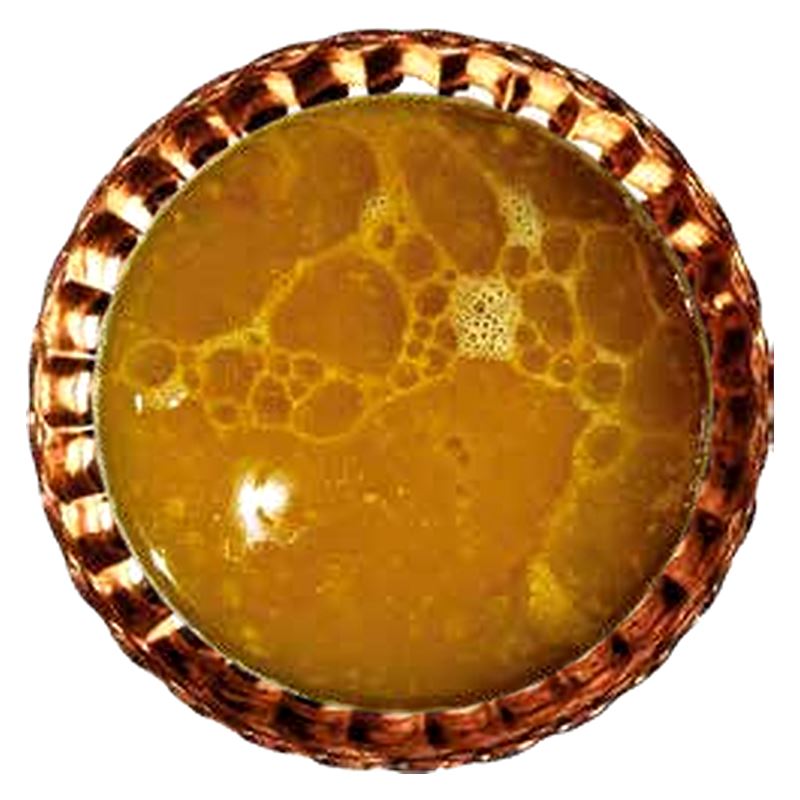
One kitchen, one family of dishes. Shaun the Sheep is at 64 Jumeira Street in Jumeirah 1, Dubai, open twenty-four hours a day, seven days a week, and what we cook is kalle pache. Heads and trotters are hand-cleaned and trimmed, blanched with that first water thrown away, then simmered about fourteen hours in a copper pot with onion, turmeric and garlic, skimmed again and again as the hours pass. The seasoning most people associate with the dish — lime, cinnamon, garlic — is added by the diner at the table, not by the kitchen. Our lamb is sourced to the UAE halal standard. If you want the long version, how it is made and what kalle pache actually is both go into it properly.
That single subject is the whole idea of the place, and it is also the reason this article exists. There is no second menu behind the first one. No chicken, no fish, no grill section waiting to be asked for. What is written down is what the kitchen cooks, at three in the afternoon and at three in the morning alike.
Which items are lamb, exactly?
Nearly all of them. Every item on the singles list is a lamb item: Eye, Brain, Meat, Tongue, Trotters, Tripe, Lamb Cheek, Brain Soup, Soup and Special Mix are all parts of the same animal, prepared the same long way, and all four platters are built from the same list.
We spell that out because the singles list is where people usually go looking for an exception. There is not one hiding in it. If you want to know what any of it tastes like out of curiosity rather than intent, the taste article describes it without romance.
So what can I actually order?
Here is the inventory, with nothing dressed up to look bigger than it is.
| On the menu | What it is | The honest caveat |
|---|---|---|
| Omelette | The one cooked dish here that is not a lamb dish | We do not describe it as vegetarian or meat-free — see the section below |
| Sangak Bread, Special Sangak | Persian flatbread, plain and in the version listed as Special Sangak | Wheat bread; if gluten matters to you, read the allergens guide and phone before ordering |
| Mixed Torshi, Garlic Torshi | Persian pickles — a mixed one and a garlic one | Usually sharp and salty; a side, not a course |
| Capsicum, Onion, Fresh Chili, Pickled Green Chili, extra Sangak | Add-ons you attach to an order | They round out a plate; they do not build a meal on their own |
| Water, Tea, Black Tea, Kettle of Tea, Lemonade, Doogh, soft drinks | The full drinks list, and a kettle is easily shared across a table | Doogh is commonly a salted yogurt drink, so it is dairy |
If the Omelette is the part you are weighing up, there is a whole piece about it, and the allergens guide is the right place to start with gluten and dairy questions.
Isn't the Soup the light option?
No, and this is the assumption we most want to head off. Soup and Brain Soup are lamb dishes. The word soup invites people to picture something delicate and meatless; here it means the liquid that fourteen hours of lamb produces, which makes it one of the richest things on the menu rather than the lightest.
The platters are lamb too, all four of them. Single Dish is lamb cheek, one trotter, half a brain and half a bread. Double Dish is lamb cheek, two trotters, half a brain, tongue, one eye and a whole bread. The Full Dish scales up to two lamb cheeks, meat, four trotters, a whole brain, tongue, two eyes and two breads. The Khan's Platter goes further again: four lamb cheeks, two meats, eight trotters, two brains, three tongues, four eyes and five breads.
One detail worth knowing if you are going to be at the table anyway: the bread is included in the platters. A table sharing a Full Dish already has two breads on it, and the Khan's Platter arrives with five. Bread is the part of a platter a non-lamb eater can share without ordering lamb. The full menu guide lays every item out if you would rather check for yourself.
Is the Omelette vegetarian?
We are not going to tell you that it is. It is the one cooked dish on our menu that is not a lamb dish, and that is as far as our honesty stretches. We have published nothing about how it is prepared in relation to the lamb, one kitchen cooks everything here, and it would be easy and dishonest to imply a separation we have never described.
If that distinction matters to you — and for many people it matters a great deal — phone 04 321 8882 and ask before you order. That number is our only contact channel: no WhatsApp, no email, no chat window, no contact form. We would rather answer a real question on the phone than sell you something you would not have chosen.
The other thing we will not do is oversell it. An omelette with warm sangak and a dish of torshi is a genuinely good plate. It is a side-sized pleasure sitting next to a platter, not a swap for one, and anyone telling you otherwise is selling.
Can the kitchen leave the lamb out, or cook something off the menu?
We make no promises of that kind. Customising an order here means choosing which parts and which items you want — that part is real, and it is why the singles list exists at all — but it does not mean changing how a dish is cooked, or having something made that is not on the menu.
There is also no kitchen-instructions or delivery-notes field anywhere in our ordering flow, so there is nowhere to type a request even if you wanted to. Anything of that sort goes through 04 321 8882, and the useful time to call is before you order rather than after.
Does this work for a mixed table?
It works in one case and fails in another, and the difference is expectation. It works when one person at the table is content with an omelette, warm bread, pickles and a pot of tea while everyone else works through lamb, because the company is the point of the evening and the food is the setting. It fails when that person arrives expecting a meal built for them. Nothing on our menu is built for them, and an hour of watching other people eat the interesting food is not a good evening.
Practically, the tidy way to order for a mixed table is to let the lamb eaters take a platter — the bread is already in it — and then add an Omelette, extra Sangak, Mixed Torshi or Garlic Torshi, and drinks for whoever is not eating lamb. A Kettle of Tea travels round a table well and lasts the length of the meal. If you are hosting rather than ordering for yourself, the piece on bringing a vegetarian friend covers that side of it.
How do I ask a question before I order?
By phone, because there is no other way. 04 321 8882 is the only channel we have, and the kitchen is open twenty-four hours a day, seven days a week. If you want to ask how the Omelette is handled, or whether anything else on the list suits you, that call is the whole process — there is no form to fill in and no inbox to write to.
Dine-in, pickup or delivery?
All three exist. You can eat in at Jumeirah 1 and tables can be reserved, you can collect an order yourself, and we deliver across Dubai — free over AED 300, with the fee below that depending on your area. The delivery article covers that side, and the Dubai piece is useful if the dish is new to you in this city.
If you are the one not eating lamb, dining in is usually the better version of the evening. Bread is best warm, tea is better by the kettle than by the cup, and being at the table is most of what you came for anyway.
How does ordering and paying work?
Payment is secure online card prepay, and only that. There is no cash on delivery and no paying on arrival. There is no account, no sign-up, no password, no saved cards or addresses, no order history and no app: you order, you pay, and that is the whole relationship.
After payment your order gets its own page. The kitchen accepts it and sets an estimated time, and the rider phones you on arrival. You can also schedule an order for a future time up to about two days ahead, which helps when you are planning an evening around other people. If the kitchen cannot fulfil what you asked for, it rejects the order with a reason and the refund is automatic. There is no self-service cancel or edit button anywhere, so if something needs to change, phone 04 321 8882 immediately. The step-by-step guide walks the whole flow.
What if you avoid red meat on medical advice?
Then the most useful thing we can do is describe the plate accurately, which is what this article is for. We are cooks. We do not know your situation, we will not tell you what is good for you, and we will not tell you how often anything should be eaten. This is not medical advice — ask your doctor or a registered dietitian. If your question is about gluten or dairy specifically, start with the allergens guide and then phone us with whatever it does not answer.
When is the honest answer "somewhere else tonight"?
When you are the one choosing where the group eats and the plan has to feed you properly. A kitchen with one cooked non-lamb dish is a poor place to carry that responsibility, and we would rather lose the order than have you sit through an evening being polite about it.
If you are simply unsure about offal rather than avoiding meat altogether, that is a different question, and this piece is honest about it. If halal sourcing is what you are checking, we answer that plainly too. And if none of this is your evening, have a good dinner elsewhere, then come back to our menu another night with someone who has been talking about kalle pache for years.
A kitchen that tries to be everything to everyone is usually not much to anyone. We would rather be exactly what we are, and say clearly when that is not what you need.
