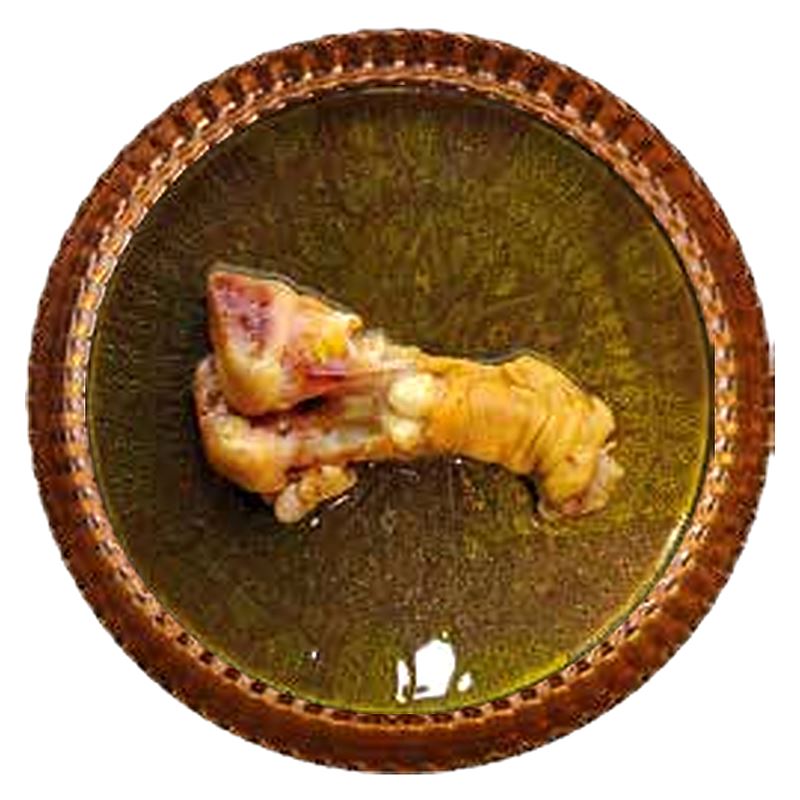
Siri means head, paya means trotters. So is kalle pache the same food?
Yes, and more literally than most people expect. Siri is the head. Paya are the trotters. The Persian name kalle pache is built from the same two words in the same order: kalle is the head, pache the trotters. Two languages, one cut of one animal.
So if siri paya is your Sunday morning, nobody is introducing you to a new food here. You are meeting a second way of cooking a food you already know, and the honest way to put it is that the Persian version will taste plainer to you at first.
Plainer, not worse. The whole difference sits in what happens after the butcher.
What is maghaz, zabaan or ojhri called on a Persian menu?
Say the Persian name and the kitchen knows exactly which piece you mean.
| You call it | Persian name | On our menu |
|---|---|---|
| Siri (head) | kalle | the head parts, as separate items |
| Paya (trotters) | pache, paye | Trotters |
| Maghaz (brain) | maghz | Brain, or Brain Soup |
| Zabaan (tongue) | zaban | Tongue |
| Ojhri (tripe) | sirabi | Tripe |
| Cheek | bonagoosh | Lamb Cheek |
| Boti, plain meat | goosht | Meat |
| Eye | cheshm | Eye |
If you would rather recognise the pieces by sight than by name, telling the parts apart on the platter goes through the giveaways one by one. The same cut carries other names around the region, and paye, baja and kalle pache explained side by side covers the Arabic and Iraqi ones.
Where did the masala go?
Here is the fork in the road. Siri paya is usually a built dish: onions browned, ginger and garlic, a masala fried until the oil separates, then the head and trotters go in and the pot thickens into gravy. The flavour is layered in by the cook.
Kalle pache is a stripped dish. Head and trotters, water, and a long quiet simmer — about fourteen hours in our kitchen — with very little else. In this tradition nothing is fried first and nothing is added to thicken the pot; the body of the broth comes out of the bones themselves. The cook's work is time and cleaning, not seasoning.
One tradition asks the masala to do the work. The other asks the animal to.
Why is the broth pale instead of a red-brown gravy?
Because nothing colours it. No fried onion base, no turmeric and chilli, no browning step at all. What you get is a pale golden broth, loose while it is steaming and thick enough to coat a spoon by the end of the bowl, with the meat alongside rather than sunk in sauce.
The stickiness nihari gets from long-fried masala and a flour slurry, kalle pache gets from fourteen hours of collagen. Same feeling on the lips, completely different route to it.
Plainer, not blander, so where does the seasoning happen?
In the bowl, by the person eating. This is the part that catches siri paya eaters out: in this tradition the seasoning is done at the table, not in the pot.
- Lime — traditionally squeezed straight into the broth. It does the job chilli does for you, cutting the fat and waking the bowl up.
- Cinnamon — a pinch over the surface. It sounds wrong in a savoury lamb bowl, and it is the most Persian move on the table.
- Salt — at the end, to taste, rather than in the pot.
- Garlic Torshi or Mixed Torshi — sharp pickles between mouthfuls, used the way you would use a raw green chilli. Both are on the menu.
- Fresh Chili or Pickled Green Chili — on the add-on list if you want heat, so the heat is yours to choose.
To check what comes with the bowl, call 04 321 8882 and ask.
Honestly: kalle pache is savoury rather than hot, and no amount of chilli on the side turns it into nihari. Why kalle pache tastes savoury rather than hot explains what carries the flavour instead.
You already eat siri paya. What should land on your table first?
Order Trotters. That is the direct answer. It is the piece you know best, the texture is the same sticky, gelatinous one you go looking for, and it lets you judge an unfamiliar broth on familiar ground.
After that, in the order most people find comfortable:
- Meat and Tongue — soft, mild, no surprises.
- Lamb Cheek — dense and deeply meaty, the closest thing here to a good boti.
- Brain, or Brain Soup if you would rather meet maghaz in liquid than on a plate.
- Special Mix, or one of the platters — Double Dish, The Full Dish, The Khan's Platter — if you would rather compare several parts in one order. To check what any of them holds, call 04 321 8882 and ask.
Add Sangak Bread to whatever you choose. In practice it is not optional.
Is there naan or rice, or is it sangak all the way?
Sangak, and it is the one substitution that is not on offer. Kalle pache is a bread dish from beginning to end. You tear sangak — a long, thin, blistered flatbread traditionally baked on stones — and you either dip it or tear it into the bowl and let it soften in the broth.
There is no rice with it. If you finish paya or nihari with rice on the side, that habit has no equivalent here. The bowl was built around bread, not beside it.
The honest part: what a nihari regular will not find here
You will miss the heat. You will miss the depth that only comes out of a long-fried masala, and the ginger julienne and coriander over the top. If your definition of this cut is thick red gravy on a torn piece of naan, the first few mouthfuls will feel like something has been left out.
What replaces it is the meat itself, undisguised, and a broth that tastes of the animal rather than of the spice cabinet. It is not a better or worse nihari; it is the other thing entirely, and the trotters and the sangak are the shortest way in. To see the two lined up properly, kalle pache against nihari, paya and haleem sets them out side by side.
How do you order it in Dubai at four in the morning?
Shaun the Sheep is at 64 Jumeira Street in Jumeirah 1, and the kitchen runs 24 hours a day, seven days a week, one kitchen and one location. Dine in, collect it yourself, or have it delivered across 141 Dubai areas, with the fee for your area shown at checkout. The lamb is halal.
You can also schedule an order for later, dawn included — the hour this food has traditionally been eaten. The site works in English, Arabic and Farsi. For anything you need to confirm before you come, call 04 321 8882 and ask.
