What is sabzi khordan?
Sabzi khordan is a plate of fresh raw herbs that sits on a Persian table for the whole of a meal. The name means herbs for eating, as opposed to herbs for cooking, which is a different plate doing a different job. It comes out whole and undressed — no oil, no lemon, no chopping — usually with radishes tucked in among the leaves.
If you have never met one, the honest first reaction is: what am I supposed to do with this? The short answer is that you take a leaf or two with your fingers, eat them between mouthfuls of the main food, and keep going back to the plate until the meal is over.
Which herbs are on the plate, and what does each one taste like?
There is no fixed list. A herb plate reflects what the market had that morning, so it changes. These six are the ones you will meet most often.
| Herb | Persian name | What it tastes like |
|---|---|---|
| Tarragon | tarkhoon | Sweet, faintly aniseed. The loudest thing on the plate, and the one people either love at once or leave alone. |
| Mint | na'na | Cool and clean. The safest first pick if you are unsure where to start. |
| Persian basil | reyhan | Darker and more peppery than the basil in pesto, with a clove edge to it. |
| Chives | tareh | Mild, grassy, gently oniony. The quiet one that makes the others work. |
| Watercress | shahi | Sharp and peppery, the heat arriving at the back of the tongue a second late. |
| Radish | torobcheh | Crunch first, pepper second, then a surprising sweetness. Eaten whole, in one or two bites. |
Spring onion, coriander and flat parsley turn up as well, depending on the table. Leftover herbs often end up in kuku sabzi, the green Persian herb omelette — the herb plate and the herb omelette draw on much the same shopping list.
Why do the herbs arrive whole and untrimmed rather than chopped?
This is the part that confuses a newcomer most, and there are good reasons for it.
- Chopping bruises them. A cut leaf starts giving up its aroma immediately. A whole sprig holds on to it far longer.
- You are meant to choose. Chopped herbs are one flavour. Whole herbs let you take three mint and no tarragon, or the other way round.
- The stems are handles. They give your fingers something to hold that is not the part you are about to eat.
- It is a shared plate, not a portion. Nothing is measured out for you, because the plate belongs to the table rather than to any one person.
How do you build the herb, bread, cheese and walnut mouthful?
This is the mouthful the whole plate is designed around, and it is assembled by hand, one at a time, at the table.
- Tear a piece of flatbread roughly the size of your palm.
- Lay a slab of white cheese on it.
- Add a walnut half, broken up if it is a big one.
- Top with a few leaves — mint and basil if you want it easy, tarragon if you want it interesting.
- Fold it over and eat the whole thing in one.
The mouthful has a name of its own, noon-o-panir-o-sabzi, bread and cheese and herbs, and it turns up at breakfast as readily as it does beside dinner. Bread at a Persian table is usually torn rather than cut; our guide to Persian dining etiquette, the sofreh and tarof covers the habits that go with it.
Is sabzi khordan a starter, or something else?
It is not a starter, and treating it as one is the usual misreading. It is not cleared away when the main food lands. It goes down early, stays put, and is still there when the plates are being taken.
The rhythm is simple: a mouthful of the rich thing, then a leaf, then back to the rich thing. The herbs are not a course. They are punctuation.
How do you eat it without looking lost?
Fingers. That is the entire technique, and it is correct — a fork is not needed.
- Take two or three sprigs at a time. Building a pile on your own plate looks like a salad and misses the point.
- Hold a long stem and eat from the leafy end, or fold the sprig in half and eat it whole. Either is normal.
- Bite a radish. Do not try to slice it.
- Keep the herbs dry. Dipping them into hot broth wilts them and wastes them.
- Take from the side of the plate nearest you, then nudge it back towards the middle when you are done.
Why does a rich meal want raw herbs next to it?
Because contrast is how a Persian table tends to be built. Something hot, soft and fatty in the middle; something cold, crisp and sharp around the edge. The herbs reset your mouth, so the tenth bite tastes the way the first one did.
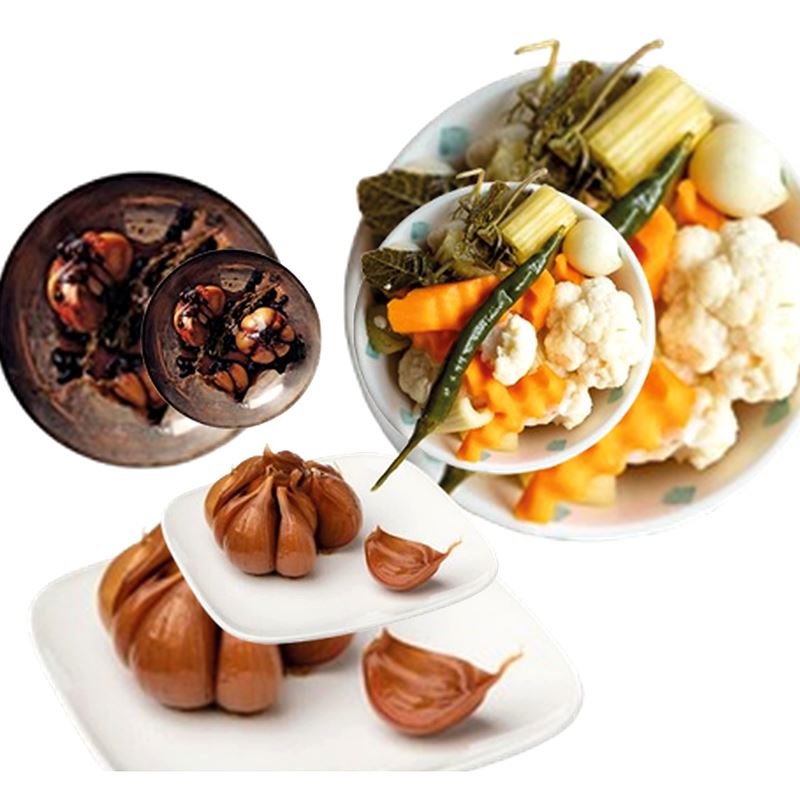
That is the same job raw onion, fresh chili and a pickle jar do beside a heavy bowl. Our guide to sangak, torshi and doogh as the sides for kalle pache covers the pickled half of the idea, and the guide to extras like onion, chili and capsicum covers the raw half.
What can you order at Shaun the Sheep along these lines?
We are a kalle pache house at 64 Jumeira Street in Jumeirah 1, open 24 hours, seven days a week, for delivery across 141 Dubai areas, for pickup and for dine-in. The fresh and sharp end of our menu is Onion, Fresh Chili, Pickled Green Chili and Capsicum, with Mixed Torshi and Garlic Torshi on the pickled side and Sangak Bread to tear.
What we are not going to do is tell you a herb plate arrives with your order, because that is not something we list. If you want to know whether one is available, call 04 321 8882 and ask. That is the reliable answer.
