If you do not eat breakfast, you can still eat kalle pache. You simply eat it at a different hour. The dawn habit is a tradition rather than a rule, and it grew out of working days that most of us no longer keep. Our kitchen at 64 Jumeira Street, Jumeirah 1, runs twenty-four hours a day, seven days a week, so the pot is on at nine in the evening exactly as it is at six in the morning.
That makes the honest answer to when should I eat this a short one: whenever you are actually hungry. What changes with the hour is not permission but proportion. A bowl of Soup at eleven at night is a very different proposition from The Khan's Platter, and knowing which to reach for is most of the skill. What follows is an hour-by-hour way in, written for people who have never once wanted food at sunrise.
Why did kalle pache become a breakfast in the first place?
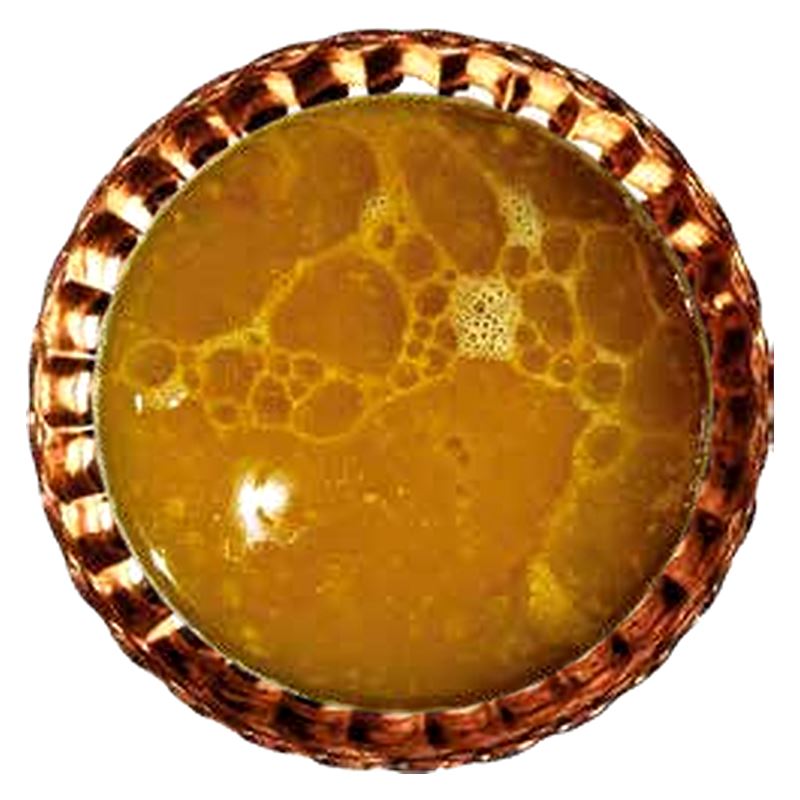
Largely because of the clock the cooking keeps. Heads and trotters are hand-cleaned and trimmed, blanched with that first water thrown away, then simmered for about fourteen hours in a copper pot with onion, turmeric and garlic, skimmed again and again along the way. Put a pot on in the late afternoon and it comes good in the small hours. The dish did not choose dawn; the pot did. There is more on that process in how kalle pache is made.
The rest is social history. In many of the cities where kalle pache is traditional, the places that sold it opened very early and closed once the pot was empty, often before the rest of the street had opened at all. It was commonly eaten quickly, standing up or around a shared table, at the start of a long physical day, and the association with that hour outlived the work patterns that produced it. We tell that story properly in why kalle pache is eaten at dawn, and introduce the dish itself in what kalle pache actually is.
The hour followed the pot and the trade. It was never a rule about the food.
Is there a rule that says it has to be eaten at dawn?
No. It is a custom, and customs travel with the people who keep them. In Dubai the real constraint on most of us is a schedule rather than a clock face: shifts, school runs, a job that starts late and finishes later. If the first genuine hunger of your day lands at two in the afternoon, that is your hour for this dish, and nothing about the food objects.
The one thing the tradition does get right is that kalle pache rewards an appetite. It is a slow, gelatinous, deeply savoury bowl, best met by someone who actively wants it rather than someone eating out of habit. People who do not eat in the morning tend to arrive at their first meal of the day with exactly that kind of appetite. That is neither better nor worse than eating at seven. It simply happens to suit this particular bowl. If you want the wider timing picture, we lay it out in when to order kalle pache.
What should you order at each hour?
Here is the short version, with the reasoning underneath it. The pattern is simple: the further you are from a real appetite, the more you want broth.
| Hour | A good place to start | Why it works then |
|---|---|---|
| Late morning | Soup, or Brain Soup | A warm, brothy start for an appetite that has not fully arrived yet |
| Lunch | Single Dish | A complete plate that does not take the whole afternoon with it |
| Early evening | Double Dish | Substantial enough to be the meal of the day, and it comes with a whole bread |
| Midnight | Singles, such as Tongue, Lamb Cheek or Trotters, or Special Mix | You choose exactly which parts, so the size of the meal stays yours to set |
| Around 3am | Soup with Sangak Bread | The lightest way in when you want something warm rather than a plate of parts |
| Any hour, with company | The Full Dish or The Khan's Platter | Built for a table: many parts and several breads between you |
Late morning, when the appetite is still waking up
Start liquid. Soup and Brain Soup are the two gentlest entries on the menu, warm and brothy rather than a full plate of parts, and they sit naturally with Sangak Bread and a pot of tea. If you have never eaten kalle pache at all, this is the least intimidating first meeting; we made that case in the soup-only way to start. If you are still deciding whether the flavour is for you, what it tastes like is the more useful read first.
Lunch
The Single Dish is the natural lunch: lamb cheek, one trotter, half a brain and half a bread. It gives you the full range of textures the dish is known for without the volume of the larger platters, which matters if you have an afternoon to get through afterwards. Mixed Torshi or Garlic Torshi on the side gives you something sharp to set against the richness, and the seasoning is yours to control, because lime, cinnamon and garlic are added by the diner at the table rather than by the kitchen. Capsicum, Onion or Fresh Chili are there if you like a plate with more bite to it.
Early evening
The Double Dish is where kalle pache becomes dinner. Lamb cheek, two trotters, half a brain, tongue, one eye and a whole bread is a serious meal for one hungry person, or a comfortable share between two who are eating something alongside it. Early evening is also the easiest hour to eat this at a table with other people, which is when the dish is at its best. If someone at the table would rather have something plainer, the Omelette is on the menu too.
Midnight
This is the hour to order singles. Tongue, Lamb Cheek, Trotters, Meat, Eye, Brain, Tripe: ordering by the part is how you control the scale of the meal, and at midnight most people want considerably less than a platter. Special Mix is the middle path when you want range without volume. Customising here means choosing which parts and how many. There is no notes field for kitchen instructions on the site, so anything unusual is a phone call to 04 321 8882.
Around three in the morning
Soup with Sangak Bread. At that hour most people want warmth rather than a plate of parts, and a bowl of broth with bread torn into it is the whole idea of the dish reduced to its simplest form. If you want a little more, Trotters alongside give you the gelatinous texture without a platter. A Kettle of Tea belongs on the table at this hour more than at any other.
Any hour, if there are several of you
The Full Dish and The Khan's Platter exist for tables. The Full Dish brings two lamb cheeks, meat, four trotters, a whole brain, tongue, two eyes and two breads. The Khan's Platter is the largest spread we make: four lamb cheeks, two meats, eight trotters, two brains, three tongues, four eyes and five breads. Neither is a solo order, and both are a good reason to gather people at an odd hour. The full range is laid out in our menu guide.
Is kalle pache too heavy for a late dinner?
It is a substantial bowl, and that is worth saying rather than talking you out of. Some people eat a Double Dish at eleven at night and sleep perfectly well. Others find anything rich late in the evening sits badly on them. Only you know which of those you are, and no article can tell you.
The menu gives you a low-stakes way to find out: order Soup rather than a platter the first time you try it late, see how it suits you, and scale up from there. Three other things tend to help: order by the part rather than the platter, keep torshi on the table because the acidity cuts through the richness, and drink tea with it, or Doogh if you would rather have the traditional partner. None of this is a claim about health. It is simply how the meal balances on the table.
What if you skip breakfast because you eat on a fasting schedule?
Then the only practical question is which items suit the hour your eating window opens, and that is a matter of appetite and preference. Some people want the lightest possible entry and order Soup. Others have waited all day and want the Double Dish. Both are perfectly ordinary choices, and neither is more correct than the other. We wrote a descriptive piece on how people fit this dish around fasting windows in kalle pache and intermittent fasting in Dubai, and it deliberately describes rather than prescribes.
This is not medical advice. We are a kitchen, not a clinic. If you have questions about meal timing, fasting, or what suits your body, ask your doctor or a registered dietitian.
How do you order at an hour when nothing else is open?
The same way you order at any other hour. The website takes orders around the clock, with no account, no sign-up, no password and no app to install. You choose your items, you pay securely online by card, which is the only way to pay, so there is nothing to hand over at the door, and the order then gets its own page. The kitchen accepts it and sets an estimated time, and if you are having it delivered, the rider phones you on arrival. The whole sequence is walked through in our step-by-step ordering guide.
Delivery covers Dubai and is free over AED 300; below that a fee applies and it depends on your area. Pickup is available if you would rather collect, and you can eat in at any hour the kitchen is working, with tables that can be reserved in advance. More on the delivery side sits in our delivery guide, and the lamb is sourced to the UAE halal standard, which we cover in is kalle pache halal.
Can you decide the hour in advance?
Yes, scheduled orders are real. You can place an order now and set a receive time in the future, up to about two days ahead. That is useful if your hungry hour is predictable, if you want food waiting when a shift ends, or if you are planning a table for several people. The kitchen holds the order and it moves into the queue at the time you chose rather than the time you paid.
What if you need to change something after paying?
Phone 04 321 8882, and do it straight away. There is no cancel button and no self-service edit, and that number is our only contact channel: no email, no chat, no messaging app. Because the kitchen is staffed around the clock, calling at three in the morning works exactly as well as calling at three in the afternoon. If we cannot fulfil an order, we reject it with a reason and the refund is issued automatically.
So what is the right hour?
The one you are hungry at. That is not a slogan, it is what a twenty-four-hour kitchen makes literally true. If breakfast has never been your meal, nothing about kalle pache requires it to become one. The dish is the same at nine in the evening as it is at six in the morning, and the only decision left to you is Soup or platter. Have a look at the menu whenever it suits you, or read the best time to eat kalle pache and kalle pache in Dubai if you want the rest of the argument.
