The short answer: sit at a table, choose a wide shallow bowl over a deep one when you have the choice, keep the bread on its own plate, and put the napkins out before you start rather than hunting for them with wet hands. Tear the bread small and press it under the surface instead of dropping it in. Dark shirt, sleeves back. Deal with any splash in the first few minutes rather than at the end of the meal.
That is the whole method, and it takes about thirty seconds to set up. Everything below is why each part works, plus the situations people actually find themselves in: a desk, a parked car, a six-year-old, a shirt you like. This is not a guide to technique — the first-timer guide handles that. This one is about eating kalle pache without wearing it home.
Why does kalle pache splash in the first place?
Because three things happen at the same moment: a bowl of thin hot broth, bread going into it, and hands moving over the top of it.
Most cooked dishes hold themselves together. A sauce clings, rice absorbs, a stew stays where you put it. This one does not. Broth from a copper pot after about fourteen hours of slow simmering and repeated skimming is thin, glossy and quick to move, and it behaves the way water behaves. Bread displaces it, and a trotter displaces more, usually at the exact moment you have decided to be confident about the trotter.
Everyone who eats this regularly has a story: a cuff that went into the bowl unnoticed, a piece of bread one size too big, the tilt at the end when a spoonful is left and gravity gets a vote. None of it makes the dish difficult; it only means the minute before you start is worth more than the ten after.
What should the table look like before you sit down?
Lay it out in this order — bowl, bread plate, spoon, napkins, seasoning — and have all of it in place before any broth is poured.
A wide shallow bowl beats a deep one. The deep bowl looks tidier and behaves worse. It keeps the broth further from your hand, so your sleeve travels down towards it every time you reach, and anything you press into it shifts a whole column of liquid instead of spreading the movement across a face. A wide bowl lets the bread lie flat and keeps your cuffs above the broth.
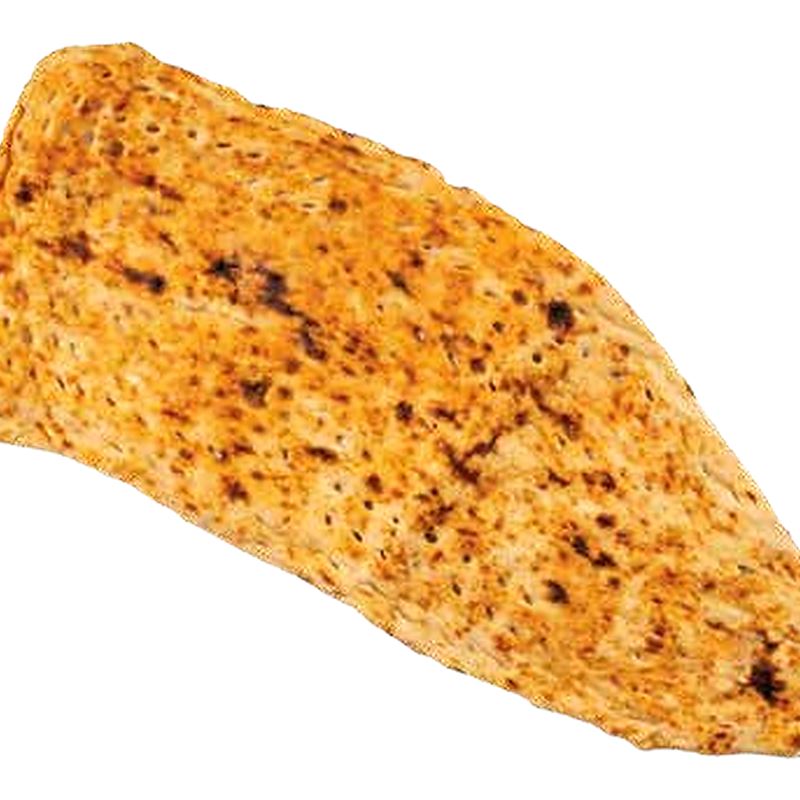
Bread goes on its own plate. Sangak is wide and flat, and left resting across the bowl it does two unhelpful things: the overhanging edge draws broth upwards until it is heavy and dripping, and every tear showers crumbs over the surface. Tear it over its own plate and carry the pieces across.
Two napkins, not one. One stays on your lap, or tucked at the collar, which has never been a joke. The other lies beside your dominant hand, already unfolded. Reaching for a folded napkin with a wet hand is how the second mess happens.
Season early, and low. Lime, cinnamon and garlic are added by you at the table rather than by the kitchen, so add them before you start, holding the lime or the shaker close to the surface. Seasoning halfway through, from a height, with wet fingers, is entirely avoidable.
Keep a spoon even if you plan to eat with your hands. It is the right tool for pressing bread under the surface, and for the last third of the bowl, where the tilt would otherwise begin.
How do you do tilit without the splash?
Tear the bread into mouthful-sized pieces, lay them on the surface near the side of the bowl closest to you, and press them under with the back of a spoon or two fingertips. Never drop them in from height.
The splash almost never comes from the broth on its own. It comes from bread arriving badly. A large piece released from a few inches above a full bowl displaces its own volume in one movement, and that volume goes outwards and upwards: onto the table and onto you. The same piece torn smaller and pushed down gently displaces as much liquid, but slowly, and the bowl absorbs it without complaint.
Two details worth knowing now rather than learning later. Press on the near side rather than the far side, because pressure at the far rim sends the wave towards you. And work in batches of three or four pieces: bread left too long turns into a soft mass that has to be scooped rather than lifted, and scooping is where the drips start. Tilit at its best is a rhythm — tear, press, wait, lift, eat.
And when you lift, hold the piece over the bowl for a beat. A soaked piece carried straight to the mouth drips exactly once, halfway across, over your lap.
Is eating with your hands messier than using a spoon?
Not necessarily, and often the opposite, because what decides the mess is the distance between bowl and mouth rather than the tool. A loaded spoon travels the whole way level, and any wobble lands on whatever is underneath, while a hand can pause over the bowl and let the excess fall back. The cleanest eaters simply sit closest to the table.
Should you eat kalle pache at your desk?
Honestly, no. But people do it, so here is the version that survives.
A desk is the wrong height, a keyboard sits in the line of fire, and desk eating is one-handed eating with your attention elsewhere, which is the combination this dish punishes. If you are doing it anyway, order Soup rather than a platter: spoon work from beginning to end, with no tearing, no pressing and no hands in the bowl.
Put the bowl on a tray if you have one, away from the keyboard, keep the bread dry on a plate beside it, and lean over the bowl rather than the laptop. The mess is usually the price of eating while doing something else.
And in the car?
Not while driving, and not really while parked either. If it has to happen, it is Soup, the car is stationary, and the bread stays dry in your other hand.
A cup of hot broth on a knee is at the mercy of the handbrake, the seat belt and whoever walks past your window, and there is no elegant recovery once broth reaches upholstery. If you are collecting from us at 64 Jumeira Street in Jumeirah 1, the better answer is usually to eat it there: the kitchen runs twenty-four hours a day, seven days a week, so a table is a table at four in the afternoon or four in the morning, and you can reserve one in advance.
If the reason for eating in the car is timing rather than hunger, that is what scheduled orders are for: place one now for a time up to about two days ahead. There is more on where the dish sits in the city in our guide to kalle pache in Dubai.
How do you manage it with children at the table?
Smaller pieces, a shallower bowl with less in it, and a spoon with no ceremony attached to it.
Serve a child a small amount and refill rather than filling a bowl to the rim, because a half-full bowl has far less to give up. Let it stand a minute so it is comfortable to eat rather than something to be blown on and stirred at speed, since the agitating is what puts broth on the table. Tear their bread on their own plate and hand it across a few pieces at a time.
Then let them use a spoon. Eating tilit with your hands is a lovely thing and it is not an examination a six-year-old needs to sit. If they want to try pressing a piece under the surface, hold the bowl steady while they do it, which removes most of what could go wrong.
On what to give them, Soup and Meat are the straightforward places to begin, Lamb Cheek is soft and easy to manage, and Trotters, the most slippery thing on any table, are better saved for when a child asks. There is more in our guide to kalle pache with children.
What should you wear, and what if you splash anyway?
Dark colours, sleeves pushed back to the elbow before the first pour, and if a splash lands, deal with it within a few minutes rather than at the end of the meal.
The part that lingers is not the fat. It is the colour. The pot goes on with onion, turmeric and garlic, and turmeric is a strong colourant. A splash on a dark shirt is nothing at all; the same splash on a pale cuff is the one people still remember a week later. That is a reason to choose the shirt, not to avoid the dish.
Push the sleeves back before they are wet, because rolling a wet sleeve puts your forearm straight over the bowl. Mind your cuffs and a tie if you are wearing one, and at home, an apron is not beneath anyone's dignity at a table where trotters are being eaten.
If it does happen, speed matters more than cleverness: a mark attended to straight away is a far smaller problem than the same mark discovered hours later, and a garment you genuinely care about is worth handing to someone who cleans clothes for a living. Beyond that we are a kitchen and not a laundry.
Does what you order change how messy it is?
Considerably — the amount of handling a dish needs is the best predictor of where it ends up.
| What you order | Hands involved | Where it works |
|---|---|---|
| Soup, Brain Soup | Spoon only | Anywhere you can sit upright |
| Meat, Lamb Cheek, Tongue, Brain | Light: spoon, bread alongside | A table, easy in company |
| Eye, Tripe, Special Mix | Moderate | A table, napkins out |
| Trotters | The most hands-on item there is | A table, sleeves back |
| Single Dish, Double Dish | Full spread, bread included | A table, two napkins each |
| The Full Dish, The Khan's Platter | A shared event | A big table and no hurry |
The platters are built to be spread out rather than balanced. A Single Dish is lamb cheek, one trotter, half a brain and half a bread; The Khan's Platter is four lamb cheeks, two meats, eight trotters, two brains, three tongues, four eyes and five breads, which is not a thing to attempt over a keyboard. The full menu guide goes through what arrives with what.
Is it easier at home or at the table with us?
Whichever table you control best — but if you are ordering in, do one thing before you open anything: clear a space and set the table first.
We deliver across Dubai, and delivery is free on orders over AED 300. Move the food into your own wide shallow bowls, get the bread onto a separate plate and put the napkins out; since the rider phones when he reaches you, that minute is better spent before the call. There is more in our delivery guide and the step-by-step ordering guide, and you can see everything we cook on the main page.
Two practical notes. Payment is by secure card online before the kitchen begins, with no account to create and no password to remember. And there is no notes box to type a request into, so to ask about anything or change something after ordering, phone 04 321 8882 — the only way to reach us, open the same twenty-four hours the kitchen is.
Nobody remembers the meal where nothing was spilled. They do remember the shirt. Wear the dark one.
