Who should be careful about eating kalle pache?
Kalle pache is one of the oldest restorative dishes in Persian cooking, and for most healthy adults it is simply a rich, slow-cooked meal enjoyed a few times a season. It would be dishonest, though, to present it as a neutral dish. It is built almost entirely from organ meats and bone, and there are a few groups whose own doctors usually ask them to think twice about exactly that kind of food: people living with gout or high uric acid, people with reduced kidney function, and people who are pregnant. This guide explains, in plain culinary language, why kalle pache and gout end up in the same sentence, and what still works for those guests at our table. It is background reading, not medical advice, and it does not replace a conversation with your own doctor.
Why do organ meats come up whenever uric acid is discussed?
Uric acid is what the body produces when it breaks down purines, the natural compounds found in the cells of every living thing. Foods made of dense, cell-rich tissue tend to carry more purines than plain muscle meat, and far more than bread, vegetables or dairy. Kalle pache is, by definition, a dish of organ meats: brain (maghz), tongue (zaban), trotters (paye), lamb cheek (bonagoosh) and tripe (sirabi). That is exactly what makes it prized, and it is also why it is the textbook example a doctor reaches for when talking to a patient about gout.
Does kalle pache cause gout?
No single meal causes gout. Gout is a medical condition with genetic, metabolic and lifestyle roots, and diet is only one factor among several. What is fair to say is this: if you already have gout, or you have been told your uric acid is high, organ meats usually sit near the top of the list your doctor asks you to limit. In practice, most people in that position are not told never again — they are told to keep it occasional and small, and to be extra careful around flare-ups. Whether kalle pache fits into your life at all is a question for the person who reads your blood work, not for a restaurant. What we can do is be completely transparent about what is in the bowl, so that conversation is an easy one to have.
Which parts of the platter are richest, and which are gentler?
People often assume the whole table is the same thing. It is not. A kalle pache spread runs from pure organ meat at one end to bread, pickles and tea at the other, and knowing where each item sits makes ordering much easier.
| On the table | What it actually is | Usually discussed with |
|---|---|---|
| Brain (maghz) | Pure organ meat, the richest item on the platter | Gout, cholesterol, pregnancy caution |
| Tripe (sirabi) | Organ meat, lean in texture but still offal | Gout and uric acid |
| Tongue (zaban) | Organ meat, firm and meaty | Gout and uric acid |
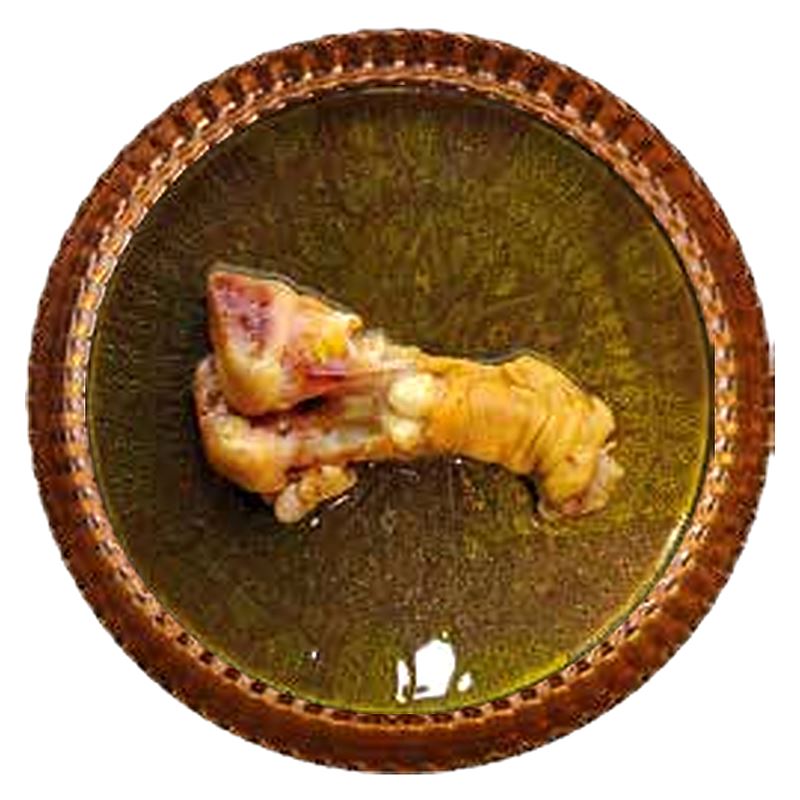
| Trotters (paye) and broth | Mostly bone, skin, gelatin and collagen | Salt, and some purines carried in the broth |
| Meat and lamb cheek | Muscle meat rather than offal | Generally the gentler meat choice |
| Sangak, torshi, tea, doogh | No meat at all | Salt in the pickles and doogh only |
What if you have kidney concerns?
People with reduced kidney function are usually given careful guidance about protein, phosphorus, potassium and salt. Kalle pache is a concentrated protein-and-mineral food by nature — that is the whole point of simmering for around fourteen hours — and the broth carries salt as well. It is not a dish to improvise with if you are on a prescribed renal diet. So the answer is the one your dietitian would give: describe it to them accurately, as a lamb head-and-trotter broth with organ meats, and follow what they say. Many people on such plans can still sit at the table for bread, tea, a little torshi and the company, which is honestly most of what a sofreh is really about.
Is kalle pache safe during pregnancy?
Pregnancy guidance in most countries singles out liver and liver products, because vitamin A concentrates there in amounts that can be excessive during pregnancy. Kalle pache contains no liver. Even so, general advice about organ meats varies from doctor to doctor and country to country, and brain in particular is extremely rich, so many pregnant guests simply leave the maghz aside and stay with broth, meat and bread. The food-safety side is straightforward: our lamb is hand-cleaned before dawn and simmered for around fourteen hours in a copper pot with onion, turmeric and garlic, skimmed hourly until the broth is the colour of strong tea, so nothing arrives undercooked. What we cannot do is tell you what is right for your pregnancy. That belongs to your doctor or midwife.
What about blood pressure and cholesterol?
Two more honest notes. The broth is savoury, and salt is part of that character; if you are watching sodium, ask for your bowl on the lightly salted side, go gently on the torshi, and skip the second helping. And brain is famously rich — traditionally the most treasured part of the head — so if your doctor has you watching cholesterol, that is usually the first item people trade away. None of this is a warning label. It is the same information a thoughtful cook would give you at their own table.
What should you order instead if you are being careful?
The good news is that our menu is not a single dish; it is a table. If the organ cuts are off the list for you but the ritual is not, you can still eat very well: sangak bread or special sangak straight from the oven, mixed torshi and seven-year garlic pickle, hot tea, doogh or lemonade, and a portion of plain meat rather than the offal singles. Sharing helps too — the communal platters are built for one, two, three or six people, so joining a platter instead of ordering your own keeps your share modest by design. And if offal is not your thing at all, the bread, pickles, tea and meat dishes still make a full meal. Build your own combination on the menu and order page, or reserve a table and let the rest of the group order around you.
How did the tradition itself handle all this?
It is worth saying that in Tehran, kalle pache was never an everyday food. It was a Friday-morning dish, a winter dish, a dish for after a long night or a hard week — eaten occasionally, in company, and followed by tea rather than a second bowl. That built-in rhythm is probably the oldest piece of dietary wisdom attached to the dish, and it still works: occasional, shared, unhurried, with bread and pickles doing half the work.
Ordering with confidence in Dubai
Shaun the Sheep is at 64 Jumeira Street, Jumeirah 1, open 24 hours a day, 7 days a week, with halal lamb in line with UAE law and standards, plus delivery across Dubai, pickup and dine-in. If you live with gout or kidney disease, are pregnant, or manage any condition where diet matters, please treat this article as background and your doctor's advice as the decision. We would far rather you arrived knowing exactly what is in the bowl — and ordered the thing that is right for you.
