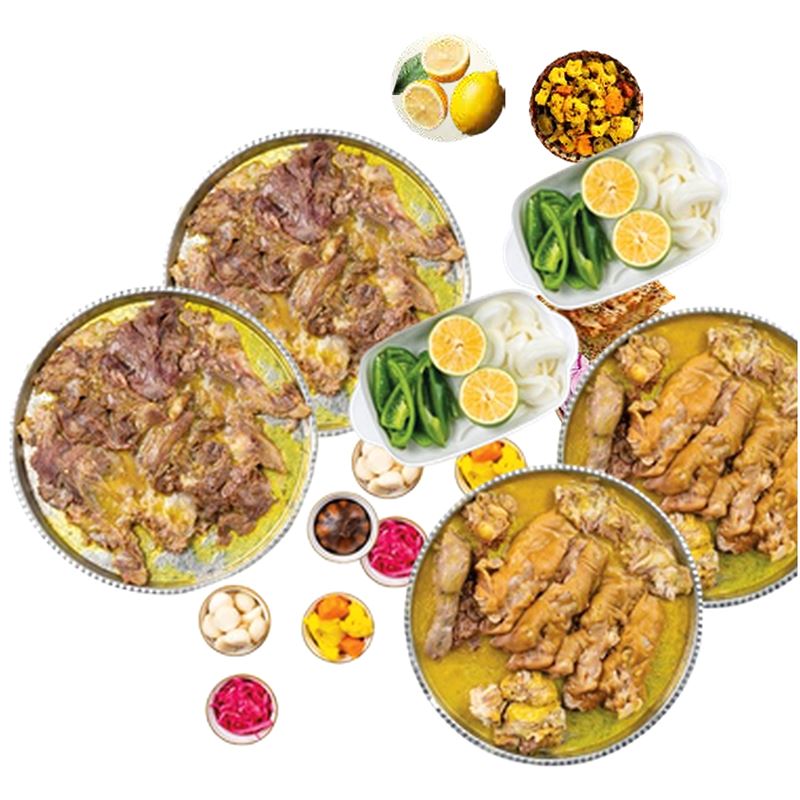
Why the half-hour after the meal is different
Kalle pache is lamb head and trotters at a bare simmer for around fourteen hours, and the two things that give the bowl its body — rendered lamb fat and the gelatin the long simmer pulls out of the joints — also decide how the clearing-up goes. Lamb fat sets a little below the warmth of a room, so the film on a plate is oil while the plate is hot and a pale wax fifteen minutes later. Gelatin turns tacky as it cools, then sets soft, and grips whatever it touches: a spoon handle, a bowl rim, the tablecloth. Warm residue moves; cold residue has to be lifted. Work early, and use heat rather than time.
Plates, spoons and the broth vessel
Hot water, not a soak. In cool water lamb fat hardens on the plate, on the sink wall and as a skin across the water, leaving a sink of cold grease instead of one plate. Take the plates while still warm, tip loose liquid into the broth vessel, and wipe the fat film off dry with kitchen paper before water touches it. Fat lifted dry leaves with the rubbish; fat rinsed away cools inside the pipe and sets there, which is how a slow drain begins.
Do the broth vessel first: it holds the most heat and gelatin. Fill it from the hot tap while the metal or ceramic is still warm and the film releases in one go. Gelatin also dries in the bowl of a spoon like a clear varnish, and once dry it wants a soak in hot water rather than scrubbing.
Bones and trotter ends leave the house, not the kitchen bin
Clear the bones onto one plate as the table comes down, not into the bin under the sink. What stays on skull and trotter bone is marrow, cartilage and a thin coat of gelatin, and a kitchen bin in Dubai sits in warm air all day. Warmth speeds up everything that happens to meat left standing, and the smell that develops inside a closed warm bin is hard to get out of it again. Bag the bones on their own, tie the bag and take it to the building chute or the outdoor bin the same evening. If that is not practical at the hour, a tied bag in the freezer waits for collection day unchanged, because cold stops the process rather than slowing it.
The table: bread crumbs, torshi juice, lime
Sangak is a dry flatbread baked on hot stones; its crumbs are hard and light. Sweep them dry into a plate before any damp cloth arrives; a wet cloth turns crumbs to paste, and paste smears rather than lifts. Torshi juice is vinegar and brine, thin enough to spread wide and dry into a sticky, faintly sour film, and lime juice with salt does much the same. A warm damp cloth dissolves that film; a dry cloth polishes it into the surface. Finish with a dry cloth so nothing is left standing, since vinegar left on untreated wood will mark it.
Leftover broth, bread and torshi
Broth keeps and reheats well, but cool it fast. A deep pot in a warm kitchen holds heat at its centre for a long time, so pour what is left into a wide, shallow container, let the steam go, then refrigerate. Overnight two things happen and neither is a fault: the fat rises and sets into a solid pale cap that lifts off in one piece if you want it off, and the gelatin sets the broth to a soft jelly. Both undo themselves at a gentle simmer. Sangak dries rather than softening, so wrap it in cloth or paper — plastic traps the moisture it is losing and turns it leathery. Torshi keeps in its own vinegar as long as you lift it out with a dry spoon and leave the brine covering it. The same applies to a meal that arrived by delivery across Dubai, since the broth cools on the way and reaches the table closer to setting.
Or hand the half-hour to someone else
None of this is hard, but it is half an hour of work at the hour the dish is traditionally eaten: dawn, or late at night. Shaun the Sheep in Jumeirah is open around the clock, so the same meal can be had at a table here, where the bones, fat and crumbs stay in our kitchen. Or read down the menu — singles from eye and tongue to trotters and tripe, platters sized for one, two, three or six — and have it sent out. If the gathering has a fixed hour, a pre-order for a set time means the food is ready then, not whenever the order lands. Delivery covers Dubai and is free over AED 300, payment on the website is by card in advance, and the phone is 04 321 8882.
