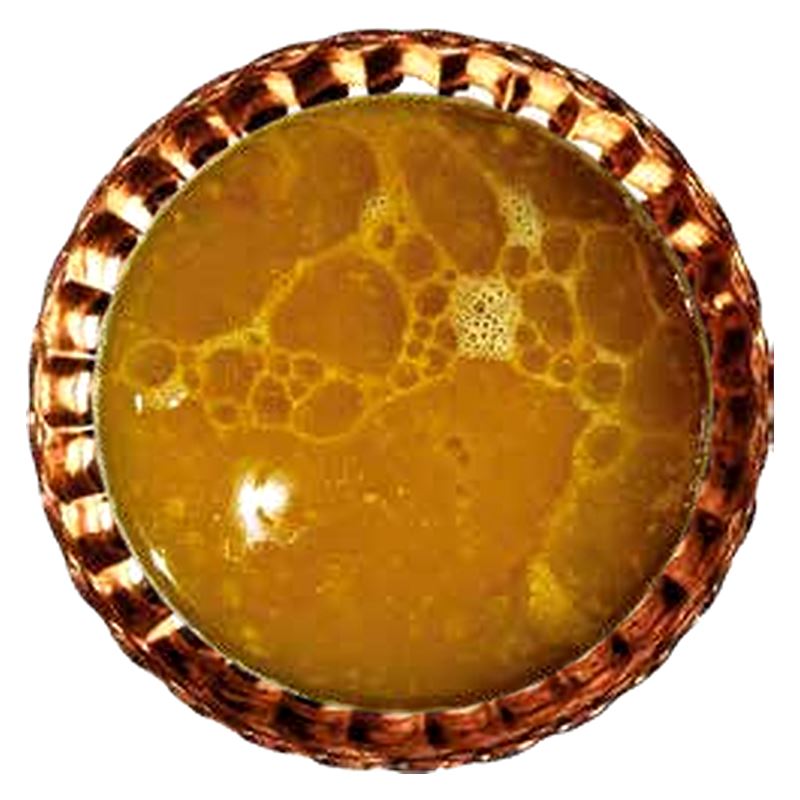
What is actually changing in front of you
A kalle pache platter is not a still life. From the moment it leaves the kitchen the broth is shedding heat, the aroma is rising with the steam instead of staying in the bowl, the fat is drawing together on the surface, and the gelatin pulled out of the trotters over roughly fourteen hours of simmering is quietly thickening the liquid. The sangak is drying in the air at the same time. None of this spoils anything: the first ladle and the last spoonful are simply two slightly different dishes. Everything below concerns that window only: the table, ours in Jumeirah or yours at home. If you have never sat in front of one of these platters, start with the first-timer's guide and come back here.
Serve out in stages, and warm the bowls first
Do not fill every bowl to the brim straight away. Broth cools fastest in a wide, shallow bowl with a large surface open to the air, and a bowl filled ten minutes before anyone reaches it works against you. Ladle a modest amount into each bowl, keep the rest covered in the pot where it holds heat far better, and top up as people finish. At home, do the small thing that makes the biggest difference: fill the bowls with very hot water, let them stand a minute, pour it out and dry them before the first ladle. A cold ceramic bowl steals a surprising amount of heat from the first serving.
Fat, collagen and the film on the surface
Hot, the fat is dispersed through the broth and the surface looks even and glossy. As the temperature drops it stops staying in suspension, gathers into pale coins, then closes into a thin film across the top. That film is not a fault and does not need skimming early: hot fat carries much of the aroma, and a gentle stir of the spoon folds it back in. Underneath, the gelatin from the trotters does its own work: broth that poured thin at the start pours slower later, and a bowl left standing a long while can turn almost silky. Lime and torshi cut straight through that richness, which is why they are on the table.
Keep the sangak covered
Sangak is the part of the platter that changes fastest and recovers least. Warm and pliable, it tears in soft sheets and takes up broth without going to paste; left flat and open on the table it dries at the edges during the meal and turns brittle. Keep it folded in its cloth or under a plate, and tear off only what you need for the next few bites. If it stiffens, a very short pass over heat or a covered warm plate gives back some softness, though the pillowy texture of the first tear does not fully return. The same rule runs in reverse for the raw onion, green pepper and torshi: they want to be cold and crisp, so keep them away from the hot pot.
Broth early, the dense parts after
A platter has a practical order, and it follows physics rather than etiquette. Take the broth early, while it is thin, hot and most fragrant, and drink or spoon up a good part of it before dismantling the heavier pieces. Brain is soft and delicate and best warm, so it belongs near the front of the meal too. Tongue, cheek and meat are dense; they hold their heat far longer than liquid and are forgiving if you come to them later. Trotters are the stickiest part and most pleasant while hot. Eaten in that order, nothing waits for you at the wrong temperature. If you are choosing between singles rather than a mixed platter, our guide to the singles goes part by part, and the full range is on the menu.
What a re-warm gives back, and what it does not
Mid-meal, a re-warm is worth doing and worth understanding. Heat comes back completely, and with it some of the aroma returns as the steam starts again. Body comes back too: gelatin that had begun to set loosens as soon as it warms. What does not come back is the very first lift of aroma, spent once, and the texture of bread that has already dried. Warm the broth gently and stop as soon as it steams: a hard boil breaks the surface fat into the liquid, muddies the clarity and tightens the meat instead of helping it. Add a squeeze of lime after warming rather than before. At home, warm only the portion about to be eaten, not the whole pot, so the rest keeps its first-serving character. A re-warm does not make a new broth; it gives back only what can be given back.
