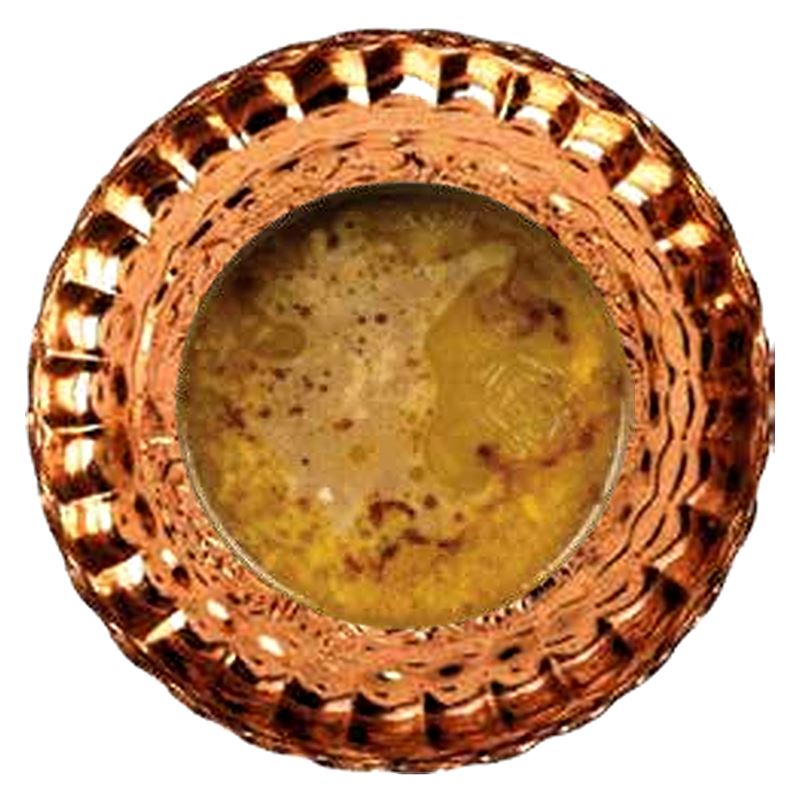
Lamb heads and trotters are cleaned and trimmed thoroughly, blanched so that the first water can be thrown away, and then simmered for many hours — about fourteen — while the pot is skimmed again and again. That sequence, unhurried and in exactly that order, is the whole difference between a broth that tastes clean and one that carries the heavy, barnyard edge people wrongly assume is built into offal.
This is the part nobody photographs. It never appears on a menu, it takes many times longer than the eating does, and yet everybody tastes it. If you have eaten kalle pache twice in your life and loved it once and struggled with it once, the difference probably was not the recipe. It was almost certainly the preparation.
Why is cleaning the whole ballgame for this dish?
Look at what the ingredient is. A head and a set of trotters are almost entirely bone, skin, connective tissue and small, hard-working muscles. There is no expensive fillet to hide behind, no fast sear, no sauce at the end to cover what came before. Whatever is on the raw material at the start ends up dissolved in the liquid at the end: the method is simply water, and most of a day.
That is why cleaning is not step one of ten. It is the step that decides the other nine. A steak cooked in a dirty pan is still a steak. A broth built on carelessly prepared heads is not a good broth with a small flaw — it is a pot of water that has spent fourteen patient hours extracting that flaw into every single spoonful.
What does "cleaned and trimmed thoroughly" actually mean?
It means exactly what it sounds like, and there is no secret to reveal — which is precisely the point. The heads and trotters are cleaned and trimmed thoroughly before they go anywhere near the pot. Not rinsed. Not given a quick going-over. Worked through piece by piece, because there is no other way and nothing that removes the need for attention. It is the least glamorous work in the process and the most decisive.
Why is the first water thrown away?
After cleaning comes the blanch: the pieces go into water, that water comes up to heat, and all of it is thrown away before the real cooking begins.
The first time you see it, it looks like waste. It is the opposite. Heat drives out blood and loose proteins; they rise, they cloud the liquid, and they carry the sharp, metallic notes people mean when they say offal "tastes strong". Throwing that water away means the long simmer starts from a clean sheet: clean water, clean pieces, nothing to fight for the next fourteen hours.
What are about fourteen hours of simmering and skimming for?
Two jobs, running at once. The first is extraction. Bone, skin and trotters are loaded with collagen, and collagen does not surrender to fast heat — it needs long, gentle time in water. Over the hours it dissolves into the liquid and gives the broth its body: that soft weight on the tongue, the way it clings to a spoon. It is also why a properly made broth sets when it cools. Nothing was added to make that happen.
The second is skimming. As the pot works it keeps pushing material to the surface, and that material is lifted off, over and over, for as long as it keeps coming. Skimming is a habit maintained across the entire simmer, not a flourish before serving. Each pass removes something that would otherwise cloud the broth and coat the bowl in a greyish film. A clear surface is not decoration. It is evidence.
What happens when these steps are rushed?
Every shortcut has a taste of its own, recognisable once you know what to look for.
| Step | What it removes or achieves | What it would taste like if skipped |
|---|---|---|
| Thorough cleaning and trimming | Takes off everything that does not belong in the pot | A muddy, farmyard note no later seasoning can lift out |
| Blanching, then throwing the first water away | Drives out blood and loose proteins and removes them entirely | Cloudy liquid, a metallic edge, and a smell that fills the room for the wrong reasons |
| The long simmer, about fourteen hours | Dissolves collagen from bone, skin and trotters into the broth; softens tough tissue | Thin, watery broth; pieces that are chewy and stubborn instead of yielding |
| Repeated skimming while it works | Lifts off the material that keeps rising, so the surface stays clear | Grey scum stirred back in: heavy on the palate, greasy on the lip, dull in the bowl |
| Doing all of it in order, without hurrying | Each step only works because the one before it was done properly | Everything this dish is unfairly accused of being |
So what should a well-prepared broth look and smell like?
The steam should smell savoury, warm and clean — the smell of good bone stock, not the smell of an animal pen. The surface reads as clear liquid with bright fat on it, not grey scum. The pieces are soft and gelatinous and give way under the side of a spoon, and broth left to cool sets into a soft jelly. We have written separately about what kalle pache tastes like and about the textures to expect.
What are we not claiming here?
No secret ingredient. No ancient technique passed down in whispers. The lamb is sourced to the UAE halal standard, and we will not dress that up into anything more than it is. When someone explains a great broth by pointing at a secret, treat it gently — the honest explanation is usually boring: cleaning, discarding, time, and attention repeated for hours.
Why do so many kalle-pache lovers order instead of cooking it?
They know exactly what they would be taking on. Eating is the short part. Preparation is another story: sourcing heads and trotters, cleaning and trimming every piece, blanching and pouring that first water away, then keeping a pot honest for around fourteen hours and skimming it every time it needs it — in an apartment, in Dubai, with a household asleep and neighbours on the other side of the wall. People who grew up with this dish are often the quickest to order it, because they have done it and know what it costs. Ordering is not a shortcut past the labour; it is the labour, done by a kitchen that repeats it every day, around the clock.
How do you order it in Dubai?
Everything happens on the website: delivery, pickup, or dine-in with a table reserved. There is no app, no account and no password — just your name and phone number, plus your Dubai area from the list and a pin on the map if you want it delivered. Payment is by secure online card at checkout. Delivery is free over AED 300.
You can also schedule an order for later, up to about two days ahead. After you pay, the kitchen confirms and sets an estimated time, your order gets its own page to follow, and the rider phones you on arrival. If the kitchen cannot take an order, it is refunded automatically to the card that paid, with the reason shown on that page. One kitchen at 64 Jumeira Street, Jumeirah 1, open 24 hours, every day, delivering across Dubai. To ask a person about a cut or a platter, call 04 321 8882. If you are new to the dish, our first-timer guide is a gentler place to start.
Is there anything here for someone who does not eat meat?
Honestly, not much, and it would be wrong to pretend otherwise. There is no vegetarian main. The meat-free items are the Omelette, Sangak Bread and Special Sangak, Mixed Torshi and Garlic Torshi, the vegetable add-ons, and the drinks. We are not going to make promises in writing about how anything is handled behind the counter. If it matters to you, phone 04 321 8882 and ask before you order.
One last thing, said plainly: none of the above is medical advice. Kalle pache is a rich, fatty, collagen-heavy food, and whether it suits you — how much, how often, at what time of day — is a question for your doctor or a dietitian, not for a restaurant.
