The short answer: it cooks, but it differs
Yes, a pressure cooker will soften a lamb head and trotters. Give them an hour and a half and the meat slides off the bone. Late at night in a Dubai apartment that is a real meal. What you will not get is kalle pache as it is understood in Tehran, or in a kitchen that keeps one pot moving all night. The gap is not a secret spice. It is what happens to collagen, fat and clarity across fourteen hours, and none of it compresses into ninety minutes.
What the long simmer does that pressure cannot
The first difference is body. Collagen becomes gelatin with heat and time, and under pressure that runs fast and hard. The broth thickens, but in a slick, one-note way, and thins again once cooled and reheated. A pot held at a bare tremble builds body slowly, and that broth sticks to your lip the next morning.
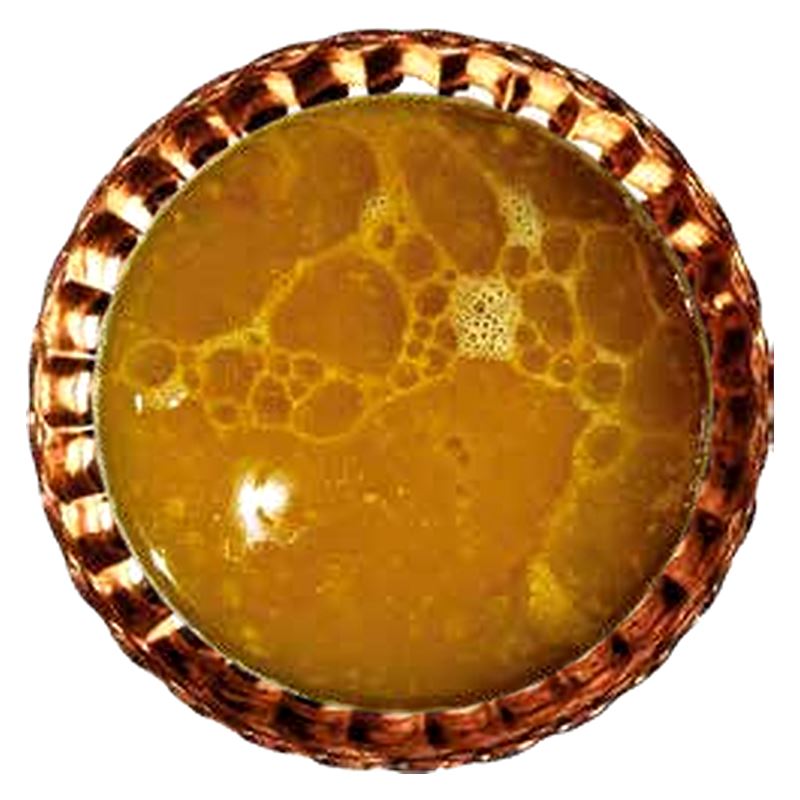
The second is fat. Fourteen hours renders fat from the cheek, jaw and marrow, and it rises where a cook can lift it. Under pressure the liquid sits above boiling in constant hard motion, so fat and suspended protein are beaten into an emulsion, which is why pressure-cooked head broth comes out milky and heavy rather than golden.
The third no gadget solves: a sealed pot cannot be skimmed. The first hours are mostly skimming: grey foam, then finer scum, then fat. That is where the clean smell and clear colour come from. The same discipline runs through the method, which is why how kalle pache is made reads like a schedule more than a recipe.
Each part finishes at a different hour
A lamb head is not one ingredient but six or seven, and they do not agree on timing.
- Trotters want the longest run: skin and connective tissue, hours to go sticky-soft without falling into threads.
- Cheek is dense working muscle. Pull it early and it is rubbery; it turns tender only after the tough stage.
- Tongue needs long enough that the skin slips off under your thumb. Too short and you cut it away, losing meat.
- Brain is the reverse: delicate, set in minutes, usually poached apart from the main pot. Under pressure it disintegrates.
- Eye is small and fragile and gets the same care as the brain.
Over an open pot a cook tastes, tests with a fork and pulls each piece at its moment. A sealed pot gives one setting for everything and no way to check without venting and starting again. If you are working out which parts you like, which single to order is faster than cooking through all of them.
Where a pressure cooker helps
It excels at specific jobs: pre-softening trotters before the open pot, pulling a second broth from bones already simmered, or cooking one component on a weekday. Blanch first and throw that water away; nothing inside a sealed pot repairs a skipped blanch. Use less water than a stovetop recipe asks, since almost nothing evaporates. Salt at the end, keep aromatics simple, and let the pressure fall on its own rather than venting hard.
Why time, not mystery, keeps it off menus
People assume kalle pache is rare in Dubai because it is difficult, or because someone guards a technique. It is neither. The method is old and simple to describe. What it costs is a night: cleaning the heads alone is hours, then starting the pot, skimming, holding the heat honest, staying awake to pull each part on time, and scrubbing the kitchen before the day begins. Most kitchens would rather spend that shift on twenty dishes that go out fast.
If you would rather not run a pot overnight
Shaun the Sheep in Jumeirah runs the fourteen-hour pot so nobody at home has to. It is open around the clock, dine-in or delivery across Dubai, with pre-orders for a later time. It arrives with sangak bread, torshi, lime, raw onion and green pepper. Singles cover eye, brain, meat, tongue, trotters, tripe, lamb cheek, brain soup, soup and the special mix, and platters run from one person to the Khan's Platter for six. The menu lays it out, and delivery in Dubai explains how the food travels. Orders on the website are card prepay only, there is no cash on delivery, and delivery is free over AED 300. The number is 04 321 8882.
