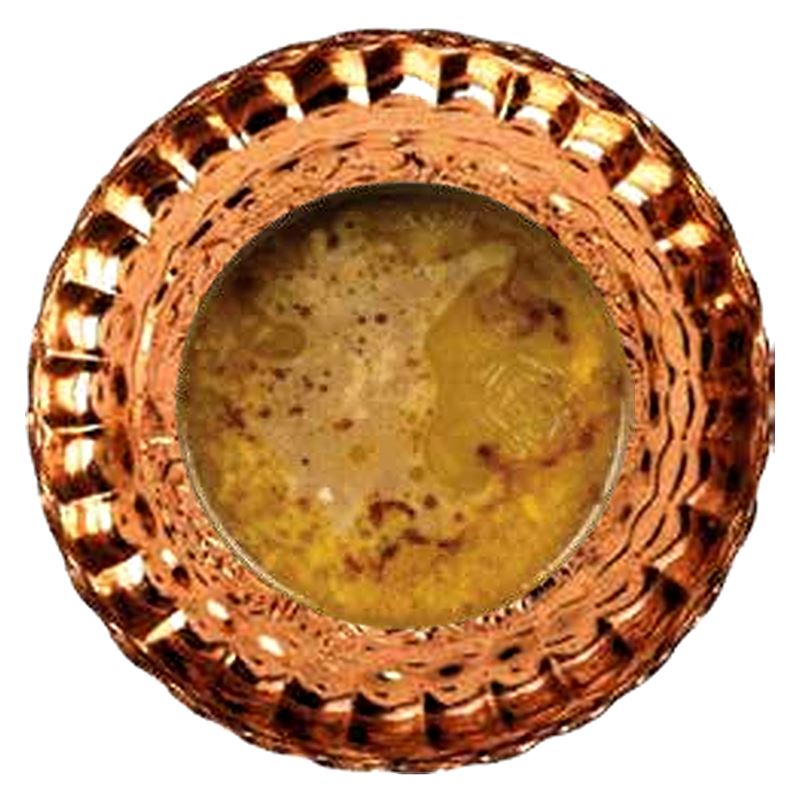
Is kalle pache a winter dish, or can you eat it all year?
In Iran the answer feels settled. Kalle pache belongs to cold mornings: fogged windows, a queue outside the kalle pazi before sunrise, a bowl that lands on the table while the street is still dark. Generations grew up with that pairing, so the dish carries winter inside it.
Dubai rearranges that calendar. The long heat holds for most of the year, then eases into a mild spell that residents wait for the way other cities wait for spring. That shift is the moment many people say their appetite for hot broth comes back: the first evening you can sit outside without thinking about it, the first dawn that feels fresh on the drive home. So the honest answer is that the season starts here when the air changes, not on a date in the diary.
The fuller answer, at least at Shaun the Sheep on Jumeira Street, is that there is no closed season at all. The kitchen runs twenty-four hours, seven days, and bowls go out in every month of the year.
Why do people in Dubai eat kalle pache in summer?
Mostly because the room is cool even when the street is not. Air conditioning quietly removed the old obstacle: a heavy, steaming bowl is comfortable indoors in any month. Add the city's night economy — drivers finishing a shift, hospital and hotel staff coming off duty, families arriving on late flights — and you get a steady flow of people eating at three in the morning regardless of the season. For them it is not seasonal at all; it is simply what is open when the night has been long. More on that in eating kalle pache through Dubai's hot months.
What changes on the table when the weather cools?
Appetite, mostly, and with it the size of the order. Through the heat many regulars keep it short: a Single Dish — a lamb cheek, one trotter, half a brain, half a bread — or a bowl of Brain Soup on its own. When the mild spell arrives the table gets longer. The Double Dish reappears, then the 3-person and 6-person platters, Deezi alongside, more Sangak, a Kettle of Tea that nobody hurries. The long winter nights of the Persian calendar have their own pull too, and the shared-table habits around Yalda night in Dubai tend to spill into the whole cool season.
| Time of year | What people tend to order |
|---|---|
| Peak heat | Single Dish, Brain Soup, Tongue, more broth and less fat |
| The turn | Double Dish, Lamb Cheek, Trotters, Sangak and Doogh |
| Cool months | Platters for three or six, Special Mix, Deezi, tea that lasts |
How do regulars make it lighter in the heat?
They order by part rather than by platter. Tongue and Head Meat are leaner choices than Lamb Cheek, which is deliberately meat and fat together. Brain Soup gives you the broth without the full spread. You can also just ask for more broth and less fat; the kitchen is used to the request. Garlic Torshi, aged seven years, and Mixed Torshi do the other half of the job: sharp and acidic, and the reason a rich bowl still tastes bright halfway through. A glass of Doogh, salted yogurt with mint, sits on the same table for the same reason. There is a case for the broth itself once the nights turn, which we look at in our piece on long-simmered lamb broth in cold weather.
When should you actually go?
Dawn is the tradition, and it is still the best version of the experience: bread fresh, broth at its first strength, the room quiet. But a 24-hour kitchen means the choice is yours rather than the clock's. Eat in at 64 Jumeira Street, Jumeirah 1, collect it yourself, or have it delivered across all 141 Dubai areas, with the fee for your area shown at checkout. The lamb is halal. Call 04 321 8882 if you would rather talk it through, and ask at the table if you are not sure which dish suits the weather you walked in from.
