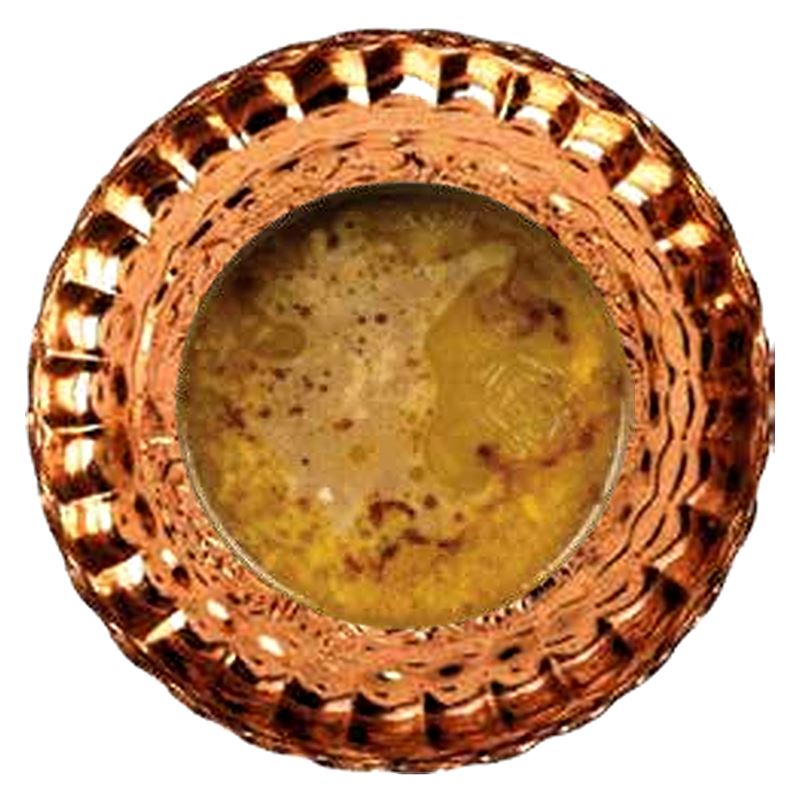
Is kalle pache the Persian bone broth your grandmother would recognise?
When the world rediscovered bone broth a few years ago — simmering bones for hours to draw out collagen, gelatin and minerals — many Persian families quietly smiled. Their grandmothers had been doing it for generations, and they called it kalle pache. It belongs to the same broad family as the bone broth now sold in jars and served in cafés: a long, patient simmer that turns humble bones and trotters into something golden, savoury and deeply warming. This is a story about that bowl, its place on a cold night, and why people reach for it. It is written as culinary and cultural tradition, not medical advice.
What is kalle pache, and why is it a kind of bone broth?
Kalle pache (Persian: کلهپاچه) is slow-cooked lamb head and trotters, known across the Gulf and Iraq as baja (الباجة); the trotters on their own are called paye (پایه). At Shaun the Sheep the pot simmers for around fourteen hours in a copper vessel with onion, turmeric and garlic, skimmed by hand every hour until the broth turns the colour of strong tea. That long simmer is exactly what a bone broth cook is after: it coaxes collagen out of the bones and connective tissue, where it softens into gelatin, and leaves a broth that is qualitatively rich in protein and minerals. You can see the full spread on our menu and order page.
Why do people reach for a warm, brothy bowl when it turns cold?
Long before anyone measured a broth in a laboratory, a steaming bowl was simply what you gave someone on a cold morning, on a low day, or when a chill had settled into the house. In Iran a bowl of kalle pache at dawn is a ritual of comfort; in Dubai, where desert nights can turn surprisingly cool and the air-conditioning runs cold year round, that same instinct holds. It is warm, it is gentle to eat slowly, and it carries the weight of memory — a grandmother's kitchen, a shared table, an unhurried hour. None of that is a health claim. It is comfort, and comfort has its own value.
How does kalle pache sit among the world's great broths?
The urge to simmer bones for comfort is universal. Here is how kalle pache sits beside other beloved long-cooked broths.
| Broth | Origin | What's simmered | Traditional role |
|---|---|---|---|
| Kalle pache | Iran / Persian | Lamb head and trotters, ~14 hours | Dawn comfort, cold mornings, gatherings |
| Western bone broth | Modern revival | Beef or chicken bones, 12–24 hours | Sipped warm as a comfort drink |
| Seolleongtang | Korea | Ox (beef) bones, many hours | Milky, restorative bowl |
| Pho broth | Vietnam | Beef bones and spices | Warming everyday meal |
They differ in seasoning and ceremony, but the principle is shared: time, low heat and patience turn bone into broth. If you enjoy that comparison, our piece on kalle pache versus ramen and pho goes deeper.
A grandmother's remedy — comfort, not a cure
Here we want to be very clear. Kalle pache is a cherished comfort food, not a medicine. It is not a treatment for colds or flu, it does not "boost immunity", and eating it will not cure an illness. When elders offered a warm bowl to someone feeling under the weather, they were offering care, warmth and nourishment — the same gesture as chicken soup in countless cultures. If you are unwell, please rest and speak to a doctor. What we can honestly say is that a warm, protein- and collagen-rich bowl is easy to eat slowly and feels comforting on a cold or tired day. Exact nutrition depends on the cut and portion you choose, so we describe qualities rather than quote numbers.
How is it traditionally eaten for comfort?
The ritual matters as much as the broth. Tear warm sangak bread into the bowl, add a little seven-year garlic pickle (torshi seer) and a spoon of mixed torshi, and drink cool, salty doogh alongside. First-timers often start with plain broth or the trotters (paye); the Special Mix sampler lets a table try tongue, cheek and brain together. Communal platters serve one, two, three or six, so a cold evening easily becomes a shared one.
Where can I find Persian bone broth in Dubai?
Shaun the Sheep is a Tehran-style kalle-pache house at 64 Jumeira Street, Jumeirah 1, Dubai (04 321 8882), open 24 hours, 7 days a week. The lamb is halal, in line with UAE law and standard. When the night turns cool, you can order for delivery across Dubai — the fee is chosen by area at checkout — or come in for pickup or dine-in. To gather friends around a warm bowl, reserve a table, or simply order online and let the pot come to you.
