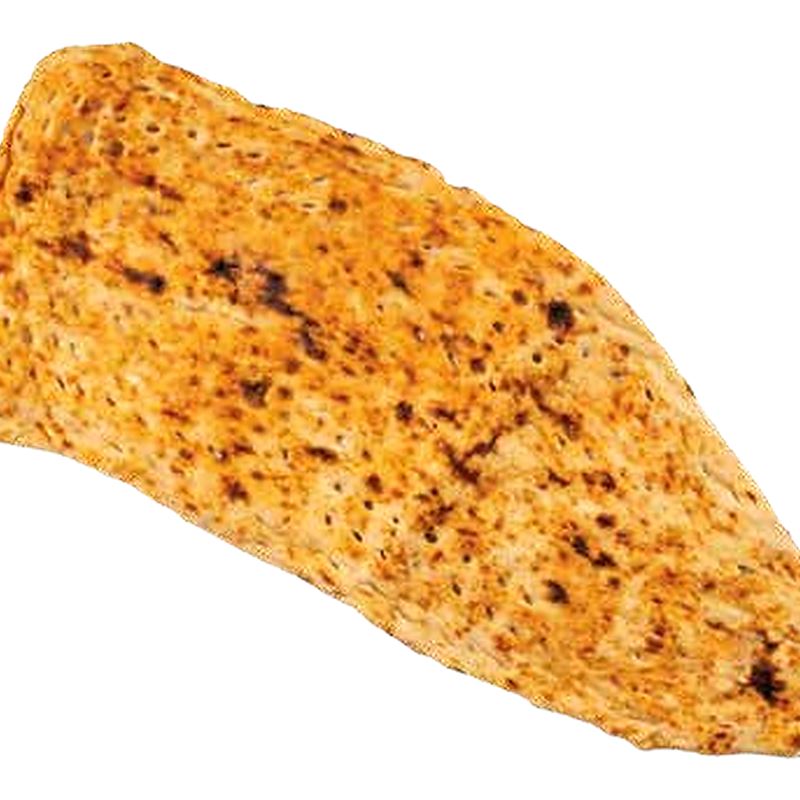
What Is Sangak, the Stone-Baked Persian Bread?
Sangak is one of the great flatbreads of Iran: a long, oval sheet of leavened wholewheat dough, blistered and freckled from the fire, with a chew that pulls and a crust that crackles. In Persian its name is nan-e sangak, and the word gives the whole story away — sang means stone. This is bread baked not on a metal tray but directly on a sloping bed of small, superheated river pebbles inside a hot oven. Slide a piece of sangak from the counter and you can still read that history in your hands: a scatter of little round dimples where each stone pressed into the dough.
Why Is It Called Stone-Baked Bread?
The technique is centuries old and beautifully simple. A layer of clean pebbles is heated until it glows, the baker stretches the wet dough across it, and the intense, uneven heat does the rest. The stones give sangak two things no flat tray can: an open, airy crumb pocked with those trademark hollows, and a base that toasts to a deep, nutty crispness while the top stays supple. Traditionally the pebbles are picked out before serving, though a stray one is a running Persian joke — proof your bread is the real, stone-baked thing rather than an imitation.
What Gives Sangak Its Chewy-Crisp Texture?
Three things. First, the wholewheat flour, which brings a savoury, slightly malty depth. Second, a natural sourdough-style ferment that builds the stretch and the faint tang. Third, the fierce, direct heat of the stone floor, which sets a crackling shell in seconds while trapping steam inside for a tender, chewy interior. The contrast is the whole point: you get shatter and softness in the same bite. It is a bread built to be torn by hand, not sliced — and, as it happens, built for a bowl of broth.
What Bread Goes Best with Kalle Pache?
Ask anyone raised on kalle pache and the answer is instant: sangak. There is a reason the pairing is inseparable. Kalle pache — slow-simmered lamb head and trotters, cooked for around 14 hours until the broth runs the colour of strong tea — is rich, gelatinous and deeply savoury. Sangak's open, absorbent crumb drinks that broth up without turning to mush, and its wheaty chew stands up to the collagen-heavy stock. You do not butter it or set it politely on a side plate. You tear it into ragged pieces and drop them straight into the bowl.
How Do You Actually Eat Sangak with the Broth?
The classic move is tilit (also called abgoosht-style dunking): tear warm sangak into small pieces, drop them into the hot broth, let them soak for a minute until they swell, then eat the softened bread with a spoon before the meat. Some diners keep a second piece dry, to wrap around a bite of tongue, cheek or trotter with a smear of seven-year garlic pickle. Both ways are correct. For more on the classic accompaniments, see our guide to sides for kalle pache.
Plain Sangak or Special Sangak?
We bake both. Plain sangak is the purist's choice — nothing but wheat, ferment, salt and fire. Our special sangak is finished with a generous scatter of sesame and nigella seeds, which toast against the crust and add a warm, nutty, faintly peppery fragrance. Against a bowl of kalle pache, the seeds give an extra layer of aroma with every torn piece.
| Flatbread | Shape & texture | Best with kalle pache? |
|---|---|---|
| Sangak | Long, dimpled, chewy-crisp, stone-baked | Ideal — soaks broth, holds its structure |
| Special sangak | Sangak topped with sesame & nigella | Ideal — adds nutty aroma |
| Barbari | Thick, oval, ridged, soft | Good, but denser and less absorbent |
| Lavash | Paper-thin, soft, foldable | Fine for wrapping, too thin for dunking |
Where to Find Sangak Bread in Dubai
At Shaun the Sheep, a Tehran-style kalle-pache house at 64 Jumeira Street, Jumeirah 1, sangak comes hot to the table beside the bowls it was made for. Our lamb is halal, the pot simmers around the clock, and the kitchen is open 24 hours, 7 days a week — so whether it is a dawn breakfast or a 3am craving, the bread is fresh. Order plain sangak or special sangak from our menu and order page for Dubai-wide delivery or pickup, or reserve a table to tear it straight into the broth the way it is meant to be eaten. Call us on 04 321 8882.
