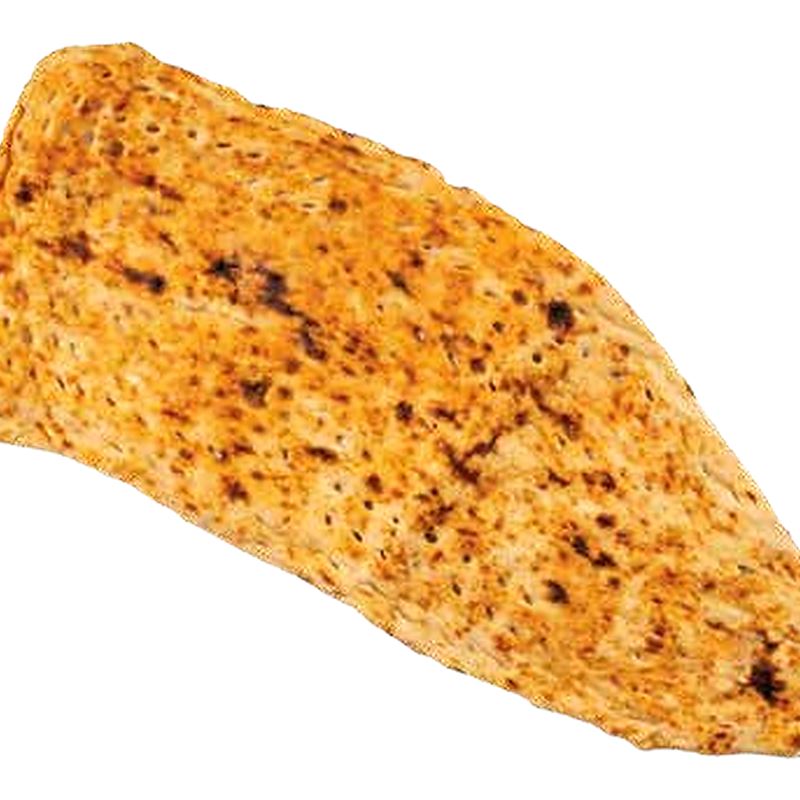
What is sangak bread?
Sangak bread (Persian: سنگک, literally "little stone") is Iran's great whole-wheat flatbread, traditionally baked on a bed of hot river pebbles inside a fiercely hot oven. Those stones are where it gets its name and its signature dimpled, pockmarked surface. It is a large, thin, oblong loaf — nutty from the whole-grain flour, faintly sour from a long ferment, and scattered with black nigella seeds and sesame. In Tehran it is bought fresh, still warm, and torn straight into a bowl of broth. At Shaun the Sheep we bake it to serve alongside our kalle pache (you can see it all on the menu and order page), but if you want to try it at home, here is an honest recipe and a realistic idea of what your kitchen can and cannot do.
Can you really make authentic sangak at home?
Honestly, not exactly — and it is fair to say so up front. True sangak needs a stone or pebble oven running at a very high heat that a domestic oven simply cannot reach. The bed of hot pebbles both shapes the bread and blasts it with heat from below, so it bakes in a couple of minutes with a blistered, smoky crust. A home oven tops out much cooler and has no pebble bed. What you can make is a very good approximation: a whole-wheat, seeded flatbread with the right flavour and chew, baked as hot as your oven will go on a preheated baking stone, steel, or heavy tray. Manage your expectations and you will be delighted; expect a bakery-perfect copy and you will not.
What ingredients do you need for home sangak?
This makes two large flatbreads or three smaller ones. Whole-wheat sangak dough is deliberately wet and soft, so resist the urge to add extra flour.
- 500 g stoneground whole-wheat flour (add up to 100 g white bread flour if you want a lighter crumb)
- 380–400 ml warm water (roughly 75–80% hydration — the dough should be sticky)
- 1.5 teaspoons (about 9 g) fine salt
- 7 g (2 teaspoons) instant dried yeast, or about 100 g active sourdough starter for a deeper, more traditional flavour
- 1 teaspoon sugar or honey (optional, to help the yeast start)
- 1–2 tablespoons nigella seeds (siyah daneh)
- 1–2 tablespoons sesame seeds
- A little semolina or extra flour, for dusting
- A splash of water in a spray bottle or small bowl, for wetting the top before baking
How do you make sangak step by step?
Give the dough time; the long ferment is where the flavour lives. The active work is only 15–20 minutes.
- In a large bowl, whisk the flour with the salt. In a jug, stir the yeast (and optional sugar) into the warm water and leave for five minutes until it looks lively.
- Pour the liquid into the flour and mix to a wet, shaggy, sticky dough. It will not be a smooth ball — that is correct for sangak. If using sourdough starter, mix it in with the water instead of the yeast.
- Knead lightly in the bowl for two or three minutes, or use wet hands to stretch and fold the dough over itself a few times. Cover with a damp cloth.
- First ferment: leave at room temperature until roughly doubled — about 1.5 to 2 hours with yeast. For the best flavour, ferment slowly instead: 4–8 hours somewhere cool, or overnight in the fridge. Sourdough versions need the longer time.
- About an hour before baking, put a baking stone, baking steel, or a heavy upturned tray on the upper-middle shelf and heat the oven to its absolute maximum, usually 250–290°C (480–550°F). The hotter, the better.
- Tip the dough onto a well-floured surface, divide in two, and gently stretch each piece into a long oval about 1 cm thick on a floured peel or a sheet of baking parchment. Handle it gently so you keep some air in it.
- Make the signature dimples: press deep grooves along the length with your fingertips. This is what mimics the pebble bed and stops the bread ballooning.
- Dampen the surface lightly with water, then scatter over the nigella and sesame seeds and press them in so they stick.
- Slide the bread (on its parchment) onto the hot stone. Bake 6–10 minutes until puffed, blistered, and browned at the edges. Watch it — at high heat it bakes fast.
- Wrap the baked bread in a clean cloth to keep it soft and pliable, and eat it warm. Repeat with the second piece.
How can you get closer to a real stone oven?
A few honest tips help. Preheat longer than you think — 45 minutes to an hour of full heat in the stone or steel makes a real difference. Bake near the top of the oven where it is hottest, and switch on the grill (broiler) for the last minute or two to blister the top. A cast-iron pan or pizza steel holds and returns heat better than a thin tray. Some enthusiasts scatter a single layer of clean, food-safe pebbles on a metal tray to imitate the traditional bed, but this is fiddly and easy to get wrong, so treat it as an experiment rather than a must. None of this reaches a professional pebble oven, but each step nudges you closer.
Why is sangak the bread for kalle pache?
Sangak and kalle pache belong together. The bread is sturdy and whole-grain, so when you tear it into the hot broth to make tilit it soaks up the liquid without dissolving into mush. Its faint sourness and toasty seeds cut through the rich, collagen-heavy broth, and its size means there is always enough to share around the pot. This is not a modern pairing invented for a menu; it is how the dish has been eaten at dawn in Tehran for generations.
Prefer to skip the oven?
Baking sangak at home is genuinely rewarding, but it is also a project, and no home kitchen can fully match a stone oven. If you would rather have the real thing without the flour on your hands, we bake sangak fresh and you can add it as a side to any order — including our special sangak — alongside mixed torshi, seven-year garlic pickle, tea and doogh, with free delivery across Dubai on orders over AED 300. Take a look at the menu and order page to build a kalle pache order with warm bread on the side, or reserve a table and we will bring it to you hot. Either way, tear it into the broth while it is still warm — that is how it is meant to be eaten.
