What Is the Difference Between Sangak and Special Sangak?
On our menu you will see two breads with almost the same name — sangak and special sangak — and first-timers often ask which one to pick. The short answer: both start from the exact same dough and the same stone-baked loaf, but special sangak is finished with a generous topping of toasted sesame and nigella seeds, so it eats richer, nuttier and more aromatic. Plain sangak is the honest classic; special sangak is the same bread dressed up. Neither is ‘better’ in the abstract — it depends on how you like to eat your kalle pache. Here is how to choose.
What Is Plain Sangak?
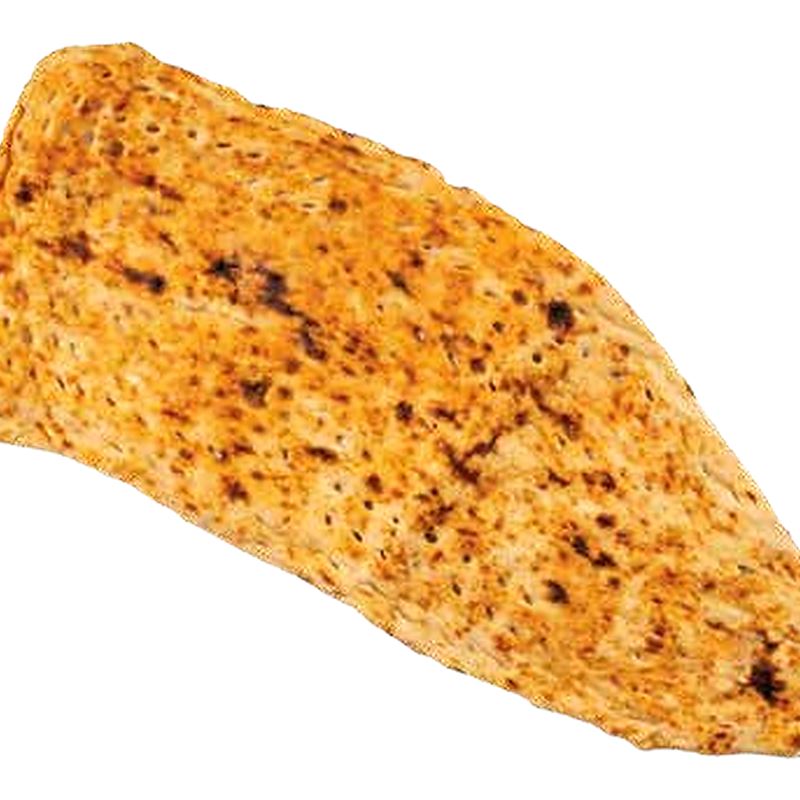
Plain sangak is the traditional Tehran breakfast bread in its purest form: a long, oval sheet of leavened wholewheat dough, baked directly on a bed of hot river pebbles until the top blisters and the base toasts to a nutty crisp. It is dimpled where the stones pressed in, chewy inside, crackling on the crust, and completely unadorned — nothing but wheat, ferment, salt and fire. That plainness is its strength. A bare loaf is a neutral canvas: it lets the rich, gelatinous lamb broth lead, and it never fights the flavours in the bowl. If you want the kalle pache itself to be the star, plain sangak is the purist’s choice.
What Makes Special Sangak Special?
Special sangak is that same loaf, baked the same way, then finished far more generously — a thick, even scatter of sesame and nigella (black seed) pressed into the dough before it hits the stones. As the bread bakes, the seeds toast against the crust and release a warm, nutty, faintly peppery fragrance; you smell it before you taste it. Where plain sangak steps back, special sangak steps forward: every torn piece carries its own flavour, so the bread becomes part of the meal rather than just a vehicle for broth. It is the small upgrade most regulars make without thinking, especially when the bread is doing more of the work — scooping, wrapping, or eaten on its own between spoonfuls.
Does Special Sangak Taste Better with Kalle Pache?
‘Better’ depends on the job. Soaked in broth, plain sangak disappears into the stew in the best way; special sangak keeps a whisper of toasted-seed aroma even after it swells. But the moment you use the bread dry — to grab a piece of lamb cheek, wrap a slice of tongue, or push a trotter onto your spoon — special sangak wins clearly, because the seeds land directly on your palate. If you tend to eat bread-forward, order special. If you tend to eat broth-forward, plain does the job beautifully.
Sangak vs Special Sangak: Which Should You Order?
Use this quick guide.
| Sangak | Special Sangak | |
|---|---|---|
| Topping | None — bare wholewheat | Generous sesame & nigella |
| Flavour | Clean, wheaty, neutral | Nutty, aromatic, faintly peppery |
| Best for | Tilit (dunking & soaking) | Scooping, wrapping, eating solo |
| Lets the broth lead? | Yes — steps back | Shares the spotlight |
| Order it when… | You want the kalle pache to star | You want more flavour in every bite |
How Do You Eat Sangak with Kalle Pache — Tilit or Scooping?
There are two classic techniques, and most people use both in one sitting.
Tilit: tearing bread into the broth
Tilit is the Persian move of tearing warm sangak into small pieces, dropping them into the hot broth, and letting them soak for a minute until they swell and soften. You then eat the drenched bread with a spoon before the meat. This is where plain sangak is unbeatable — its open, absorbent crumb drinks the collagen-heavy stock without turning to paste, and its neutral flavour lets the broth shine. Special sangak works here too and adds a gentle toasted note, but if you are a heavy dunker, plain gives you the cleaner soak.
Scooping and wrapping the pieces
Keep a second piece dry and use it as a tool: fold it around a bite of lamb cheek (bonagoosh), wrap a sliver of tongue (zaban), or pinch a trotter (pacheh) and lift it to your mouth with a smear of seven-year garlic pickle. Here the bread meets your tongue directly, so this is special sangak’s moment — the sesame and nigella season every bite.
Which Bread Suits Which Platter?
Our communal dishes already arrive with bread — a Single Dish comes with half a loaf, a Double Dish with a whole one, the Full three-person Dish with two, and the Khan’s six-person Platter with five. The easy upgrade is to make some of that bread special. Eating solo? Add one special sangak and you have flavour in every torn piece. Feeding a table? Order a mix — plain loaves for the heavy tilit dunkers and a couple of special sangak for those who like to scoop — so the sofreh has variety. Round it out with mixed torshi and a glass of doogh, and you have the full Tehran spread. See the sides on the menu and order page.
Where to Order Sangak and Special Sangak in Dubai?
Shaun the Sheep is a single Tehran-style kalle-pache kitchen at 64 Jumeira Street, Jumeirah 1 — not a chain, but we deliver right across Dubai, with delivery free over AED 300. Our lamb is halal, the pot simmers around the clock, and the kitchen is open 24 hours, 7 days a week, so the bread is fresh whether it is a dawn breakfast or a 3am craving. Add plain sangak or special sangak to your order on the menu and order page for Dubai-wide delivery or pickup, or reserve a table to tear it hot straight into the broth. Our tip: order one of each and taste the difference for yourself.
