What are the two ways brain appears on our menu?
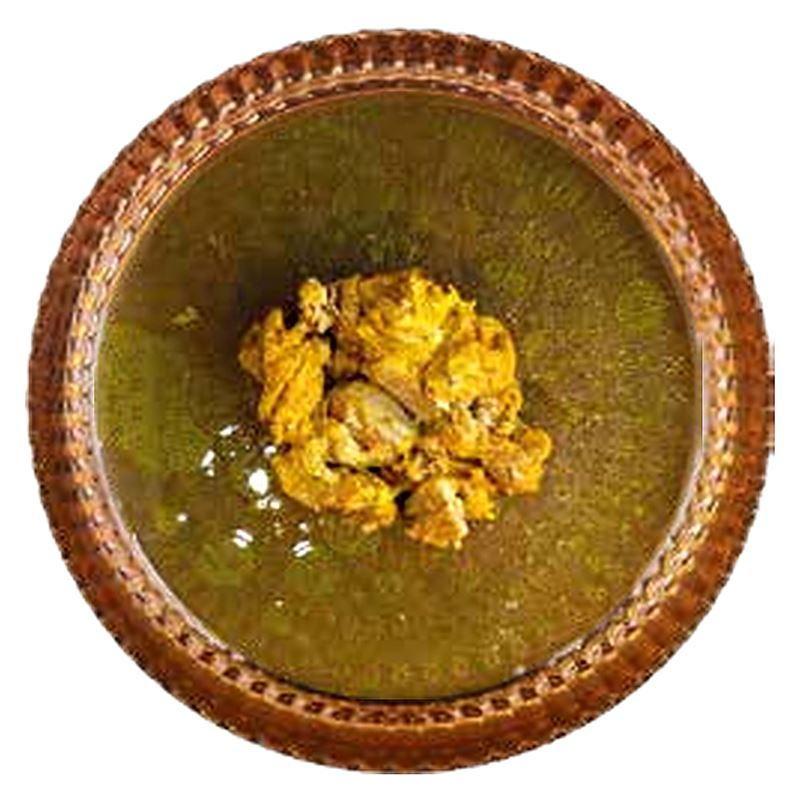
Brain — maghz in Persian — is the part of kalle pache people ask about before anything else, and on our menu it appears twice. The first is brain on the plate: the lobes lifted whole out of the pot, pale and warm, on a dish of their own — nothing hidden, nothing thinned out. The second is brain soup, where the same brain is broken gently into a bowl of long-simmered kalle pache broth and reaches you already softened, spoon rather than bread in hand.
One ingredient, one pot, two different meals. What changes is not the cooking but the delivery: how concentrated each mouthful is, and how directly you meet the ingredient. For the ingredient itself, see lamb brain in kalle pache; for the bowl on its own, our brain soup guide.
How does the texture differ between brain on the plate and brain in soup?
On the plate, brain holds its shape. It behaves like a set custard: soft enough that a fork parts it without pressure, firm enough to lift onto bread without collapsing. The surface is smooth and faintly matte, the inside dense and even. Every bite arrives at full strength, and that texture is the point.
In the soup, the structure is relaxed on purpose. Hot broth loosens the brain into soft, cloud-like pieces: some stays as tender curds you catch with the spoon, some dissolves and turns the liquid a shade paler and slightly thicker, almost silky. You never meet a solid mouthful. Richness arrives suspended in hot savoury liquid, and it arrives evenly, first spoon to last.
| What to expect | Brain on the plate | Brain soup |
|---|---|---|
| Texture | Set and sliceable, like firm custard | Soft curds in a silky broth |
| Concentration | Full strength in every bite | Spread evenly through the bowl |
| What you eat it with | Bread and fingers | Spoon, at least to begin with |
| Temperature | Cools as you go, so eat it warm | Hot to the last spoon |
| Order it for | The texture itself, at full strength | The flavour, gently carried |
Which of the two tastes milder, and why does the broth change how it reads?
Brain is mild to begin with — buttery, faintly sweet, with a nutty finish and none of the gamey edge first-timers brace for. Neither version is aggressive, but the soup tastes milder, and the reason is the broth rather than the brain.
The broth thins, stretching the same richness across a whole bowl so no spoonful lands heavily. It adds its own onion, turmeric and garlic background from the long simmer, so brain becomes one element in a familiar soup rather than the whole event. And it holds heat: a plate cools as you go and coats the palate more as it does, while a bowl stays warm to the bottom. On the plate you taste brain; in the soup you taste kalle pache, with brain making it creamy.
Which one is easier for a first-timer, and which do regulars go back to?
If you have never eaten brain, the soup is the easier start, and not only for flavour. The bowl-and-spoon format is familiar, you control the size of every mouthful, and the piece is not in front of you whole — for some, that is the real hurdle, not the taste. Our guide to eating kalle pache for the first time covers the rest of the table, and we answer the safety question separately.
Regulars mostly order the plate, precisely for what the soup softens: texture intact, richness at full strength, warm brain on torn sangak with lime squeezed over it. It is the piece experienced eaters reach for first when a platter lands, which is why who gets the brain is a real question at Persian tables. There is no required order, though: plenty of first-timers go straight to the plate for exactly that texture.
How do you season and eat each — lime, cinnamon, bread, or spooned?
Both are finished by you at the table, and both want lime, salt and a little cinnamon, in different measures. For brain on the plate, be generous with lime and squeeze it across the whole piece, not one corner: the acidity is what stops something this rich from tiring you halfway through. Add salt, then a small pinch of cinnamon, which sits surprisingly well against the sweetness. Then eat it with bread: tear sangak, scoop rather than cut, keep the bites modest. Bread is not a side here; it is the plate's partner.
For brain soup, season the bowl rather than the piece. Stir the lime through so the whole bowl brightens evenly, and go lighter on the cinnamon, which spreads further in liquid. Eat it spoon-first, then decide whether to tear sangak in to soak or keep it dry alongside for contrast. Both are correct. Our seasoning guide goes further into proportions.
What else belongs on the table alongside each of them?
Sangak belongs with both, in different quantities: the plate needs more, because the bread does the carrying; the soup needs less, because the broth already does it. Pickles earn their place beside the plate especially — seer torshi, pickled garlic, is sharp enough to reset your palate between rich bites, and mixed torshi does the same with more variety. Doogh cuts fat the way lime does but from another direction, and it suits either version.
For balance rather than more richness, add a leaner part: tongue or plain meat carries the meal without doubling the intensity. Our guide to the sides covers them, and sangak and doogh have pages of their own.
Can you order both and share, or is that too much richness in one sitting?
For two people, ordering both is the best arrangement: one plate, one bowl, passed across the table, so you get the concentrated version and the gentle one side by side. That comparison teaches more in ten minutes than any description can.
For one person, both in a single sitting is a lot. Brain is the richest thing on the menu in either form, and doubling it tends to end an appetite rather than satisfy it. The better solo order is brain soup to open, then a piece or two of brain from a shared plate — or a Special Mix, which brings brain alongside tongue, trotters and more. For a group, a 3-person or 6-person platter covers the table, with a separate bowl of brain soup for whoever wants the gentler version.
Our kitchen at 64 Jumeira Street, Jumeirah 1 is open twenty-four hours a day, seven days a week, so either version is there whenever you want it, and the lamb is halal, in line with UAE law and standards. Order from the menu and order page for delivery anywhere in Dubai, with the fee shown by area at checkout, or choose pickup or dine-in; to eat later, pick a future time at checkout, or reserve a table.
