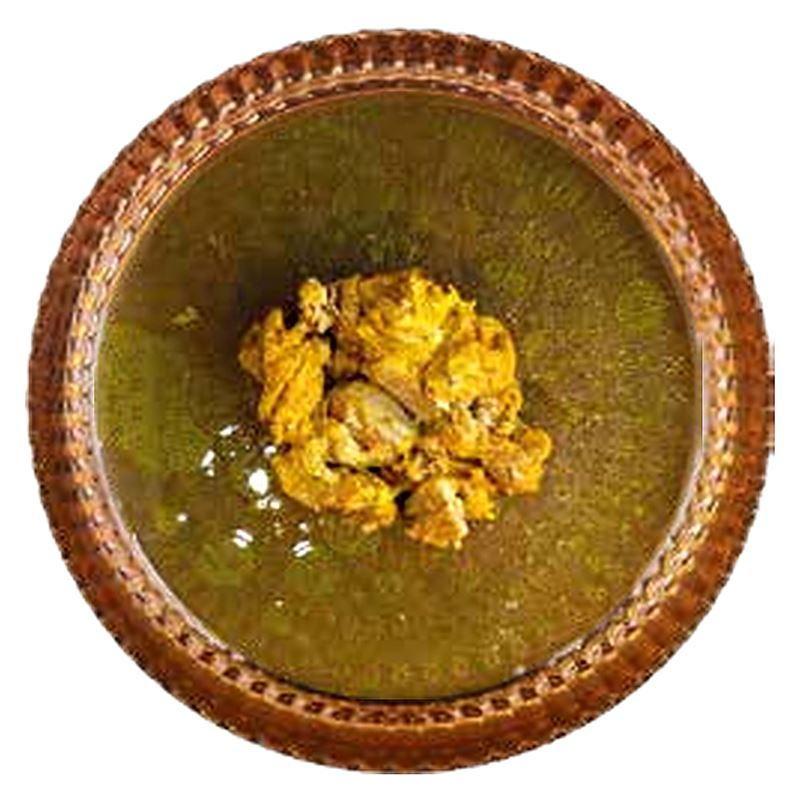
How do different countries cook lamb brain?
Three ways, and they have almost nothing in common. India and Pakistan fry it in a pan with masala until the outside browns and it breaks into soft curds — that is bheja fry. France poaches it, cools it, slices it and dresses it, with browned butter and capers or a sharp vinaigrette — cervelle. Iran and Turkey poach it in broth and eat it hot with bread — maghz and beyin. One ingredient, three completely different plates.
That is worth knowing in Dubai, where it is easy to have eaten one of the three without thinking of it as related to the others. If bheja fry is a regular order for you, you have already eaten lamb brain. What we serve is the same organ handled in the opposite direction.
What is bheja fry, and how is it cooked?
Bheja fry is brain cooked dry in a pan: onion, ginger, garlic, green chilli and a ground spice mix, stirred until the pieces break down and the edges catch. Some kitchens fold an egg through it, some finish it with coriander and lime, some pile it into pav as a sandwich. Mumbai and Hyderabad both have versions, as do family kitchens that never called it anything but bheja. Indian and Pakistani cooking is easy to find in Dubai, so this tends to be the version of lamb brain people here meet first.
On the plate it reads like a very rich scramble. The spice does the loud talking; the brain does something quieter, carrying fat and giving the pan a softness nothing else in it can. Because it arrives broken up and heavily seasoned, the texture question barely comes up. The masala answered it for you.
What is cervelle, and why is it dressed cold?
France goes the other way entirely. Cervelle is soaked, trimmed of its membrane, then poached gently in water sharpened with vinegar and aromatics until it firms enough to slice cleanly. It is cooled, cut into rounds, and dressed. The two classic finishes: butter cooked until it browns and smells nutty, poured over with capers and a splash of vinegar, or a mustard vinaigrette with parsley, served as a cold starter.
Nothing is hidden. No spice blend, no broth to sit in, so what arrives is the ingredient itself with fat and acid beside it. That is a confident way to serve brain, and a demanding one: the French plate asks you to like the texture on purpose, in daylight, with a fork.
How do Iran and Turkey serve it — maghz and beyin?
Both poach, and both keep it hot. In Iran, maghz comes out of the same pot as the rest of kalle pache — ours runs about fourteen hours with onion, turmeric and garlic. It arrives soft and set, and you lift it onto torn sangak with lime, a pinch of cinnamon and salt. In Turkey, beyin turns up as a meze — poached, cooled a little, dressed with lemon, olive oil and parsley — and as beyin haşlama, warm in its own liquid alongside the head-and-trotter tradition the two countries share.
Turkey seasons with lemon, vinegar and chilli flakes; Iran with lime, cinnamon and garlic torshi. A real difference in the mouth, but the handling is close enough that the two plates read as relatives. For the Persian version in detail, our guide to maghz covers what it tastes like and how to eat it.
How do the four compare side by side?
| Dish | Where | Treatment | How it arrives | Seasoned with |
|---|---|---|---|---|
| Bheja fry | India, Pakistan | Fried dry in masala | Hot, broken into soft curds | Chilli, ginger, garlic, spice blend |
| Cervelle | France | Poached, then cooled and sliced | Cold or barely warm, in rounds | Browned butter and capers, or vinaigrette |
| Maghz | Iran | Poached in the kalle pache pot | Hot and whole, lifted onto bread | Lime, cinnamon, salt, garlic torshi |
| Beyin | Turkey | Poached | A dressed meze, or warm in its liquid | Lemon, olive oil, parsley, vinegar |
Does brain taste different from country to country?
Barely, and this is the honest part. Brain is mild wherever you eat it — faintly sweet, faintly mineral, closer to something set and dairy-like than to meat, without the sharp edge liver carries. No method changes that by much.
So the gap between bheja fry and maghz is not a gap between two kinds of brain. It is masala against lime, a dry pan against a broth, broken against whole. Swap the seasoning and the French plate and the Persian one converge fast.
Why is texture what divides people, not flavour?
Because brain is soft everywhere too, and soft is the trait people hold opinions about. It is rarely turned down for tasting too strong, but often for the way it gives under the tongue with nothing pushing back.
Look at the three traditions again: each is answering exactly that. Frying breaks it up and browns it, so the mouth gets edges. Poaching and cooling firms it enough to slice, so the mouth gets a shape. Poaching in broth leaves it at its softest and leans in, which is why the Persian and Turkish versions tend to be the ones that split a table.
If softness is your sticking point, bread and acid help more than switching dishes does. And if you are choosing between our two formats, brain on the plate or brain soup is the choice that genuinely changes how soft it reads.
What about the safety question?
People ask it, and it deserves an answer of its own rather than a paragraph buried in a comparison piece. So: our honest answer on lamb brain sets out what we can tell you and what we will not pretend to know. Read that one. This article is about cooking traditions.
If you already eat bheja fry, what should you order here first?
Start with Brain Soup. You already know you like the ingredient, so the only new thing is the format, and a spoon and a bowl are a kinder introduction than a whole one. Sharpen it to taste — acid does the job the chilli and the ginger did in your pan.
Order plain Brain on your second visit, once you know how you feel about it whole and unbroken. If you want it alongside the other cuts in one sitting, Special Mix and the platters — Single Dish, Double Dish, The Full Dish, The Khan's Platter — are the way in; ask what each one holds when you order. Get extra Sangak Bread either way — it is the tool, not the side. And a lamb has one brain, so a shared platter has a small negotiation built into it; the etiquette of who gets the brain is worth two minutes before you order.
We are at 64 Jumeira Street, Jumeirah 1, open 24 hours, seven days a week, for dine-in, pickup and delivery across 141 Dubai areas, with your area's fee shown at checkout. Browse the menu and order, or call 04 321 8882 first.
