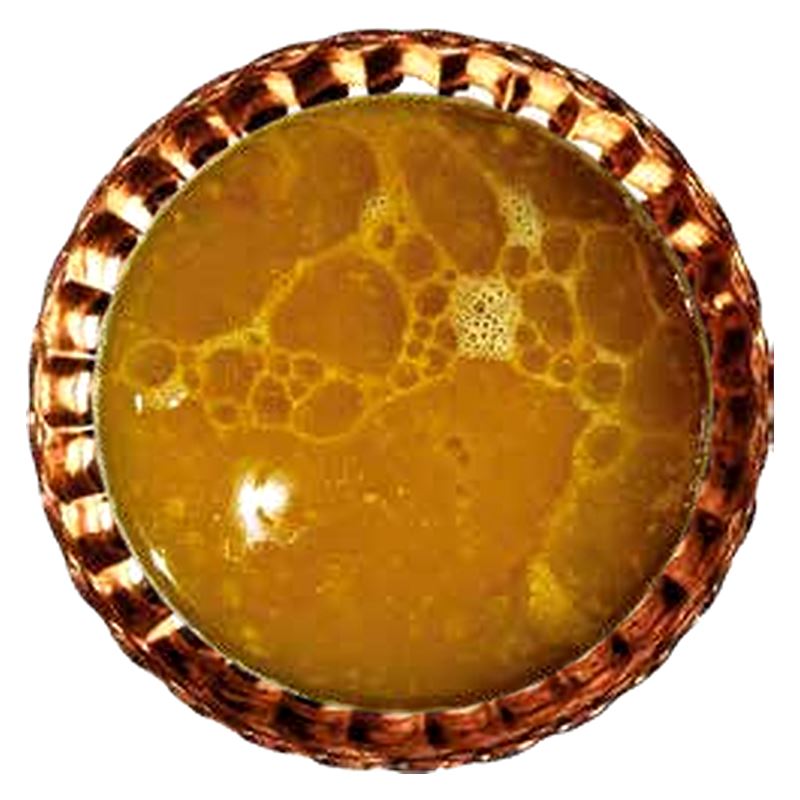
Two bowls that arrive unfinished
Almost everything a restaurant sends out has already been decided: the ratio of solid to liquid, the size of every piece, the minute the dish is called done. A few refuse that: they arrive deliberately unfinished, and the last step belongs to whoever is holding the bread.
In Chinese cooking the clearest example is Xi'an lamb paomo — yangrou paomo, the Hui Muslim bowl from Shaanxi in the north-west. In Persian cooking it is kalle pache and the tilit ritual. If you know Chinese food well and assume a Persian table in Dubai is another planet, paomo is the bridge: two bowls built differently, tasting nothing alike, asking the same of you.
How each broth is built
Paomo begins with lamb bone and meat in a deep pot, skimmed patiently and simmered softly for hours until the liquid is savoury and clean rather than heavy. The broth should stay drinkable on its own: you taste lamb, not fat.
Kalle pache goes the other way. It uses only head and trotters — almost entirely bone, skin, cartilage and collagen — cleaned and soaked with care, then simmered low for around fourteen hours. Nothing thickens it but the gelatin leaving the bones, which is why a cold bowl sets like jelly by morning. We wrote out the long simmer behind it step by step.
Two different ideas about spice
A Xi'an pot is perfumed. A cloth bag of aromatics goes in — star anise, cassia bark, fennel seed, ginger, dried tangerine peel, white pepper, black cardamom — and the broth carries that warmth under the lamb. Sharpness comes at the table: chilli paste at the rim, sweet pickled garlic between spoonfuls, coriander.
A Persian pot is nearly bare: salt, onion, a stick of cinnamon, black pepper, sometimes a little turmeric. Everything bright arrives separately: lime to squeeze in, torshi, raw onion, green pepper. Different pantries, identical logic — neither kitchen finishes the seasoning; both hand you the tools.
The two breads, and what tearing does
Mo is a small, pale disc, unleavened and baked firm on a griddle. It is dense on purpose because it has a job: the diner tears it by hand into soybean-sized pieces in an empty bowl. That is ten or twenty minutes of quiet work, and size matters: large pieces stay bready inside, small ones drink evenly. The bowl goes back to the kitchen, where broth is poured or cooked over it with vermicelli and wood ear, and returns finished.
Sangak is the opposite: wholewheat sourdough stretched long and thin, baked on hot pebbles, blistered and full of fine pockets. It tears in strips rather than crumbs and drinks broth in seconds. Tilit happens in front of you — tear the bread in, spoon broth over it, wait a moment, eat. Nothing leaves the table.
The etiquette of tearing
Both traditions have manners here. In Xi'an the bread is torn with fingers, never cut with a knife, the pieces kept even, and there is a whole vocabulary for how much broth a bowl should carry, from barely damp to swimming.
The Persian rules are looser but real. You choose the bread-to-broth ratio, and it is easy to overshoot: tear in half what instinct suggests, let it soften, add more if the bowl looks thin. Keep some sangak dry on the side: the meat, the tongue and the trotters want dry bread and a bite of onion. If it is your first bowl, our first-timer's guide has the order things happen in.
Where to eat the Persian version in Dubai
Shaun the Sheep in Jumeirah cooks kalle pache the long way — lamb head and trotters, around fourteen hours — and serves it with sangak, torshi, lime, onion and green pepper, the full kit for tilit. Singles are eye, brain, meat, tongue, trotters, tripe, lamb cheek, brain soup, soup, or the special mix known as mojoon. Platters are sized by people: Single Dish for one, Double Dish for two, The Full Dish for three, The Khan's Platter for six. If you are unsure, which single to order is the shortest way in, and the menu has the rest.
The kitchen runs 24/7, for dine-in and delivery across Dubai, and you can pre-order for a later time if you want the bowl waiting at a set hour. The website takes card prepayment only — there is no cash on delivery — and delivery is free over AED 300. Phone: 04 321 8882.
