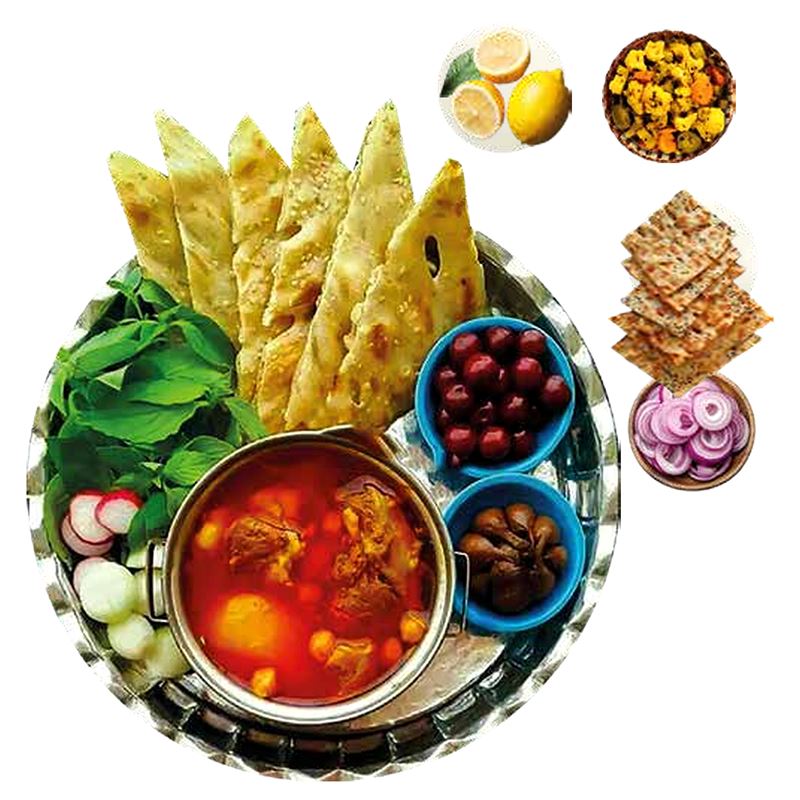
What is abgoosht (dizi), and why make it at home?
Abgoosht — known as dizi after the stone crock it is cooked and served in — is one of Iran's oldest and most comforting one-pot meals. Lamb on the bone, chickpeas, white beans, potato and tomato are slow-simmered with dried lime and turmeric until the broth turns deep and savoury and the meat slips off the bone. It is peasant food in the best sense: cheap cuts, humble pantry staples, and time doing most of the work. Making it at home is genuinely rewarding, and this guide walks you through the real method and the serving ritual that makes dizi special.
What ingredients do you need for authentic dizi?
This recipe serves four generously. The magic is in the dried lime (limoo amani), which gives dizi its signature gentle sourness — do not skip it.
- 500 g lamb on the bone — shank or neck are ideal (halal)
- 1 cup (about 200 g) dried chickpeas, soaked overnight
- 1/2 cup (about 100 g) dried white beans, soaked overnight
- 2 medium onions — one sliced, one left whole
- 2–3 medium potatoes, peeled
- 3–4 ripe tomatoes, or 2 tbsp tomato paste
- 1 tbsp tomato paste for colour and depth
- 4–5 dried limes (limoo amani), pierced with a fork
- 1 tsp turmeric
- Salt and black pepper to taste
- About 1.5 litres water
- Optional: a small piece of lamb fat or 1 tbsp oil, and a cinnamon stick
How do you make abgoosht step by step?
- The night before, soak the chickpeas and white beans in plenty of cold water. Drain and rinse them before cooking.
- In a heavy pot, gently fry the sliced onion in a little lamb fat or oil until soft and golden. Stir in the turmeric for thirty seconds.
- Add the lamb pieces and brown them lightly on all sides.
- Add the drained chickpeas and white beans, the whole onion, and about 1.5 litres of water. Bring to a boil.
- Skim off the grey foam that rises — this keeps the broth clear and clean-tasting.
- Lower the heat to a bare simmer, cover, and cook gently for about 1.5 hours.
- Stir in the tomatoes, tomato paste and the pierced dried limes. Season with salt and pepper, and add the cinnamon stick if using.
- Add the peeled potatoes whole or halved. Top up with hot water so everything stays just covered.
- Cover and simmer for another 1 to 1.5 hours, until the meat falls off the bone, the beans are creamy, and the potatoes are soft.
- Taste and adjust the salt. The broth should be rich, savoury and gently sour. Rest it off the heat for ten minutes before serving.
How long does dizi take, and is it difficult?
Be honest with yourself about time: dizi is easy but slow. You need overnight soaking, about 20–30 minutes of hands-on work, and roughly three hours of low simmering. None of the steps are technically hard — there is no sauce to split and no delicate browning to fuss over — but you cannot rush it. A heavy pot works perfectly; a traditional stone dizi crock is lovely but not essential. The one tool that truly makes a difference is a masher (goosht-koob) for the second half of the ritual. If your beans stay hard, your water was probably too hard or the beans too old — a little patience and a longer simmer usually fix it.
What is the two-part dizi ritual?
This is the part that turns a stew into an experience, and it is the reason dizi is eaten the way it is.
First: drink the broth (ab)
Strain the thin, fragrant broth into a separate bowl. Tear fresh sangak flatbread into pieces, drop them in, and let them soak for a minute. This soaked-bread course is called tilit, and it is eaten first — warm, savoury and deeply comforting.
Then: mash the solids (goosht-koobideh)
Tip the meat, beans, chickpeas and potato into a bowl and mash everything to a coarse, smooth paste with the goosht-koob. Discard the bones and the spent dried limes. This mash — goosht-koobideh — is scooped up with more sangak and eaten with raw onion, mixed torshi and pickled garlic. Broth first, mash second: that order is the whole point.
Craving dizi but short on three hours?
Dizi rewards patience, but some days you simply want the real thing without the overnight soak and the long simmer. We cook a proper abgoosht (dizi) in our Jumeirah kitchen every day, alongside our Tehran-style kalle pache, fresh sangak, mixed torshi and seven-year garlic pickle. Browse the menu and order page for delivery across Dubai — free over AED 300, open 24/7 — or reserve a table and let us bring the crock, the broth and the koob to you. Make it at home when you have the afternoon; let us handle it when you don't.
