Is kalle pache something children eat, or is it strictly an adult dish?
It is a family dish, and always has been. In Iran, kalle pache is the meal a household eats together, and the children are simply at the table with everyone else — usually with a little broth and bread in front of them, not a plate of their own. Nobody sits a child down for a formal introduction to lamb tongue.
That is the useful part for a parent ordering in Dubai. There is no children's version of this dish to look for. What you want is the mildest corner of the order the adults are already having, and a way to serve it that asks nothing of the child — what to add, how much, and how to put it on the table. Our guide to kalle pache for kids and families covers the rest.
Which part is the gentlest place for a child to start?
Tongue, without much competition. It is the leanest cut on the platter, peeled and boneless, and it slices into neat rounds that look no more alarming than very tender roast lamb. The flavour follows the look: mild and savoury, faintly sweet from the onion, with turmeric and garlic in the background and no chilli heat anywhere on the table. A child who eats roast lamb has, in effect, already eaten this — our guide to lamb tongue goes through it in detail.
After tongue, plain meat from the head is the next easy thing: ordinary shredded lamb, warm and soft and familiar. Brain divides children sharply — smooth and custardy, it needs almost no chewing, which some love and others find odd for that same reason. Trotters are sticky and gelatinous, tripe springy under the teeth; both are wonderful, and both belong to a second visit rather than a first. The texture guide lays them all out.
| Part | In the mouth | First taste |
|---|---|---|
| Tongue | Firm, tender, slices cleanly | The easiest yes |
| Meat | Soft shredded lamb, familiar | A safe second choice |
| Broth alone | Warm, savoury, no texture to decide | The gentlest opening |
| Brain | Smooth and creamy, almost no chewing | Loved or refused |
| Trotters | Sticky and gelatinous, eaten by hand | Better saved for later |
| Tripe | Springy and chewy | Better saved for later |
Is a bowl of the broth a better opening than anything on the platter?
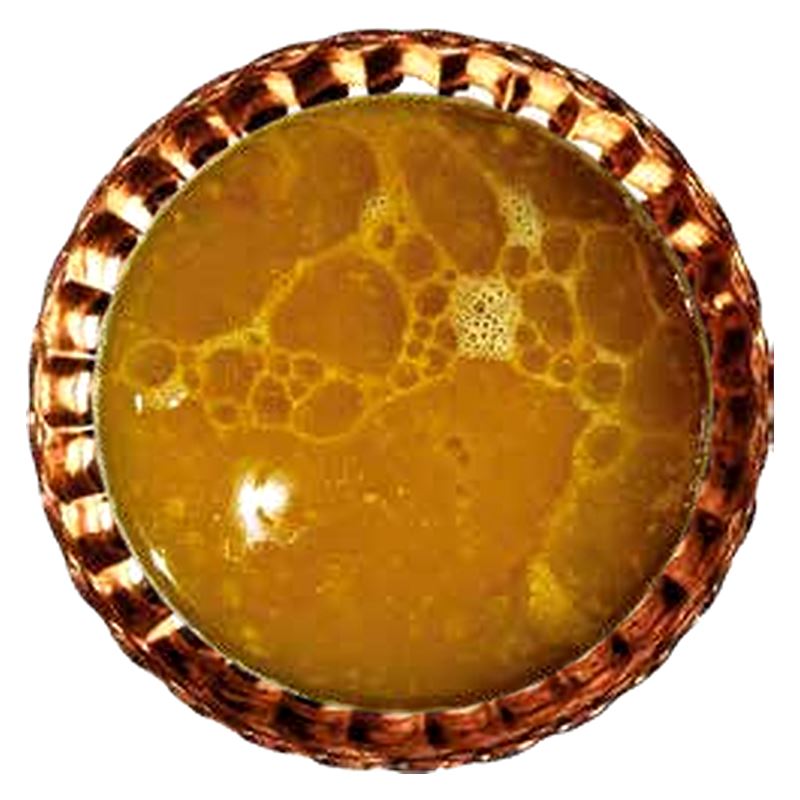
For a lot of children, yes. The broth carries the entire character of the dish: the long overnight simmer, the onion and turmeric, the deep savoury weight of lamb. What it does not carry is a decision about texture — and texture, far more often than flavour, is what settles a child's verdict.
So start with the old Persian habit called tilit: bread torn into the bowl until it softens and drinks up the broth — a warm, complete meal on its own. A child who empties a bowl of broth has genuinely eaten kalle pache. If that goes well, a slice of tongue on the side is the natural next step; our guide to ordering the soup on its own covers this lighter route.
How much do you actually add to the order for one child?
Less than most parents expect. A first taste is a taste, and the surest way to turn it into a refusal is a full portion in front of someone who did not ask for one. Three sizes of decision make sense:
- Add nothing at all. Ladle a few spoons of broth from the adults' bowls into a small empty bowl and tear in bread. It costs nothing and wastes nothing.
- Add a bowl of soup. Now it is theirs, which matters more to some children than the food itself, and it is still the mildest thing on the table.
- Add a portion of tongue to share — sensible only if the adults will finish whatever is left, which they usually will.
The one thing genuinely worth adding is more sangak. Bread is what children eat most of at this table, and running short is a far more common regret than ordering one dish too few. For a whole family order, how much to order per person is the companion page.
How do you serve it at the table so it is easy for small hands?
Small bowl, shallow, not full. It arrives properly hot, so let it stand a minute or two before it goes in front of a child: warm is the target, and the dish is at its best a little below scalding anyway, as what changes as it cools explains.
Leave their portion plain. Lime, crushed garlic, cinnamon and salt are the adult finishing ritual, and every one of them is assertive. Season your own bowl where they can see you, and let them ask for whatever they want to try. Tear the sangak into strips a small hand can hold and dip, and slice the tongue thinner than you would for yourself. Skip the doogh unless you know they like salty yoghurt drinks; water or tea is a good partner. And expect the bread to go faster than anything else — that is normal.
What do you do if they take one look and say no?
You say fine, and you eat your own meal. Nothing about a first taste improves under pressure, and a dish that gets bargained over tends to stay refused for years. Two things help before it gets that far: do not oversell it, because a long build-up tells a child there is something here that needs one; and do not be squeamish yourself, because children read hesitation faster than a menu. If they ask what it is, answer plainly — lamb, cooked slowly through the night until it is soft. If the answer is still no, the bread and broth in front of them are a meal, and plenty of people who love this dish turned it down the first time.
Is a first taste better at home or at the table with everyone else?
Both work. In the restaurant the whole room is eating the same thing, and that quiet social proof does more than any encouragement from a parent will. At home there is no audience — familiar bowls, a familiar table, and a child who can leave without the moment becoming an event.
Delivery across Dubai and pickup both suit the home version, and a scheduled order lets you pick the arrival time, so it lands when the child is actually hungry. Treat any leftovers as you would any cooked meat dish: cool and store them without long delay, warm them through gently and thoroughly, use your own judgement, and follow the food-safety advice you normally rely on.
Whenever the moment feels right, the kitchen is open. Browse the menu for delivery, pickup or dine-in, reserve a table, or call +971 4 321 8882. We are at 64 Jumeira Street, Jumeirah 1, open 24 hours a day, seven days a week, and the lamb is halal, in line with UAE law and standards.
