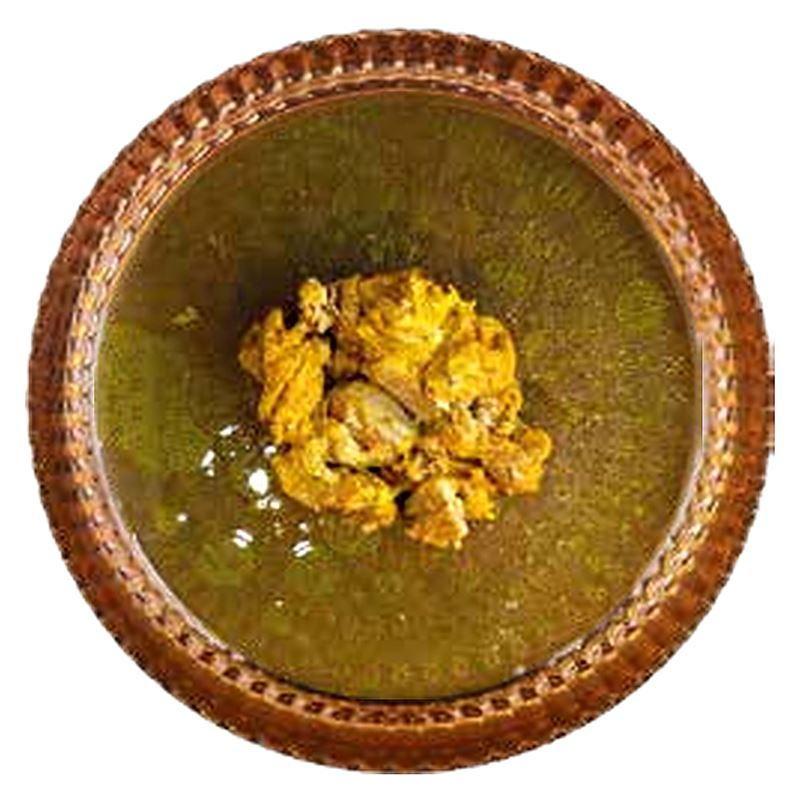
What Is the Lamb Eye (Cheshm) in Kalle Pache?
Among all the parts that make up a spread of kalle pache, the eye is the smallest and, for many Iranians, the most quietly prized. Called cheshm in Persian, it is a single, marble-sized morsel — and because a lamb has only two, it has always been treated as something special rather than something everyday. If you have heard it mentioned with a knowing smile at a Tehran breakfast table, this guide explains exactly what it is, how it eats and how to order it, with no drama at all. When you are ready, you can find it on the menu and order page.
Kalle pache is the classic Tehran-style dish of lamb slow-simmered overnight, known across the Gulf and Iraq as baja. It arrives as an assortment of parts — brain (maghz), tongue (zaban), trotters (pache), cheek (bonagoosh), meat (goosht) and more — each with its own character. The eye sits at the delicate end of that range, closer in spirit to the silky brain than to the chewy tripe. It is a traditional part, eaten for generations, and we treat it with the same respect the tradition gives it.
Why Is the Lamb Eye Considered a Treat in Iran?
Scarcity is part of the answer: two eyes per head means the cheshm was never a part you could pile on a plate. In many Iranian families it became a small honour — offered to a respected guest, to an elder, or to the person at the table who loves kalle pache most. There is even an affectionate old habit of giving it to a favourite child, wrapped in the folk saying that it is "good for the eyes." That is folklore rather than nutrition, and we mention it only because it captures how fondly the part is regarded. What matters at the table is simpler: it is a rare, tender bite that enthusiasts genuinely look forward to.
What Does the Lamb Eye Taste Like and Feel Like?
The flavour is mild and clean — far gentler than most people expect. Like the brain, the eye carries very little of the strong offal taste newcomers brace for; instead it takes on the turmeric, garlic and sweet onion of the golden broth it has simmered in. There is no chili heat anywhere in kalle pache — it is a comfort dish, never a spicy one.
The texture is where the eye is memorable: soft, gelatinous and rich, almost melting after the long cook. The outer part is tender and yielding; the tiny firm lens at the centre is usually set aside rather than eaten. Taken in a single spoonful over warm bread, it is a smooth, buttery mouthful — closer to a delicate custard than to anything you would need to chew.
Here is the eye at a glance:
| Feature | Cheshm (lamb eye) |
|---|---|
| Persian name | Cheshm |
| Size | Small — about a marble; two per head |
| Taste | Mild, clean, not gamey; soaks up the broth |
| Texture | Soft, gelatinous, rich — melts, no chewing |
| Heat level | None — kalle pache is never spicy |
| Best for | Enthusiasts and lovers of soft cuts like brain |
| How to order | As a single, or within the Special Mix platter |
Who Seeks Out Cheshm, and Who Prefers to Skip It?
Let us be honest, because that is the fair way to talk about a part like this. Enthusiasts and traditionalists seek the eye out precisely because it is soft, rare and a little ceremonial — if you already love the brain, you will very likely love the eye. Others prefer to skip it, and that is completely fine; usually it is the idea rather than the taste that gives them pause. Neither choice is wrong. Kalle pache has always been a spread you build to your own liking, leaving aside what you would rather not have and enjoying more of what you do.
If you are curious but unsure, the easy path is to try a small piece alongside gentler, familiar cuts — a little tongue or some meat — with plenty of fresh bread, so every bite is a choice rather than a leap. For a first-timer weighing exactly that decision, should you try the lamb eye the first time you eat kalle pache walks through eating one without ceremony, and passing on it gracefully.
Is the Lamb Eye Halal, and How Is It Cooked?
Yes — all our lamb is halal, in keeping with UAE law and standard practice, and there is no pork anywhere on the menu, so the eye is halal-appropriate like every other cut. It is cleaned carefully and then cooked the traditional way: the lamb simmers for roughly 14 hours in a copper pot with onion, turmeric and garlic, skimmed through the night until the broth turns the deep colour of strong tea. That slow, gentle heat is exactly what gives the eye its soft, melting character. In Persian tradition kalle pache is enjoyed as a hearty, comforting meal; this is culinary heritage rather than medical advice, and for any health question you should speak with a doctor.
How Do You Order and Eat the Lamb Eye?
You have two simple options. Order the eye (cheshm) on its own as a single if you already know you love it — keeping in mind it is limited, since there are only two per head — or choose the Special Mix platter so you can taste it beside brain, tongue, cheek and meat and decide for yourself. Sharing a platter is the traditional way to eat kalle pache, and it takes all the pressure off a first try.
At the table, eat it the Tehran way. Tear warm sangak bread, spoon a little broth over the eye, and season to taste with lime, a touch of crushed garlic, a pinch of cinnamon and salt — a little at a time. A cool glass of salted doogh balances the richness, a plate of mixed torshi or seven-year garlic pickle adds a sharp lift, and a pot of black tea closes the meal. When you would rather settle in and take your time, reserve a table and let us guide you through the spread.
Browse the menu and order page for dine-in, pickup or delivery across Dubai — free over AED 300, with the fee shown by area at checkout, and you can even pre-order for a specific time. Payment is by secure online card. We are at 64 Jumeira Street, Jumeirah 1, open 24 hours a day, seven days a week.
