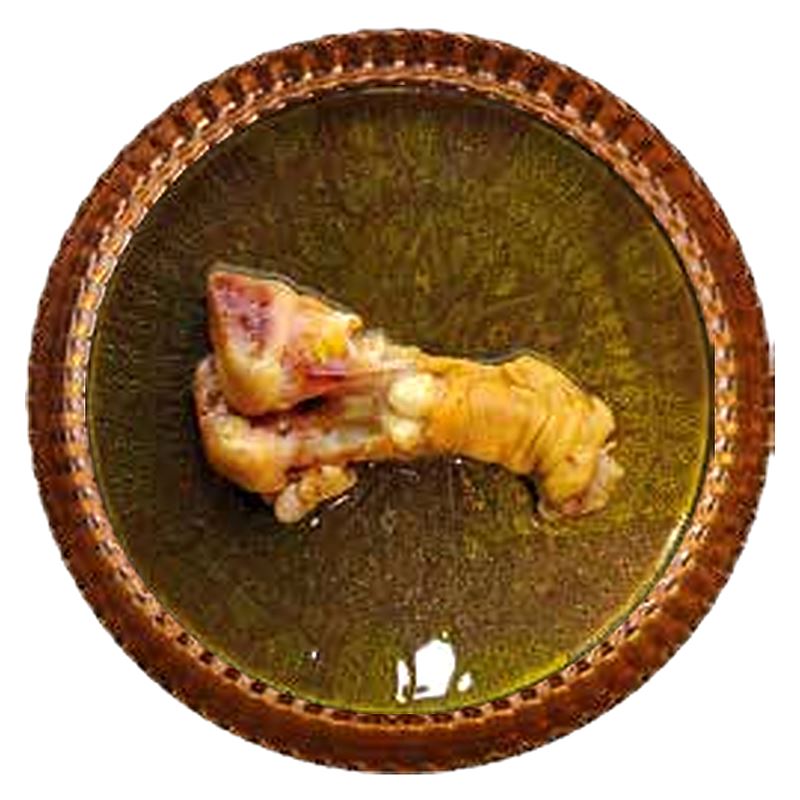
What Is Sirabi (Lamb Tripe) in Kalle Pache?
Every plate of kalle pache tells you something about the person who ordered it. Ask for the tongue and you are easing in; ask for sirabi and you are letting the table know you have been here before. Sirabi is lamb tripe — the lining of the stomach — and it is the one cut that quietly divides newcomers from devotees. Curious but a little unsure? That is exactly the right frame of mind. Browse the menu and order page when you are ready, but read this first so you know what you are saying yes to.
Kalle pache is the great Tehran-style dish of slow-simmered lamb, known in the Gulf and Iraq as baja. It arrives as a spread of different parts, each with its own personality. Tripe is called sirabi in Persian (often served alongside its cousin shirdan) and kirsha in Gulf Arabic. Look closely and you will see its signature honeycomb pattern — a soft, ridged surface a little like a coral reef. It is nothing like the smooth slices of tongue or the rich meat of the cheek, and that difference is the whole point.
What Does Lamb Tripe Taste Like and Feel Like?
Let us be honest, because that is the only way to talk about tripe. The flavour is the easy part: mild, clean and faintly savoury, with a gentle milky note and very little of the strong offal taste people brace for. Sirabi is essentially a sponge for the golden broth it cooks in, so it carries the turmeric, garlic and sweet onion of the pot rather than shouting over them. There is no chili heat — kalle pache is a comfort dish, never a spicy one.
The texture is where sirabi earns its reputation. It is springy and pleasantly chewy, with a gentle bounce that a long simmer softens but never fully erases. Enthusiasts adore exactly this: the way it holds broth in its honeycomb, the satisfying give under the tooth, the contrast against soft bread and tender meat. Newcomers are sometimes surprised by that same bounce. Neither reaction is wrong — it simply depends on whether you enjoy chew as part of the pleasure of eating.
Who Loves Sirabi, and Who Finds It Challenging?
Rather than promise everyone will love it, here is the honest map. Use it to decide where to start.
| You will likely love sirabi if… | You may want to start elsewhere if… |
|---|---|
| You enjoy chewy, springy textures — squid, well-cooked calamari, menudo or pho tripe. | Soft or slippery textures put you off and you prefer things that fall apart. |
| You like a mild cut that soaks up a good broth. | You want bold, meaty flavour front and centre. |
| You already enjoy kalle pache and want to explore its range. | This is your very first bowl and you want an easy win. |
| You like slowing down and savouring each bite. | You prefer to eat quickly without much chewing. |
If that second column sounds like you, begin with a gentler cut like lamb tongue or the meat, then come back to sirabi once the dish feels familiar. You can see every cut on the menu and order page and plan your plate before you visit.
How Do the Long Clean and 14-Hour Simmer Tame It?
With tripe, cleaning is not a step — it is the whole craft. Sirabi is scrubbed and rinsed again and again, ridge by ridge, until it is spotless, pale and completely free of any barnyard odour. This patient preparation is the difference between tripe done properly and tripe done badly, and it is why well-made sirabi tastes clean rather than strong.
Then comes time. The lamb simmers for about 14 hours in a traditional copper pot with onion, turmeric and garlic, skimmed every hour until the broth turns the deep colour of strong tea. Those long hours are what tame the chew: the springy honeycomb softens to a tender, yielding bite that still keeps a pleasant bounce. Rush tripe and it turns rubbery; give it the full simmer and it becomes something people crave. The lamb we use is halal, in keeping with UAE law and standard practice, and there is no pork anywhere on the menu.
How Do You Order and Eat Sirabi?
You have two easy paths. Order sirabi on its own if you already know you love tripe, or choose the Special Mix sampler or a larger platter so you can taste it beside gentler cuts and decide for yourself. Sharing a platter is the traditional way anyway, and it takes all the pressure off a first try.
At the table, eat it the way Tehran does. Tear warm sangak bread, spoon a little broth over a piece of tripe, and add lime, a touch of crushed garlic, a pinch of cinnamon and salt to taste — a little at a time. A cool glass of salted doogh cuts the richness, a plate of mixed torshi or seven-year garlic pickle adds a sharp lift, and a pot of black tea finishes the meal. First-timers, keep a slice of tongue or some meat on the plate too, so every bite is a choice rather than a leap. When you would rather settle in and take your time, reserve a table and let us guide you.
Is Lamb Tripe Halal and Nutritious?
Yes — all our lamb is halal, and there is no pork on the menu, so sirabi is halal-appropriate like every other cut. In Persian tradition kalle pache is enjoyed as a hearty, comforting meal, and tripe naturally contains protein and collagen. Exact amounts depend on the cut and portion, so we never quote numbers. This is culinary tradition rather than medical advice, and for any health concern you should consult a doctor.
Ready to find out which side of the table you are on? Browse the menu and order page for dine-in, pickup or delivery across Dubai — free over AED 300, with the fee shown by area at checkout, and you can even pre-order for a specific time. Payment is by secure online card. We are at 64 Jumeira Street, Jumeirah 1, open 24 hours a day, seven days a week.
