What is the Persian "warm and cold" food tradition?
Long before nutrition labels, Iranian home cooks sorted food into two families: garmi (warming) and sardi (cooling). In this folk system, every ingredient carries a "nature" — a quality believed to gently warm or cool the body — and a good meal is one where those qualities are kept in balance. It is a way of eating passed down at the family table, not a set of medical rules, and it explains why so many Persian households pair a rich dish like kalle pache with just the right drink and pickles. Once you understand the logic, a bowl of kalle pache reads very differently: not merely a soup, but the warm half of a plate that has been balanced on purpose.
Where does the idea of "warm" and "cold" foods come from?
The garmi/sardi idea grows out of an old Perso-Islamic understanding of temperament, often called mizaj (Persian: مزاج). In that tradition, foods, seasons and even people were described as leaning warm or cold, dry or moist, and health was pictured as a matter of keeping those qualities in balance. Similar hot-and-cold food systems appear across the region and in many cultures worldwide, which is part of why the vocabulary feels familiar to Arabic- and Persian-speaking families alike. It is important to say plainly: this is cultural heritage and folk belief, not modern science. We share it because it explains how the food is eaten, not because it is medical fact.
Is kalle pache considered a "warm" (garm) food?
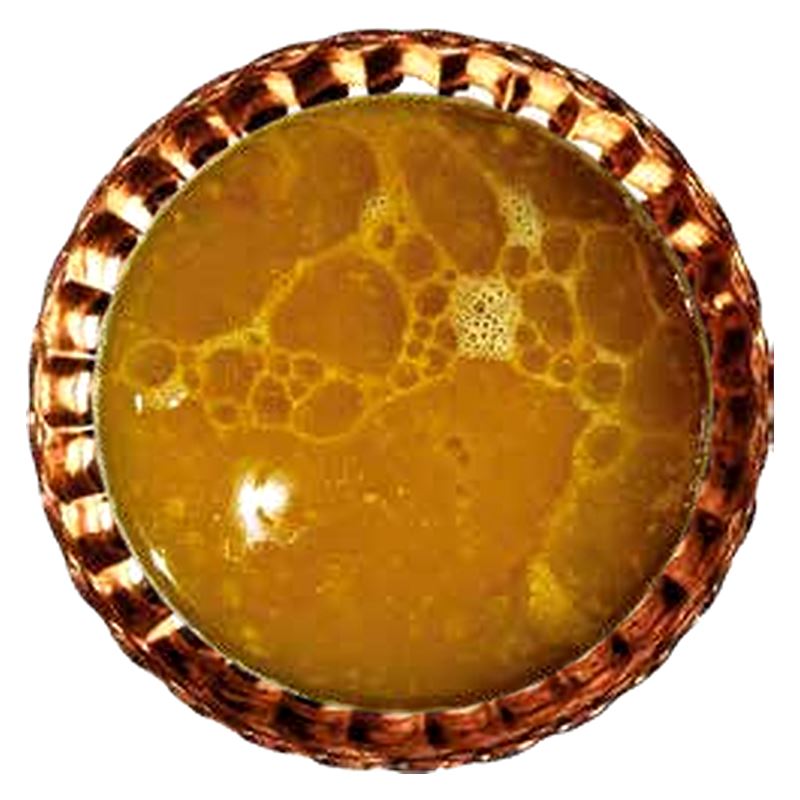
Yes — in the traditional classification, kalle pache sits firmly on the warming side, and it is often described as one of the most strongly garm dishes on the table. Several things earn it that reputation in folk thinking: it is lamb (we use halal lamb, in line with UAE law and standards), and lamb itself is considered warming; it is built from bones, head and trotters simmered for hours; and it is seasoned with onion, turmeric and garlic, all of which the tradition treats as warming. At Shaun the Sheep, the pot is hand-cleaned before dawn and simmered for around fourteen hours in a copper pot, skimmed hourly until the broth turns the colour of strong tea — exactly the kind of long, deep cooking that folk wisdom links to a "warming" food. You can see the full range on the menu and order page.
How do families balance a warming bowl?
Because kalle pache is seen as intensely warming, the tradition says you should pair it with cooling and sour companions so the meal feels balanced rather than heavy. That is exactly why the classic kalle pache table is never just the bowl on its own. Salted doogh, the tart yogurt drink, is considered cooling and is its natural partner. Sour torshi (mixed pickles) and fresh herbs are also treated as cooling, and their sharpness cuts through the richness. The result, in this way of thinking, is a plate that does not tip too far in one direction.
| At the table | Traditional nature | Its role in the balance |
|---|---|---|
| Kalle pache (lamb head & trotters) | Strongly warming (garm) | The warm centre of the meal |
| Doogh (salted yogurt drink) | Cooling (sard) | Sipped throughout to balance the warmth |
| Mixed torshi (sour pickles) | Cooling and sour | A sharp counterpoint that cuts the richness |
| Fresh herbs and greens | Cooling (sard) | Freshen the palate between bites |
| Seven-year garlic pickle | Garlic is warming, but eaten sour and in small amounts | A traditional digestive on the side, not a cooler |
| Sangak bread | Neutral, grounding | Soaks up the broth and steadies the meal |
What should I order to eat "in balance"?
Start with your warming centre — the plain broth, trotters (paye), a single cut such as tongue or lamb cheek, or the Special Mix if you want to try several cuts. Then add the cooling companions the tradition calls for: a glass of doogh, a dish of mixed torshi, and warm sangak to tear into the broth. A little seven-year garlic pickle is the classic digestive on the side. Communal platters come portioned for one, two, three or six, so a family can share one big warming bowl and balance it together. If you would rather gather around a table, you can reserve a table.
When do people eat warming foods like kalle pache?
In the tradition, warming foods are especially welcome when the body is thought to need warming: cold mornings, winter days, and before a long or demanding day ahead. That is one reason kalle pache has always been a dawn food, eaten early and slowly. Dubai's weather is different, of course, but the rhythm survives — many people still reach for it early in the morning or late at night. Because our one kitchen on Jumeira Street is open 24 hours a day, 7 days a week, you can follow that rhythm whenever it suits you, and you can even schedule a pre-order for a future time.
Is the warm-and-cold food idea scientifically proven?
No. The garmi/sardi system is a traditional cultural belief and a way of thinking about food, not a scientific or medical fact, and there is no proof that any food warms or cools the body in the literal sense the tradition describes. Kalle pache does not cure, treat or heal anything, and none of this is dietary or health advice. If you have a health condition, are pregnant, or are watching cholesterol, salt or rich foods, please speak to a doctor or a qualified dietitian about what is right for you. We share the warm-and-cold tradition simply as part of the culture around the food. When you are ready to enjoy it as exactly that — a delicious, deeply traditional meal — you can order online for delivery across Dubai, with free delivery over AED 300 and secure online payment.
