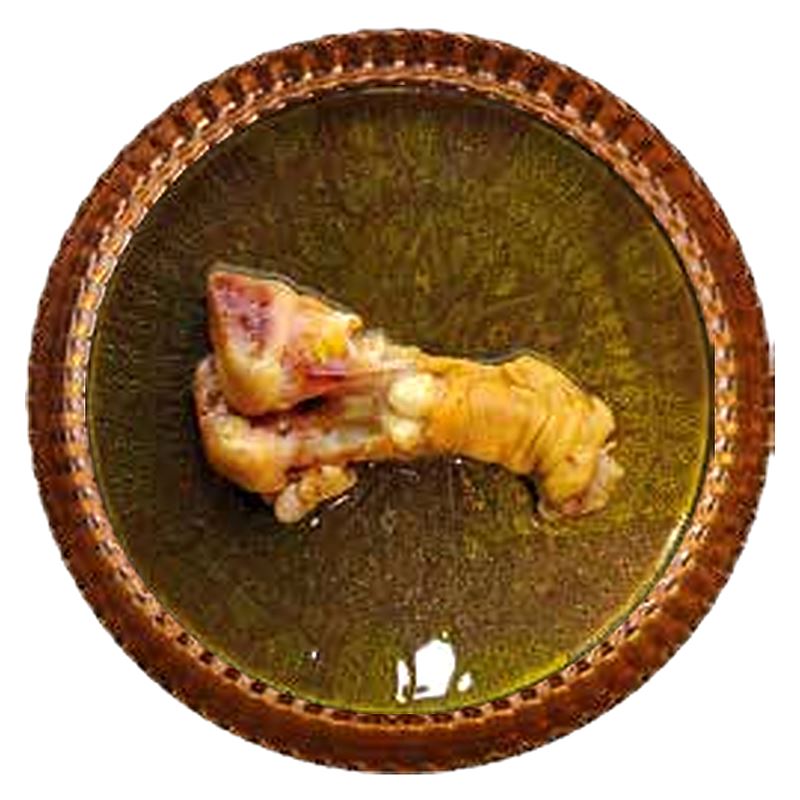
Kalle Pache and the New Mother: A Persian Postpartum Tradition
In many Persian and regional households, the days that follow a birth have their own quiet grammar of care. Relatives arrive with covered pots, the kitchen stays warm through the night, and somewhere near the centre of it all sits a bowl of steaming broth for the new mother. Often that broth is paye — the gentle, gelatinous liquor drawn from slow-simmered lamb trotters, a close cousin of the celebrated kalle pache. This article describes that custom with affection and respect. It is a cultural portrait, not a health guide.
Please note: everything here is offered as tradition and as "traditionally believed." It is not medical advice. Every new mother should follow the guidance of her own doctor or midwife about what to eat and drink after childbirth.
Why is warm broth given to new mothers?
Across Iran, Iraq and the wider Gulf, food after childbirth is understood as a language of comfort. In many folk frameworks certain foods are considered "warming," and a rich, restful broth has long been offered to a woman recovering from labour as a way of saying rest, be nourished, be looked after. The paye broth tradition sits inside this wider custom of surrounding a new mother with warmth, quiet and unhurried, home-cooked food.
What families have long valued in the bowl is its texture and depth: trotters simmered for hours release collagen and gelatin, giving the broth its silky body. We describe these qualities the honest way — the exact protein, collagen or mineral content depends entirely on the cut and the portion, so we never quote numbers. For more on that texture and what it is made of, see our guide to kalle pache, protein and collagen.
How the broth is traditionally made
Real kalle pache is unhurried by nature. At its heart are lamb head and trotters, cleaned with great care and simmered for around 14 hours in a copper pot with onion, turmeric and a little garlic. The pot is skimmed by hand every hour until the surface is clear and the liquid deepens to the colour of strong tea. For a new mother, families most often ladle out the lighter portions — the clear paye broth and tender meat — served with warm sangak and, for those who like it, a whisper of lime and cinnamon.
Postpartum broth across cultures
The instinct to feed a new mother warm, collagen-rich broth is not Persian alone. Many cultures share a version of it, which is part of what makes the custom so moving.
| Culture | Dish traditionally offered | Traditionally associated with |
|---|---|---|
| Iran | Paye / kalle pache broth | Warmth, rest and strength |
| Iraq & the Gulf | Baja (al-baja) | Nourishing, warming care |
| Korea | Miyeok-guk (seaweed soup) | Recovery after birth |
| China | Confinement soups | Warmth and replenishment |
Read across the row and the same idea appears everywhere: a warm bowl is a way for a family to carry a new mother through a tender time. None of these traditions is a medical prescription; each is a cultural expression of care.
What the regional names mean
Because this dish travels, its names travel too. In Persian it is کلهپاچه; the trotters alone are paye (پایه). In Iraq and parts of the Gulf the whole dish is known as baja / الباجة. If you would like to understand the family of names before you order, our short guide to paye, baja and the other names lays them out gently.
Ordering paye or broth in Dubai
At Shaun the Sheep, our Tehran-style kalle-pache house at 64 Jumeira Street, Jumeirah 1, we simmer through the night so a good bowl is never far away. If someone in your family is resting at home, you can order the plain broth, the paye, or our Special Mix sampler platter and have it delivered Dubai-wide — the delivery fee is set by area at checkout — or collect it yourself. Our lamb is halal in line with UAE law, and communal platters serve 1, 2, 3 or 6 people. Browse the full menu and order page, or reserve a table if you would rather gather around the pot together. We are open 24 hours a day, seven days a week; the kitchen line is 04 321 8882.
However you honour the tradition, let the last word be the gentle one: a warm bowl is a thoughtful gift, but it is care, not medicine. For anything to do with recovery after birth, a new mother's own doctor or midwife always comes first.
