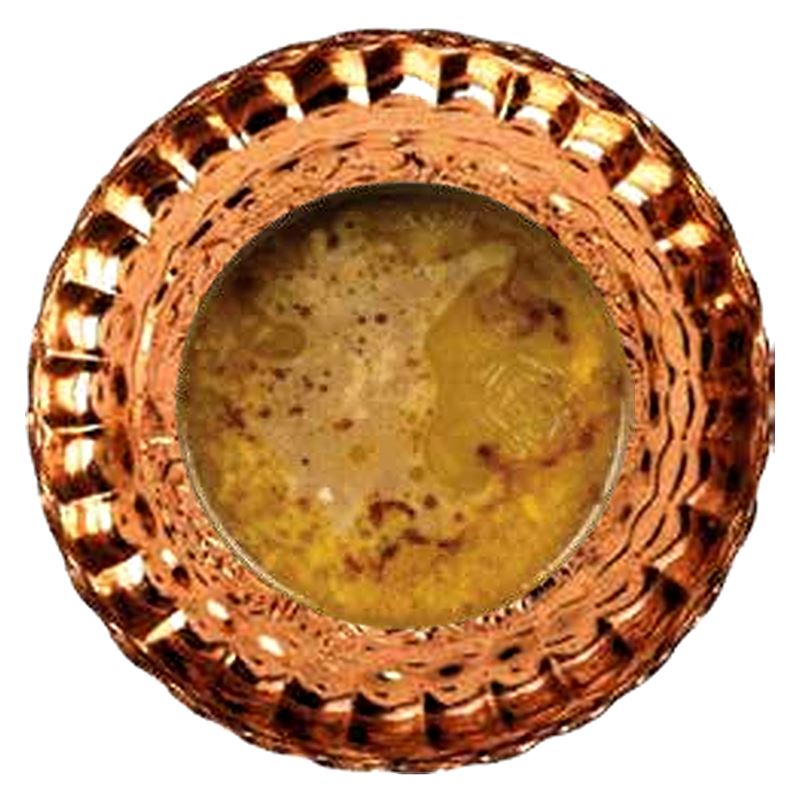
The last glass: why chai closes a kalle pache breakfast
In Tehran, a kalle pache breakfast does not end when the bowl is empty. It ends with tea. After the broth the colour of strong tea, the tender lamb, the torn sangak and the sharp bite of garlic pickle, someone reaches for the kettle and pours. The small glasses go round, and the table exhales. This is the Persian tea ritual — the quiet, warming close that Iranians have kept for generations, and the reason a good kalle pache house always keeps a pot near the boil.
What is the Persian tea ritual?
Persian tea is black tea brewed strong and served clear. On a classic samovar, water stays gently at the boil below while a small teapot rests on top, the leaves steeping slowly into a dark, fragrant concentrate. To pour a glass you mix a little of that concentrate with hot water from the kettle, deciding then and there how strong you want it. There is no milk. There is glass, not a mug, so the colour is part of the pleasure — a Tehrani will judge tea by its clarity and its deep amber-red before the first sip.
How do you take Persian tea with sugar?
The most beloved way is qand pahlu — sugar "by the cheek." You place a cube of ghand (sugar) between your teeth or tuck it into your cheek, then draw the hot tea through it. The sugar sweetens the sip on its way in rather than dissolving into the glass, which stays clear and slightly bitter. Others prefer nabat, saffron rock sugar stirred until it dissolves, or a date or raisin taken on the side. However you sweeten it, the point is the same: a warm glass to settle a rich meal and give the table a reason to linger.
Tea styles and how to take it
| Style or term | What it means | How it's taken |
|---|---|---|
| Porrang (strong) | Deeply steeped, dark as the kalle pache broth | Sipped slowly; cuts through the richness of the meal |
| Kamrang (light) | The same tea let down with more hot water | A gentler glass, good late in a long breakfast |
| Qand pahlu (sugar cube) | A cube of ghand held in the cheek | Tea drawn through it so the glass stays clear |
| Nabat (rock sugar) | Crystal or saffron rock sugar | Stirred in until dissolved for a softer, aromatic sweetness |
| With a date or raisin | Dried fruit taken alongside | Bitten between sips instead of adding sugar |
Why does a warm glass suit a rich meal?
Kalle pache is generous food — lamb head and trotters simmered for about 14 hours until the broth runs deep and full of collagen and gelatin. A glass of hot, faintly bitter tea is the traditional counterpoint: it warms the hands, clears the palate, and slows everyone down so the meal ends in conversation rather than a rush. This is culinary custom rather than any health claim — we make no medical promises, only the promise of a good, unhurried finish. If you are new to the whole spread, our guide to sides for kalle pache shows how sangak, torshi, doogh and tea each play their part.
Samovar or kettle: how the tea reaches the table
At home in Iran, the samovar is the heart of the room, humming all morning. In a busy restaurant the same result comes from a strong pot kept freshly brewed, poured to order. Either way the tea is fresh, dark and hot, never stewed to bitterness or left to go flat. When it arrives in small glasses, you top each one to the strength you like from the kettle — your table, your ratio.
How we serve Persian tea in Dubai
At Shaun the Sheep, our Tehran-style kalle-pache house at 64 Jumeira Street, Jumeirah 1, we serve black tea by the glass and a kettle of tea for the table — the natural way to close a plate of paye, zaban, maghz or the Special Mix. Our lamb is halal, and we are open 24 hours, 7 days a week, so the ritual is here whether you come for a dawn breakfast or a 3am bowl. Browse the menu and order page to add tea to your order for delivery or pickup across Dubai, or reserve a table and let us bring the kettle to you. Pour, hold the sugar in your cheek, and let the last glass do what it has always done.
