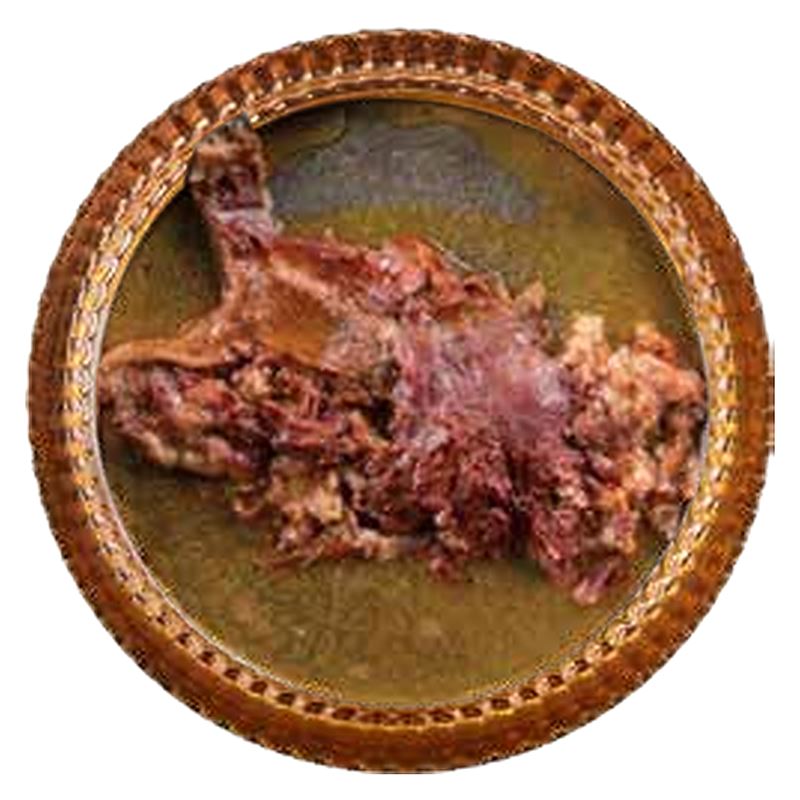
Where Does the Lamb in Our Kalle Pache Come From?
Kalle pache is an honest dish in the most literal sense: there is nowhere to hide. You are eating head, trotters, tongue, brain and cheek — the cuts that carry the most character and the least tolerance for careless handling. A mediocre kebab is still edible; a carelessly sourced head is not. That is why sourcing is the first decision of our day rather than an afterthought at the end of it.
Our lamb is halal, supplied and handled under UAE law and the meat standards that apply here. Just as importantly, we buy against the day we are actually cooking, in quantities our copper pots can finish. The cuts move from supplier to prep bench to pot inside one cycle; nothing waits around for a slow week. That single habit — buying to cook rather than buying to store — removes most of the risk before anyone lights a flame.
What Does Halal Mean for a Kalle Pache Kitchen in Dubai?
In the UAE, halal is not a marketing sticker; it is the regulated baseline for meat, covering how the animal is slaughtered and how the supply chain is documented and inspected. For a kitchen built on offal, that has a very practical consequence alongside the religious one: an animal handled properly from the start arrives as a cleaner head and cleaner trotters, which means there is nothing to mask later. Careless supply shows up as odour, and odour is what people wrongly blame on the dish itself.
Why Do Heads and Trotters Need So Much Hand-Cleaning?
This is the least glamorous and most decisive part of the day, and it happens before dawn while the city is quiet. Each head is scraped and singed until the skin is bare, then split so the interior can be reached. The brain is lifted out whole and kept aside, because it is fragile and does not want the same treatment as bone and skin. The tongue is scrubbed. The trotters get the most patience of all: grit collects between the toes and around the hoof line, and it comes out only with fingers, a blade and repeated rinsing in cold — not warm — water, changed again and again until the water runs clear.
No machine does this well. A machine can move volume, but it cannot feel a missed patch or notice that one trotter needs another minute. Hand-cleaning is the single biggest reason a finished broth smells clean and sweet rather than gamey, and it is the step rushed kitchens quietly shorten because nobody in the dining room can see it. You can smell it, though. Everyone can.
Is the 14-Hour Simmer About Flavour or About Food Safety?
Both, and they are inseparable. Flavour first: the collagen in skin, bone and tendon only becomes silky gelatin under long, low heat. That is why our pot runs roughly fourteen hours in copper with onion, turmeric and garlic, skimmed by hand every hour until the broth is the colour of strong tea. Skimming is not decoration — the grey foam that rises is coagulated protein and impurity, and pulling it off is what keeps the liquid clear instead of muddy.
Safe handling comes from the same clock. A long, sustained simmer holds the food far above the lukewarm middle ground, hour after hour, rather than dipping in and out of it. The pot goes from raw to a steady simmer and stays there until it is served hot. The temptation to boil hard and finish in four hours does the opposite of what people assume: it emulsifies loose fat into the liquid, clouds it, toughens the meat, and still leaves you with a pot that has to be parked somewhere for the rest of the day.
Why Do We Cook Fresh Every Day Instead of Holding Stock?
Because kalle pache is at its best in a window, and that window is short. Aromatics fade first — the turmeric-and-garlic warmth flattens within hours. Then the texture goes: gelatin that was glossy turns rubbery once it has been cooled and revived a second and third time. Holding stock is a business convenience, not a cook's decision.
Being open 24 hours, 7 days a week is what makes cooking daily practical for us. The pot is always moving; portions leave through the night and the morning rush, so nothing sits around waiting for demand that may never arrive. Turnover, in this trade, is a freshness feature.
Where do the shortcuts actually happen?
| Stage | A careful kitchen | Where shortcuts creep in |
|---|---|---|
| Sourcing | Halal supply, bought for today's pot | Bulk buying to store for the week |
| Cleaning | Hand-scraped, repeated cold rinses | Fast rinse, odour masked with spice |
| The simmer | About 14 hours gentle, skimmed hourly | Hard boil, a few hours, unskimmed |
| Holding | Cooked to the day, served hot from the pot | Cooled, stored, reheated repeatedly |
| Service | Brain kept separate and intact | Everything stirred into one pot |
How Can You Tell a Trustworthy Kalle Pache Kitchen?
You do not need a kitchen tour. Four checks will tell you almost everything, in Tehran, Dubai or anywhere else:
- Ask what time today's pot went on. A kitchen that cooks daily answers instantly and with some pride. Hesitation is itself the answer.
- Read the broth. Clear, the colour of strong tea, glossy from natural gelatin. Cloudy, grey or slicked with loose fat means a hard boil or thin skimming.
- Trust your nose. The aroma should be mild and savoury. Aggressive spice on an offal dish is usually a cover, not a style.
- Look at the brain. Maghz should arrive pale, intact and served as its own thing, not broken up and hidden in the bowl.
A fifth, quieter signal: turnover. A busy counter means the pot empties and is replaced. An empty room with a full pot means that pot has been sitting.
What Happens Between the Pot and Your Table?
Dine in at 64 Jumeira Street, Jumeirah 1, and the bowl comes straight from the pot with warm sangak beside it. For pickup and delivery, broth and solids are packed to travel hot and to be finished quickly at the other end — kalle pache is not a dish to leave in the car. We deliver across Dubai, with the fee set by the area you select at checkout. If you do have leftovers, bring them to a full simmer once and eat them; do not cool and revive the same portion over and over.
You can see the whole range — communal platters for one, two, three or six, singles such as brain, tongue, paye, lamb cheek, meat, tripe, brain soup, plain soup and the Special Mix, plus sangak, torshi, seven-year garlic, tea and doogh — on the menu and order page, or reserve a table if you are bringing a group.
Is Kalle Pache Suitable If You Have a Health Condition?
Everything above is culinary craft, not medical advice. Kalle pache is a rich, traditional dish, and how it fits any individual diet depends on that person. If you are managing cholesterol, gout, kidney concerns, pregnancy or anything else, please consult your doctor about your own situation rather than relying on tradition or on us. What we can promise is the part that is ours to control: halal sourcing, hands in cold water before dawn, fourteen hours of patience, and a pot that is cooked for today.
