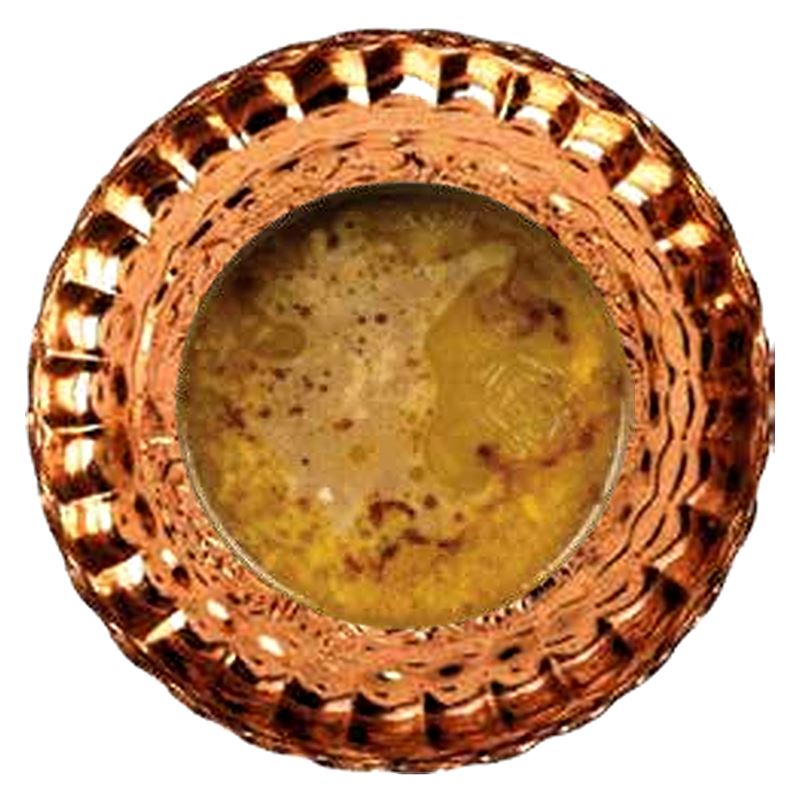
Sending food to someone who is under the weather is one of the oldest gestures there is, and in Dubai it is often the only practical one. Most of us have parents and brothers and sisters in another country, and the friends we have here are somebody else's family too. When one of them is at home and not feeling their best, you cannot send an aunt round with a covered pot. You can send dinner instead.
The honest part belongs at the top. You are not sending medicine. Food does not treat anything, shorten anything or fix anything, and we are never going to tell you otherwise. What you are sending is warmth, and the plain message that somebody thought about them today. This page is not medical advice. The rest of it is about doing the sending well: their address, their phone number, a modest order, an hour that suits them.
What are you actually sending when you send food to someone who is unwell?
You are sending attention, and that is the whole of it. Someone stopped in the middle of their own day, thought about a friend stuck at home, and arranged for something hot to arrive at their door. The food is the delivery mechanism; the thought is the gift.
There is a practical side too. Cooking is the first thing that gets abandoned when a person feels rough, and asking for help is the second. A meal that simply turns up removes both problems at once, without anyone having to admit they were struggling. That is also why a small, well-judged order lands better than an enormous one: you are not catering an event, you are covering one meal.
Is any of this medical advice?
No. Nothing on this page is medical advice, and nothing here is a reason to eat or to avoid anything.
This is not medical advice. If someone is unwell, their doctor decides what they should eat and drink. If they have been told to follow a particular diet, follow that and ignore anything here that conflicts with it. Questions about food and health belong with a doctor or a registered dietitian, not with a restaurant.
The practical version of that rule is simple: ask them. A short message — would a bowl of soup be welcome today, or is this the wrong day for it — settles the question properly. If they have been given instructions about what to eat, check before you order anything at all. Kindness that ignores the instructions is not kindness.
Why do people carry broth to a friend's door?
Because they always have, more or less everywhere. In many households a pot of soup is what turns up at the door when a neighbour or a cousin is laid up: a chicken soup in one kitchen, a bowl of rice porridge in another, a long-simmered broth somewhere else again. The details vary enormously by region and by family, and we would rather say so plainly than pretend to be authorities on anybody else's cooking.
What matters here is that this describes a custom — what people do — and not what food does. People carry broth to each other because it is hot, because it is easy to hand over at a door, and because the act says something that is hard to say out loud. These dishes are cousins across a wide map, never a competition. We cook the Persian one, kalle pache, and only that one; there is a separate page on how kalle pache is made.
How do you send kalle pache to somebody else's address in Dubai?
You order exactly as you would for yourself, with one change that matters: every detail on the delivery form should be theirs, not yours.
- Choose the food on the menu and order page. Keep it modest — the next section covers what usually suits.
- Enter their address. You pick their area of Dubai and mark the exact spot, and both are needed, because the marked spot is what the rider drives to. If you are unsure of the building, ask them rather than guessing.
- Enter their phone number, not yours. The rider phones on arrival, so the number has to belong to whoever will open the door.
- Pay by card online. Payment is secure online card prepay only, which suits gifting well: nobody at the other end is asked for money at the door.
- Expect no account and no sign-up. Checkout is for guests. There is no password to create and nothing saved for next time.
One thing to know before you start: there is no notes field for the kitchen or for the rider. If something needs saying — a gate code, a request, any detail — phone 04 321 8882 and say it to a person. That number is our only contact channel. There is also a longer guide to ordering online step by step, and one on how delivery across Dubai works.
Should you tell them it is coming, or make it a surprise?
Tell them — the surprise is worth giving up. Two questions cover it. Is anyone at home, awake, and able to answer the door and the phone? And is there anything they would rather not eat right now? A surprise is a lovely idea in principle and an awkward one at a locked door with a rider standing outside it.
If they live with family or share a flat, tell whoever is most likely to be up. A parent, a flatmate or an older child can take the delivery in, which beats making someone get up off the sofa. The same logic applies when you are ordering for parents or older relatives.
What should you order for somebody who is not up to much?
Something small and simple. Soup on its own is the gentle option, and for a lot of people it is the whole answer. Everything else in this table is a step up from there, and you rarely need to go far up it.
| Choice | What it is | When it suits |
|---|---|---|
| Soup | The broth on its own, in a bowl | The default gift, and the least effort to face. |
| Brain Soup | The soup with brain in it, richer than the plain bowl | Someone who knows the dish and wants a little more of it. |
| Single Dish | The smallest of the platters, one proper portion | Someone eating normally who simply does not want to cook. |
| Sangak Bread or Special Sangak | Persian flatbread that goes with anything on the menu | Always welcome, and happy sitting on the side. |
| Tea, Black Tea, Kettle of Tea | Hot tea; the kettle is for a household rather than one person | The thing that gets drunk on a day when nothing else does. |
| Mixed Torshi or Garlic Torshi | Sharp Persian pickles | Only if you know they like sharp things. |
What to leave alone: The Khan's Platter, The Full Dish and the Double Dish are built for a table of people passing plates around, and sending one to a single person who is resting is generosity pointed in the wrong direction. Most of it will sit in the fridge and turn into a chore. We have written about the platters and who each size is for. The same restraint applies to the add-ons: fresh chili is not something to spring on a person who did not ask for it.
One detail worth knowing: the seasoning is not done in the kitchen. Lime, cinnamon and garlic go in at the table, to the taste of whoever is eating, so the food arrives plain and adjustable — exactly what you want when you cannot ask them mid-bowl. If you have never eaten it yourself, we have described what kalle pache tastes like and ordering the soup on its own. The lamb is sourced to the UAE halal standard, which we go through on the page about whether kalle pache is halal.
When should the food arrive?
At an hour that suits them, which is not necessarily the hour it occurred to you. The kitchen is open 24 hours a day, seven days a week, so the timing is genuinely your choice — and that freedom is easy to misuse. A resting household does not want a doorbell at five in the morning.
If you are ordering late at night for a friend who is asleep, schedule it. At checkout you can pick a future time up to about two days ahead, so tomorrow at lunchtime is an ordinary thing to book. The order waits quietly until then, and scheduling is also the polite way to handle a house with small children in it.
What happens after you pay?
Your order gets its own page. The kitchen accepts it and sets an estimated time, and that estimate appears on the page. Keep it open: it is how you know what to tell your friend, so they are not watching the door all afternoon.
We do not quote delivery times in minutes anywhere on this site and we are not going to start here. The estimate belongs to the kitchen on the day, and it is an estimate rather than a promise. When the rider arrives, they phone the number on the order — which is why that field needs to be theirs.
Can you send it if you are not in Dubai yourself?
The order does not need you to be in Dubai; it needs their Dubai address and a phone number the rider can reach. You handle the paying, they handle the door. What we will not do is tell you which cards work from where — that is not something we can answer honestly in an article, so phone 04 321 8882 and ask first.
What if you need to change the order, or the kitchen cannot cook it?
Phone 04 321 8882 straight away. There is no cancel button and no edit screen — changes are made by talking to a person, and the sooner you call the better. Wrong address, wrong hour, second thoughts: the fix is the same phone call.
Sometimes the kitchen cannot fulfil an order. When that happens it is rejected with a reason and the payment is refunded automatically. We will not put a number of days on when the money reappears, because that part is not ours to promise.
How much is delivery?
Delivery is free on orders over AED 300. Below that there is a fee, and because it depends on which part of Dubai the order is going to, it is not a number we can quote in an article. A modest gift may well sit under the threshold, and that is fine — do not pile on food nobody wants just to cross a line.
Can you collect it and take it round yourself?
Yes, and sometimes that is the better version of the gesture. Pickup is available: order and pay online in the same way, then collect from the kitchen at 64 Jumeira Street, Jumeirah 1, and carry it to their door yourself. There is one kitchen and no branches, and dine-in is available at the same address at any hour once they are up and about again. We have also written about kalle pache in Dubai, sending it as a gift, and sending it to new parents.
What is the short version?
Ask first. Choose something modest — Soup on its own is usually right. Put their address and their phone number on the order, pick an hour that respects their sleep, pay by card, and message them to say it is on the way. Then let it be exactly what it is: not a treatment and not a cure, just a hot bowl that turned up because somebody was thinking of them. You can start on the menu and order page.
