Why does kalle pache mean so much more to Iranians than a bowl of soup?
Because in Persian, kalle pache never arrives alone — it brings a whole vocabulary with it. Ask someone who grew up in Tehran what kalle pache is and you almost never get a description of the broth first. You get a scene: a window fogged over at five in the morning, a queue that formed in the dark, a ladle ringing against the rim of a copper pot, and a folded sheet of sangak carried home flat across two hands because it is still too hot to hold properly.
Then you get the jokes. Nearly every part of the animal on that table lives a second life inside an idiom. Head, brain, tongue, trotters and the soft cheek behind the ear are not only cuts of lamb — they are words Iranians use every day to talk about stubbornness, foolishness, insolence and flattery, usually without noticing where the words came from. You cannot explain kalle pache by listing ingredients any more than you can explain a proverb by translating it word for word.
What actually happened inside a Tehran kalle-pazi before dawn?
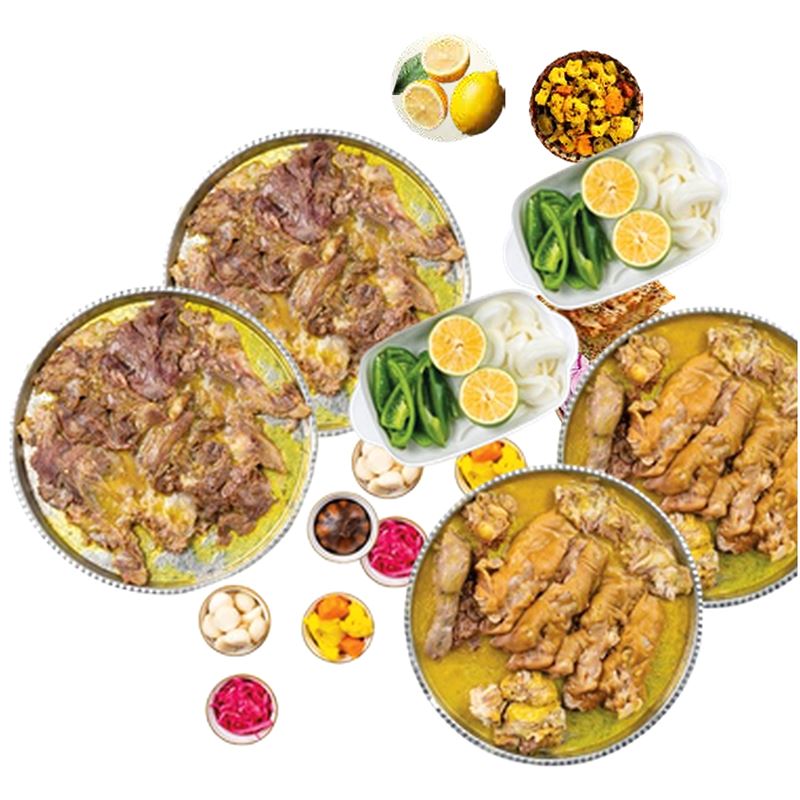
The kalle-pazi — literally the head-cooker — was one of the very few places in an Iranian city that opened while everybody else was asleep and closed around the time the rest of the world started work. Small, wet with steam, and lit in the particular way only a five-in-the-morning shop is lit. You ordered by the part rather than by the plate: maghz (brain), zaban (tongue), pache (trotters), bonagoosh (the cheek), sirabi (tripe) — or you gave up and asked for a mix. Nobody read a menu. Somebody at the next table always told you what you should have ordered instead, whether or not you had asked.
What made it an institution rather than a takeaway counter was the seating. Strangers sat elbow to elbow at shared tables and talked before the day had a chance to sort anyone into ranks. There were rules nobody wrote down: the bread arrives hot or it does not arrive, the seven-year garlic stays within reach of the whole table, the last spoonful of broth belongs to whoever is still holding bread, and nobody eats brain in silence.
Which Persian sayings and jokes actually come from kalle pache?
More than most Iranians consciously realise. The language of the dish is the language of character. Here are the ones you will hear at a real table, often aimed at the person who is eating that exact part at that exact moment.
| Persian expression | Literally | What it means | Where it meets the table |
|---|---|---|---|
| maghz-e khar khordan | to have eaten donkey brain | to be behaving absurdly, to have lost your judgement | said with a straight face to whoever just ordered maghz |
| pache-khari | trotter-eating | shameless flattery, sucking up | the word every Iranian knows long before they know the cut |
| ta bonagoosh sorkh shodan | to redden as far as the bonagoosh | to blush right up to your ears | bonagoosh is also the lamb cheek, quietly the best piece |
| kalle-shagh / kalle-pouk | hard head / hollow head | pig-headed / empty-headed | two of dozens of kalle words in daily speech |
| zaban-derazi | long-tonguing | talking back, insolence | zaban, tongue, is one of the most prized singles |
| sar-o-kalle zadan | to knock heads together | to wrangle and argue with someone | exactly what happens over the last piece |
| sahar-khiz bash ta kamrava shavi | rise at dawn and you will prosper | the classic argument for being up early | the entire moral defence of a 5 a.m. breakfast |
A note of honesty on pache-khari: etymologists are not unanimous. Pache also means the cuff of a trouser leg, and one reading of the word is about grovelling around somebody's ankles rather than eating their trotters. Either way, the dish and the insult share a syllable, and Iranians thoroughly enjoy the overlap.
Why is kalle pache itself a running joke in Iranian humour?
There are three reliable punchlines. The first is the hour — kalle pache is the only thing on earth that gets an Iranian out of bed voluntarily at five in the morning, and everyone knows someone who will not answer a phone call before noon but will happily drive across town in the dark for a bowl. The second is the sleep that follows: the traditional wisdom holds that a proper bowl sends you straight back to bed, so Friday plans made over breakfast quietly collapse by ten. The third is the squeamish friend — the one who eats the broth and the bread with tremendous enthusiasm, swears they touched nothing else, and is contradicted by the entire table.
Why do Iranians call kalle pache a dish that crosses classes?
Because at dawn, the queue does not sort itself. By long reputation the kalle-pazi was the one address in the city where a labourer heading to a site at six, a bazaari on the way to open his shop, a taxi driver at the end of a night, a surgeon after a shift, a professor and a poet with a notebook all stood in the same line and were served in the order they arrived. It was within reach of a working man before a long shift, and prized enough that people who could eat anywhere still crossed town for it. Very few foods anywhere in the world manage both, and Iranians are quietly proud of that.
It also explains where the dish lives in the language. Kalle pache belongs less to the classical poetry of the great divans than to the register underneath it — everyday speech, jokes, family arguments, the things people actually say to each other with their mouths full. That is a more durable kind of literature than it sounds.
Why do Iranians abroad talk about kalle pache with so much feeling?
Because what emigration takes away is not the recipe — it is the institution. You can find lamb anywhere. What you cannot easily find is a room where the steam is thick at five in the morning, where bread arrives too hot to hold, where somebody at the next table has an opinion about your order, and where three generations of one family will argue for twenty minutes about who gets the cheek. Persian has a word for the ache that follows: delatang, tight-hearted. It is not really about missing a flavour. It is about missing a morning.
What should you order if you want the culture and not just the dish?
Order for a table rather than for yourself, because this was never a solo food. Platters are built for one, two, three or six people, which is much closer to how the dish is genuinely eaten than a single bowl. If you already know exactly what you miss, order it as a single — brain, tongue, trotters, lamb cheek, meat or tripe. If you cannot choose, and most people cannot, the Special Mix is the modern version of letting the man behind the counter decide for you. New to it, or easing back in after years away? Plain soup or brain soup with warm sangak is the gentle door in. Add mixed torshi and seven-year garlic pickle to cut the richness, doogh or hot tea to close the pattern, and you have the whole tradition on one table. It is all set out on the menu and order page.
Where can you keep the kalle pache tradition going in Dubai, and is it a heavy meal?
At 64 Jumeira Street, Jumeirah 1, at whatever hour you happen to need it. Shaun the Sheep cooks Tehran-style kalle pache and is open 24 hours a day, 7 days a week, so the dawn ritual can be an actual dawn, a Friday morning with family, the end of a night shift, or one in the morning when you are simply homesick. Everything is hand-cleaned before dawn and simmered for around fourteen hours in a copper pot with onion, turmeric and garlic, skimmed every hour until the broth is the colour of strong tea. The lamb is halal, in line with UAE law and standards. Delivery reaches across Dubai with the fee set by the area you choose at checkout, and pickup and dine-in are always there. For a proper gathering — the kind where the arguing starts before the bread lands — it is worth booking ahead, so reserve a table.
On richness: kalle pache has been treated for generations as an occasional, restorative food for cold mornings and gatherings, and part of its cultural meaning is precisely that it was not an everyday meal. We write about it here as culinary tradition, not as medical advice, and we make no health claims. If you are managing a specific condition or watching cholesterol, gout or anything else, please talk to your doctor about your own circumstances rather than to a restaurant blog. If you have a food allergy, contact us directly before ordering and we will tell you exactly what is in the pot.
Then bring somebody who will argue with you about which part is best. In Persian, that argument is not a side effect of the meal. It is the meal. If you would rather have the morning arrive at your own kitchen, that works too — order from the menu and let the copper pot come to you.
