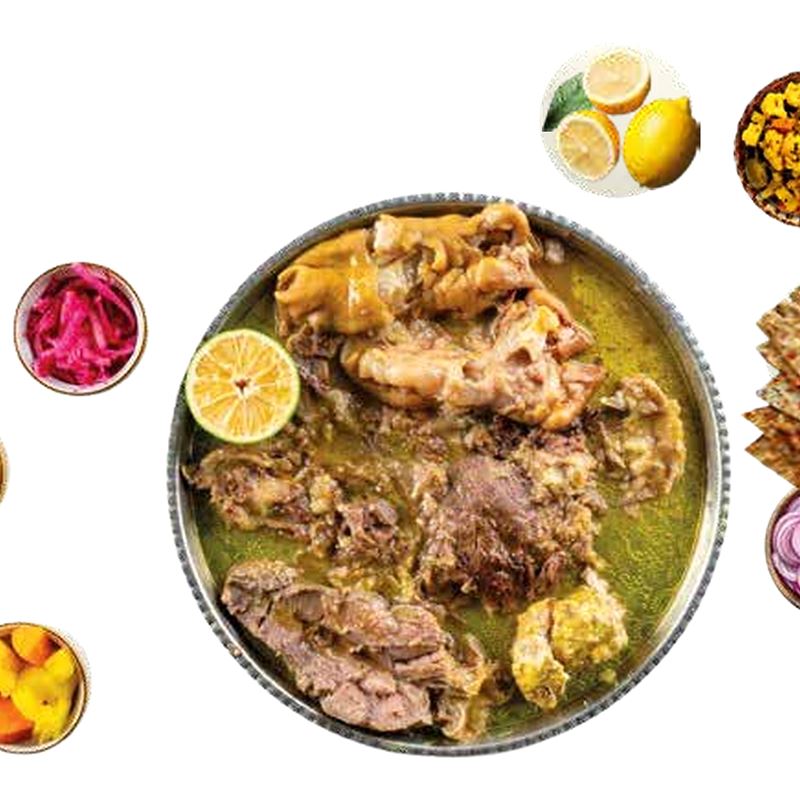
Is kalle pache suitable for children?
For most children, yes — provided you choose the right parts and the right portion. Kalle pache is, at heart, a slow-simmered lamb broth, and in Tehran it has been a family breakfast for generations: the adults work through the shared platter while the youngest at the table gets a small bowl of clear soup and a piece of warm bread to dip. Nothing about the dish is inherently "adult food". It is simply rich, and richness is easy to manage by serving less of it. At Shaun the Sheep on Jumeira Street we watch this happen most weekends — the parents order a platter, one child gets plain broth with torn sangak, and by the second spoonful they have stopped asking what it is. One note before anything else: this article describes a culinary tradition, not medical advice. If your child has an allergy, a specific dietary condition, or you are simply unsure, speak to your paediatrician first.
What is actually in the bowl?
Kalle pache (Persian کلهپاچه, known across the Gulf and Iraq as baja) is lamb head and trotters, hand-cleaned before dawn and simmered for around fourteen hours in a copper pot with onion, turmeric and garlic, skimmed by hand every hour until the broth turns the colour of strong tea. That is the entire seasoning list: no chilli, no heat, nothing sharp. The lamb is halal, as UAE law and standards require. The result is savoury and gentle rather than strong — which is exactly why it suits younger palates better than most parents expect. You can see every cut and soup on the menu and order page.
Which parts of kalle pache are mildest for a child's first taste?
Start with three things and nothing else: plain soup, a little meat, and warm sangak bread.
The plain soup is the safest possible introduction. It is clear, golden and tastes like the best lamb broth a child has ever had, with no organ texture to negotiate. Tear the sangak into pieces, let them soak for a moment, and you have something very close to the bread-and-broth dishes children already eat all over the world. Plain meat comes next — soft, slow-cooked threads that taste like the lamb in any stew. Lamb cheek (bonagoosh) is the natural third step: tender, mild and much closer to braised meat than to anything a child would call unusual.
Season lightly. A squeeze of lemon and a little salt is plenty; go easy on the cinnamon, and keep the seven-year garlic pickle for the adults, since it is intense and salty. If your child enjoys sour flavours, offer one small piece of mixed torshi instead.
Which textures do children usually find odd?
It helps to be honest here, because the parts that surprise children are about texture far more than flavour.
Brain (maghz) is the classic example. Its taste is remarkably mild — creamy, almost buttery — but it is soft-set, closer to custard than to meat, and many children (and plenty of adults) find that unexpected in a savoury bowl. Tongue (zaban) has the opposite problem: the texture is smooth and lean, not far from good roast beef, but the name alone can end the conversation before the fork moves. Trotters (paye) are silky and gelatinous, which some children love and others find slippery. Tripe (sirabi) is the chewiest thing on the table and is usually best saved for later years.
| Part | Flavour | Texture | Good for a child's first taste? |
|---|---|---|---|
| Plain soup | Mild, savoury, gently sweet | Liquid, nothing to chew | Yes — the ideal starting point |
| Meat | Like the lamb in any stew | Soft, falls apart | Yes |
| Sangak bread | Nutty and plain | Chewy, made for dipping | Yes — usually the favourite |
| Lamb cheek (bonagoosh) | Rich but gentle | Tender, braised | Yes, in small pieces |
| Trotters (paye) | Very mild | Silky, gelatinous | Maybe — the texture divides children |
| Tongue (zaban) | Mild and lean | Smooth, like roast beef | Maybe — let them taste before naming it |
| Brain (maghz) | Creamy, very mild | Soft-set, custard-like | Later — the biggest surprise of the table |
| Tripe (sirabi) | Savoury, deeper | Chewy and springy | Later |
How much kalle pache should a child actually eat?
Less than you think, and that is the whole trick. Kalle pache is collagen- and fat-rich, so a small bowl travels a long way. A child handed an adult portion tends to stop halfway and announce they do not like it, when in fact they are simply full. Half a small bowl of broth, a few pieces of bread and one or two bites of meat is a complete first experience — and a child who finishes and asks for more has had a far better time than one who leaves most of a large bowl behind.
Serving from a shared platter makes this much easier, because you can give a spoonful at a time rather than committing to a whole plate. Our communal platters are sized for one, two, three or six people, so a family can order a single platter with a plain soup on the side and let the children take what they want from the middle of the table. For drinks, doogh is the traditional partner but it is salty and quite grown-up in taste — many children prefer lemonade, while tea suits the older ones at the end of the meal.
How do you turn kalle pache into a family ritual?
The pleasure of this dish was never really about the meat. It is about a table where everyone has something to do: one person tears the bread, another ladles the broth, another squeezes the lemon. Children who are given a job at the sofreh eat far more willingly than children who are simply handed a bowl. Fix it to a slot — the first morning of the weekend, the meal after a long flight, the birthday breakfast — and within a couple of years it becomes the thing your children describe as "what we always do". Because our kitchen runs 24 hours a day, seven days a week, you are not fighting the clock: an early breakfast before school and a slow late-morning weekend table both work.
Is dining in with kids easy in Dubai?
We are at 64 Jumeira Street, Jumeirah 1, and being open around the clock means you can choose a quieter hour instead of the busiest one, which is often the kindest decision with small children. Platters arrive in the middle of the table for sharing, so nobody is stuck with a plate they did not choose. And if travelling with a tired toddler is the wrong idea today, we deliver across Dubai — the fee is chosen by area at checkout — and offer pickup too, so the same bowl can land on your own kitchen table with your own cups, bibs and rules.
Planning a family visit? Reserve a table so everyone sits together, or order online and start with one plain soup and a warm sangak. That is how most small people in Tehran began, and it still works perfectly well in Jumeirah.
