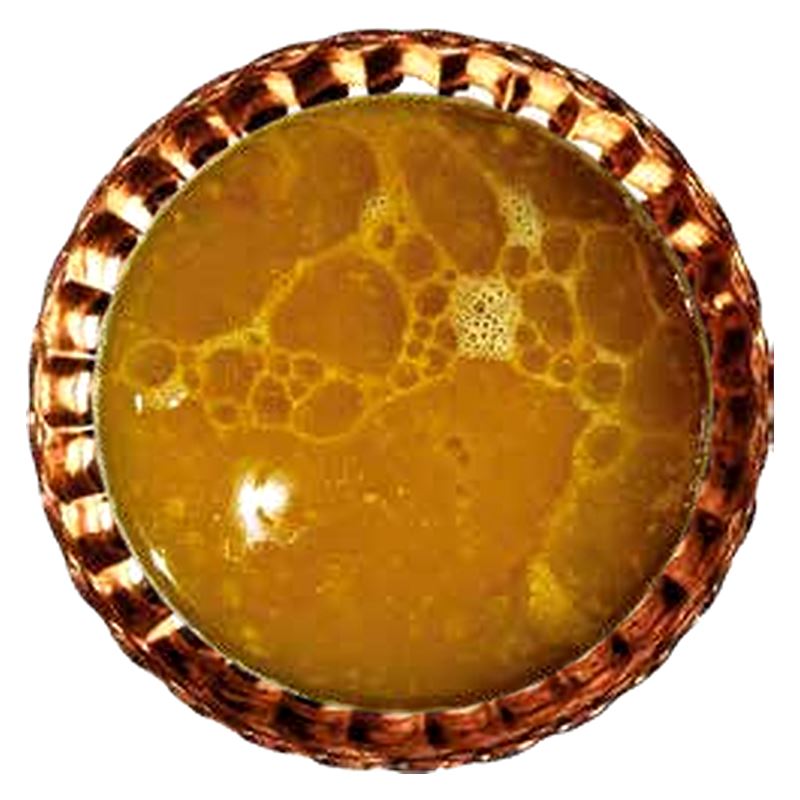
Afghan kalla pacha and the kalle pache we cook in Dubai are one dish family, not two different dishes: the same head and trotters, the same pot running all night, the same first-light hour, and a name from the same two Persian words. What differs sits at the edge of the table rather than inside the pot, above all the bread beside the bowl.
This page is for anyone who grew up eating kalla pacha at home and wants to know what a Persian-style kitchen in Jumeirah puts in front of them. We will not pose as experts on Afghan cooking, and we will not call your family's version wrong, because there is no wrong one. Here is what is shared, what shifts, and what is on the menu at Shaun the Sheep.
Why do the two names sound almost identical?
Because they are the same two words. Kalle means head. Pache, or pacha, means the trotters, the lower legs. Persian in Iran and Dari in Afghanistan share that vocabulary almost untouched, so a kitchen in Kabul and one in Tehran name the dish in the same breath. What changes is a vowel and the Latin spelling: Afghan menus often say kalla pacha, Iranian menus often say kalle pache. Related dishes appear elsewhere in the region under close-sounding names: kelle paça in Turkey, pacha in Iraq. Nothing from the animal is wasted, and the least glamorous parts, given enough hours, make the richest bowl.
Is the dawn timing the same in both traditions?
This is the part two households recognise instantly. In both traditions this is a first-light food: the pot runs overnight, the shop is open while the sky is still grey, people eat early and heavily, and the morning then goes slowly on purpose. It leans towards winter and the day off, and somebody always says you should have come earlier.
Our one difference is logistical rather than cultural. The kitchen at 64 Jumeira Street, Jumeirah 1 is open 24 hours, every day, so there is no window to miss. A night shift ends at six, a flight lands at three, and the pot is there when your morning is. If you would rather fix a time, you can schedule an order up to about two days ahead.
What happens in the pot before it reaches you?
Heads and trotters are cleaned and trimmed thoroughly, the slow, unglamorous work that decides whether the finished bowl smells clean. They are blanched, and that first water is thrown away. Then comes the long simmer, around fourteen hours, skimmed again and again. Collagen from bone, skin and trotters gives the broth its body; let a bowl cool and it sets to a soft jelly, the plainest proof that the pot ran long enough. The lamb is sourced to the UAE halal standard. If someone in your family cooked this at home, it will read as familiar; the method is nobody's secret. What differs between houses is everything around it.
So what actually tends to differ?
Bread, first and most obviously. In Afghanistan the everyday bread is baked in a tandoor. The Iranian table this kitchen comes from reaches instead for sangak, a flatbread baked directly on hot stones: thin, blistered, chewy at the edge, faintly sour, smelling of toasted wheat. The bread's job is the same in both places: you tear it, scoop with it, and drop pieces into the broth to soften. Only the texture changes. To be plain about it, we do not serve Afghan bread and would not claim to. We serve Sangak Bread and Special Sangak, and extra sangak can be ticked onto any order.
Second, the sharp thing on the side. The Persian habit is vinegar, torshi: on our menu, Mixed Torshi and Garlic Torshi, whole cloves aged in vinegar until dark, soft and mellow, nothing like raw garlic. One clove every few spoonfuls resets your palate. If pickles at breakfast are not your habit, leave them out.
Third, what you drink. Tea is loved in both countries: we pour Tea and Black Tea, with a Kettle of Tea for the table if you dine in, and doogh, the cold salted yoghurt drink Iranian tables treat as the natural partner to a rich bowl.
And the caveat that matters most: variation inside Afghanistan is enormous, province to province and family to family, and inside Iran it is every bit as wide. There is no correct version, only the one you grew up with.
What is shared, what shifts, and what is on our menu?
| What is the same | What tends to differ | On our menu |
|---|---|---|
| Head and trotters, simmered slowly for hours | Which parts fill a bowl, and how a house finishes it | Singles by the bowl: Soup, Eye, Brain, Brain Soup, Trotters, Lamb Cheek, Tongue, Meat, Tripe, Special Mix |
| The hour: before dawn, into the early morning | A weekly ritual, or an occasional winter treat | Open 24 hours, every day; pre-orders about two days ahead |
| Bread is essential: torn, dipped, used as a tool | Tandoor bread in Afghanistan, sangak on the Iranian table | Sangak Bread, Special Sangak, extra sangak. No Afghan bread |
| Something sharp to cut the richness, tea alongside | Pickling styles vary by region and by house | Mixed Torshi, Garlic Torshi, Tea, Black Tea, Kettle of Tea (dine-in only), Doogh, Lemonade, Water |
What should I order the first time?
Every part can be ordered as a single bowl, the honest way to arrive somewhere new. Soup is the abgoosht broth on its own and the lightest opening; then Trotters, Meat, Lamb Cheek, Tongue, Brain, Brain Soup, Eye, Tripe, and Special Mix for the whole spectrum in one bowl. If you already know your favourite part, order it by name. For a group, the platters run Single Dish, Double Dish, The Full Dish, and The Khan's Platter, built for six: four lamb cheeks, eight trotters, two brains, three tongues, four eyes and five breads. More in the guide to choosing a single and the full menu guide.
How does ordering work in Dubai?
Through the website, with no account and no app: no sign-up, no password. Choose delivery, pickup or dine-in; a table can be reserved for dine-in. Leave a name and a phone number. Delivery also needs your Dubai area from the list and a pin on the map, both of them, because addresses and pins in this city do not always agree. Payment is a secure online card payment at checkout, and that is the only method. Delivery is free over AED 300.
After payment the kitchen confirms the order, sets an estimated time, and the order gets its own page you can keep open. When the rider arrives, they phone the number on the order, so give a number you will answer. If the kitchen has to reject an order, the refund goes back automatically to the card that paid, with the reason shown on the order page. Anything you would rather ask a person, an unfamiliar area, a large order, or whether a particular card will work at checkout, goes to 04 321 8882, our only contact channel. One kitchen, no branches, all of Dubai served from Jumeirah.
Is it really a restorative winter food?
That is what people in both cultures say, and we repeat it as a cultural belief rather than a health claim. Honestly described, the bowl is rich, warm, deeply savoury and filling, traditionally eaten early and in cold weather. We make no claim that it cures, treats, heals or prevents anything, or that it helps recovery. This is not medical advice: if you have a health condition, are pregnant, or are watching cholesterol or anything else, ask your doctor or a registered dietitian.
What if the dish is new to you rather than familiar?
If the dish is new to you, start with what kalle pache actually is, then how to eat it as a first-timer. Soup on its own is the gentlest way in. And if you did grow up with it: you will recognise most of it, you will notice the bread immediately, and the pickles are optional. Come at dawn for the full ritual, or at two in the afternoon if that is when your morning happens. Either way, the pot has been going all night.
