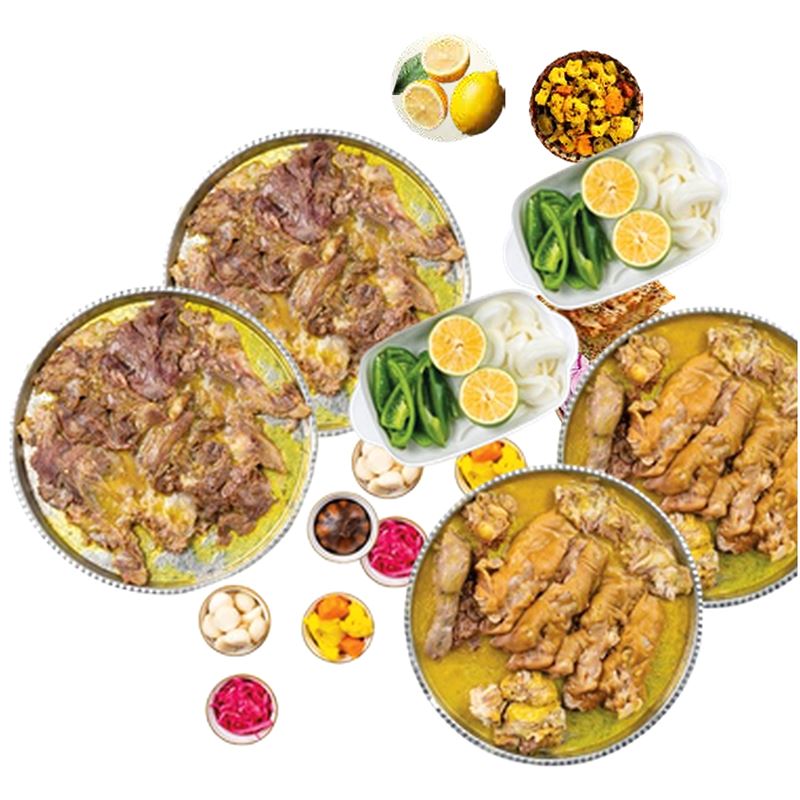
What Makes Kalle Pache Truly Authentic?
Kalle pache — Persian کلهپاچه, known around the Gulf and Iraq as baja or الباجة — is one of those dishes where you can taste the shortcut. It is slow-simmered lamb head and trotters, a craft that rewards patience and quietly punishes haste. A good bowl warms you to the bone; a rushed one leaves grease on your lip and disappointment in the memory. So how do you, as a diner, tell the two apart? This is a practical guide to reading the signs before the first spoonful.
The Single Most Important Sign: A Real ~14-Hour Simmer
Everything begins with time. Authentic kalle pache is simmered for roughly fourteen hours in a copper pot with onion, turmeric and garlic, skimmed by hand every hour until the impurities are gone and the collagen has melted into the liquid. You cannot fake this on a fast, high flame. A rushed pot boils hard, clouds the broth and leaves the meat either tough or falling into greasy shreds. A proper simmer, held at a whisper for half a day, gives you cuts that are tender but intact and a broth with real body.
How to Read the Broth
The broth is the honest witness. Genuinely well-made kalle pache yields a liquid that is clear and roughly the colour of strong tea — golden-amber, glossy from natural gelatin, not slicked with a layer of loose fat. Cloudy, milky or grey broth usually means a hard boil or under-skimming. Bring the bowl close: the aroma should be mild and savoury, warm with turmeric, garlic and onion. It is not a chili-hot dish, so heat on the nose is a sign someone is covering something up. Rich in collagen and gelatin, a real broth clings slightly to the spoon; the exact richness depends on the cut and portion you order.
Signs of Authentic vs Rushed Kalle Pache
| What to check | Authentic, well-made | Rushed or careless |
|---|---|---|
| Cooking time | ~14 hours, gentle simmer | A few hours on a hard boil |
| Broth clarity | Clear, strong-tea colour | Cloudy, grey or milky |
| Surface | Glossy, light sheen of gelatin | Thick slick of loose grease |
| Cleaning | Hand-cleaned cuts, no off-smell | Rushed prep, muddy aroma |
| Aroma | Mild turmeric, garlic, onion | Harsh, sour or masked with spice |
| The table | Warm sangak, torshi, garlic, doogh | Cold bread, no proper sides |
Look at the Cuts and the Cleaning
Authentic kitchens clean each cut by hand — the head, the trotters (paye), tongue (zaban), brain (maghz) and the prized cheek meat-and-fat (banagoosh). Well-prepared offal has no barnyard smell; it should read clean, gentle and inviting. If a bowl arrives with a muddy or overly gamey odour, the cleaning was rushed. You can learn more about our method in our guide to how kalle pache is made.
The Table Tells the Truth Too
Authenticity is not only in the pot. A kitchen that respects the craft sets the right table: fresh, warm sangak (or special sangak with sesame and nigella), a saucer of aged seven-year garlic pickle, mixed torshi, and a cold glass of salted mint doogh. These are not garnishes — they are the tradition. At the table, you finish the bowl your own way: a squeeze of lime, a little garlic, a pinch of cinnamon and salt to taste. If the sides are an afterthought, the main dish often is too.
How We Make Ours at Shaun the Sheep
At Shaun the Sheep, a Tehran-style kalle-pache house at 64 Jumeira Street, Jumeirah 1, we hold to the long way on purpose. Our lamb is halal, simmered around fourteen hours in copper, skimmed hourly until the broth runs the colour of strong tea, and served with fresh sangak and the proper accompaniments. We are open 24 hours, 7 days a week, with pickup, dine-in and Dubai-wide delivery. Browse the menu and order page, or reserve a table for a communal platter built for one, two, three or six. Once you have tasted a real ~14-hour bowl, the shortcuts are easy to spot.
This article is culinary and cultural guidance, not medical advice.
