What is bastani sonnati, Iran's saffron ice cream?
Bastani sonnati (bastani-e sonnati, literally "traditional ice cream") is Iran's beloved saffron-and-rosewater ice cream, studded with chunks of frozen clotted cream and slivered pistachios. It is not like Western ice cream: it is denser, chewier and just a little stretchy, perfumed with saffron and rose, with cold ribbons of cream that snap between your teeth. In Iran you will find it pressed between two thin wafers as a sandwich, or scooped into a bowl with a spoon of cream on top. That chew is the whole point, and it comes from two traditional ingredients — salep and mastic — that give bastani its unmistakable elastic body. This guide gives you a real, workable home recipe, and it is honest about the parts that take effort.
What ingredients do you need for bastani?
This makes about 1 litre, enough for six to eight servings. The saffron, rosewater and pistachios are non-negotiable; the salep and mastic are what create the signature texture.
- 4 cups (1 litre) whole milk
- 1 cup (240 ml) heavy/double cream, for the ice cream base
- 1 to 1.25 cups (200-250 g) sugar
- 2 tablespoons salep powder (or 2 tbsp cornstarch as a substitute — see below)
- 1/2 teaspoon ground saffron, bloomed in 3 tablespoons hot water
- 2-3 tablespoons rosewater (golab)
- 3-4 small pieces of mastic gum (mastika/sakez), ground with 1 tsp of the sugar — optional but traditional
- 1/3 cup (about 40 g) shelled pistachios, slivered or roughly chopped (unsalted)
For the frozen cream chunks (the signature ribbons):
- 1/2 cup (120 ml) heavy cream or Persian-style clotted cream (sarshir)
- A pinch of sugar (optional)
How do you make bastani sonnati step by step?
- First, make the frozen cream chunks so they have time to set. Spread the 1/2 cup of cream in a thin layer on a small parchment-lined tray or a shallow container, and freeze it solid — at least 2-3 hours, or overnight. Later you will break it into shards.
- Bloom the saffron: grind the strands to a powder, stir into 3 tablespoons of hot water, and set aside to release their colour and aroma.
- If using mastic, grind the little resin tears to a fine powder with a teaspoon of sugar (the sugar stops it clumping). Set aside.
- Make a smooth salep slurry: whisk the 2 tablespoons of salep (or cornstarch) with about half a cup of the cold milk until there are no lumps.
- Pour the rest of the milk, the cream and the sugar into a heavy saucepan and warm over medium heat, stirring, until steaming but not boiling.
- Whisking constantly, pour in the salep slurry. Keep stirring as the mixture gently simmers and thickens — about 10-15 minutes — until it coats the back of a spoon like a thin custard. If using mastic, whisk it in now and cook another 2 minutes.
- Stir in the bloomed saffron. Take the pan off the heat and let it cool to room temperature, then stir in the rosewater. Chill the base fully in the fridge — ideally overnight.
- Churn: if you have an ice cream maker, churn the cold base until it is thick and soft-set. No machine? Pour into a freezer container and freeze, beating hard with a fork or whisk every 30-40 minutes for 3-4 hours to break up the ice crystals.
- When the ice cream is thick but still soft, break the frozen cream into rough chunks and fold them through along with the pistachios. Work quickly so the cream stays frozen.
- Press into a container, cover and freeze until firm, at least 3-4 hours. Let it soften for a few minutes before scooping.
What is salep, and what if you cannot find it?
Salep is a fine flour milled from the dried tubers of wild orchids, and it is the traditional thickener that gives bastani (and Turkish dondurma) their famous stretch. It is sold in Iranian, Turkish and Arab grocers, sometimes labelled "sahlab". Genuine salep can be expensive and is restricted in some countries because of over-harvesting, so many home cooks substitute. The most reliable swap is cornstarch in the same quantity — it will not give quite the same elastic chew, but it thickens the base beautifully and the result is still delicious. A tiny pinch of a food gum such as guar or xanthan added to the cornstarch gets you closer to the real pull.
How do you get the signature chewy stretch?
Three things create bastani's texture, and it helps to understand each. Salep is the main one: it gives the base a soft, elastic body even before freezing. Mastic (mastika, the aromatic resin also called sakez) adds a gentle bounce and a faint pine-resin perfume; a little goes a long way, so do not overdo it. And the frozen cream chunks — cream frozen separately and broken in at the end — are the cold, chewy ribbons that make each spoonful interesting. Fold them in while they are still rock-hard; if they soften, they melt into the base and you lose the contrast. Churning (or beating by hand) keeps the crystals small and the body smooth, so the chew reads as elastic rather than icy.
Is bastani hard to make at home?
Let us be honest: bastani is a project, not a quick dessert. None of the steps are technically difficult, but it asks for special ingredients (saffron, rosewater, salep and ideally mastic), a slow custard-thickening stage, an overnight chill, and either an ice cream maker or a couple of hours of stir-and-freeze babysitting. An ice cream maker makes it far easier and smoother, but the hand method genuinely works if you are patient. Budget the best part of a day, most of it hands-off. The reward is a saffron-perfumed, chewy ice cream you simply cannot buy in most of Dubai — and the quiet pride of having pulled off a dish that intimidates a lot of cooks.
Craving a proper Tehran-style meal in Dubai?
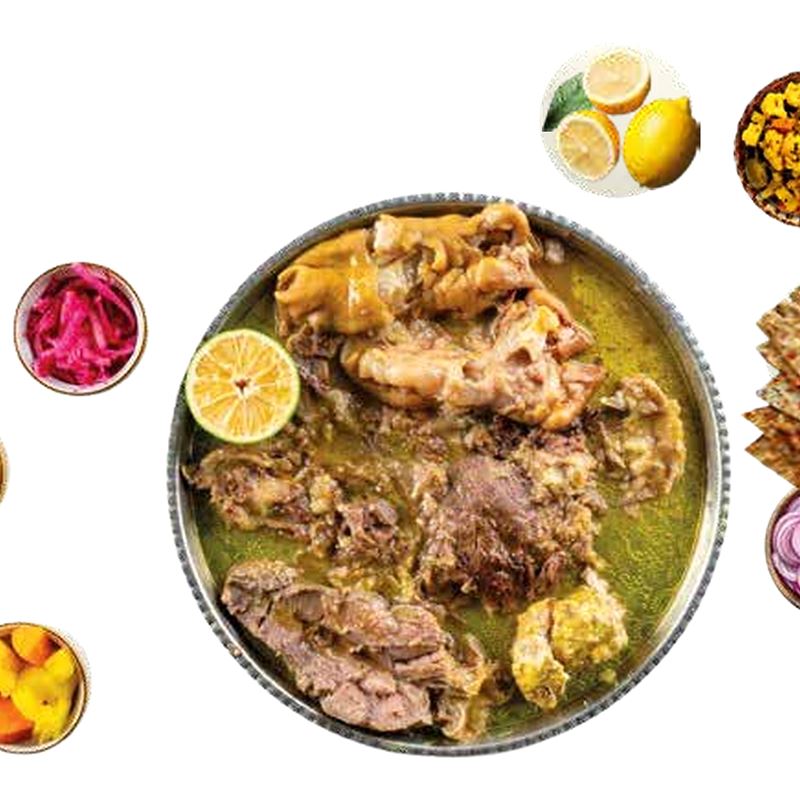
Bastani is a labour of love, and some days you would rather someone else did the slow cooking. We do not make bastani — but if what you are really after is authentic, slow-simmered Persian food, that is exactly our craft. Our kitchen cooks Tehran-style kalle pache and a hearty abgoosht (dizi) around the clock, with warm sangak, mixed torshi, seven-year garlic pickle and cold doogh to go with them. Browse the menu and order page — we deliver across Dubai, free over AED 300, open 24/7 for pickup and dine-in — or reserve a table and make an evening of it. Make the bastani at home when you have the day; let us handle the slow-cooked classics when you don't.
