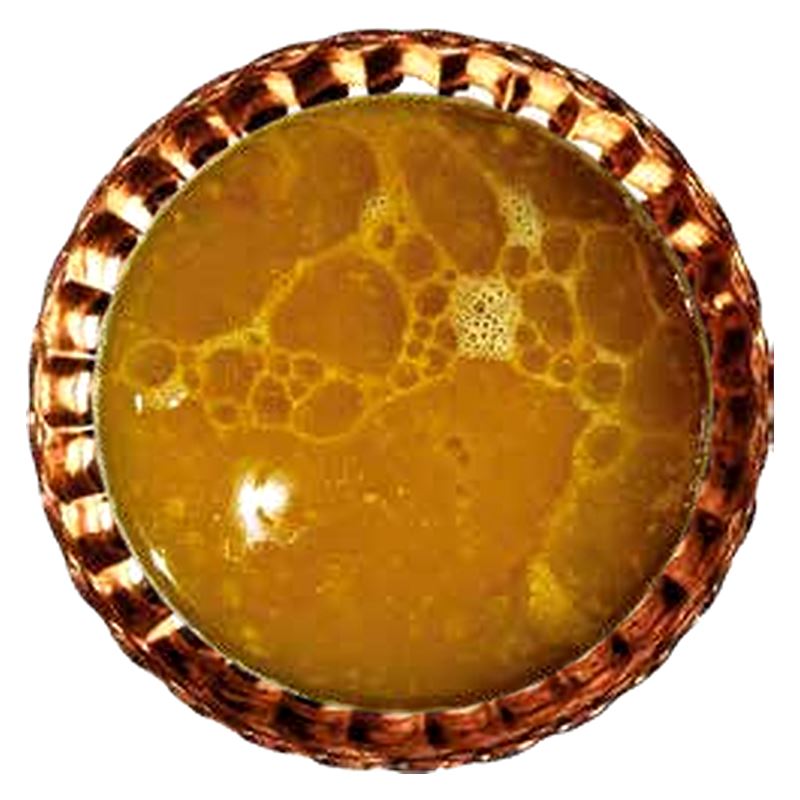
What is shole zard?
Shole zard (Persian: شلهزرد) is a silky Persian saffron rice pudding, its name meaning literally "yellow shole" — shole for a soft, porridge-like rice dish and zard for the deep gold the saffron lends it. Rice is slow-cooked with plenty of water until it collapses into a smooth cream, then sweetened with sugar and perfumed with saffron and rosewater. Slivered almonds are folded through for gentle texture, and the cooled surface is decorated with ground cinnamon, pistachios and more almonds. Served cool in shallow dishes, it is one of the most beloved and recognisable sweets in Iranian home cooking.
Why is shole zard a votive (nazri) dessert?
Beyond dessert, shole zard carries deep meaning. It is a classic nazri food — cooked in large pots as a votive offering and shared freely with neighbours, especially during the month of Muharram and on days of mourning and remembrance. Many families also make it to fulfil a vow (a nazr) once a wish has been granted. Because it is meant to be given away by the bowlful, shole zard is almost always prepared in generous quantities, decorated with care, and carried door to door. It appears at Nowruz tables and celebrations too, where its golden colour reads as festive rather than solemn.
Is shole zard hard to make at home?
It is not difficult, but it does ask for patience and a little attention. There are only a handful of ingredients, and no special equipment beyond a heavy-bottomed pot and a wooden spoon. The two things that trip people up are timing and stirring: sugar must go in only after the rice is completely soft (added too early, it stops the rice from breaking down), and the pudding needs regular stirring so it does not catch and scorch on the base. Get those two right and the rest is mostly waiting. Set aside about two hours of gentle, occasional work.
What ingredients do you need for shole zard?
This makes a generous pot, enough for about eight servings — fitting for a dessert that is traditionally shared.
- 1 cup (about 200 g) white short- or medium-grain rice, rinsed well
- 8 cups (about 2 litres) water
- 2 cups (about 400 g) sugar
- 1/2 teaspoon saffron threads, ground and bloomed in 1/4 cup hot water
- 1/4 cup (60 ml) rosewater
- 1/4 cup (about 60 g) butter or a neutral oil
- 1/2 cup slivered almonds, blanched
- 1/4 teaspoon ground cardamom (optional)
- To decorate: ground cinnamon, slivered pistachios and slivered almonds
How do you make shole zard step by step?
Give yourself an unhurried afternoon; almost all of the time is gentle simmering, not labour.
- Rinse the rice in several changes of cold water until it runs clear, then soak it for 1–3 hours and drain.
- Put the drained rice and 8 cups of water in a heavy pot. Bring to a boil, then lower to a gentle simmer.
- Cook uncovered (or partly covered) for about 45–60 minutes, stirring now and then and skimming any foam, until the grains break down completely into a smooth, loose porridge.
- Stir in the sugar. It will loosen the mixture again; keep it at a gentle simmer, stirring often, until it thickens back up, about 15–20 minutes.
- Add the butter or oil and the blanched slivered almonds, and stir through.
- Pour in the bloomed saffron and its liquid; the pudding will turn a deep, even gold. Simmer another 10–15 minutes.
- Add the rosewater (and cardamom, if using) in the last 5–10 minutes so their aroma is not boiled away. Cook until the shole zard thickly coats the back of a spoon — remember it firms up further as it cools.
- Ladle into shallow bowls or a wide serving dish and let it cool to room temperature, then chill.
- Decorate the cooled surface with ground cinnamon (often dusted in lines or patterns), slivered pistachios and almonds before serving.
How do you get the saffron and rosewater balance right?
This is the heart of the dish. Saffron gives colour, aroma and a faint honeyed bitterness; rosewater gives a floral lift. Bloom the ground saffron in a little hot water first so its colour and flavour spread evenly, rather than tossing dry threads straight into the pot. Add it while the pudding still has time to simmer, so the colour sets. Rosewater, by contrast, is delicate and volatile — add it near the very end, off a hard boil, or its perfume simply evaporates. If you are unsure, start with slightly less rosewater than you think you want; you can always stir in a little more, but you cannot take it back once the pudding tastes soapy.
What are the most common mistakes?
| Mistake | What happens | Fix |
|---|---|---|
| Sugar added too early | Rice stays grainy and never fully softens | Cook the rice to a smooth cream first, then sweeten |
| Not enough stirring | The base catches and scorches, turning it bitter | Use a heavy pot and stir regularly, especially once thick |
| Rosewater added too early | The floral aroma boils away | Add it in the final few minutes, off a hard boil |
| Pulled off the heat too thick | Sets stiff and pasty once cold | Stop while it still flows slightly; it firms as it cools |
Craving a slow-cooked Tehran-style meal instead?
Shole zard is a labour of love for a quiet afternoon, and nothing beats a homemade pot shared with neighbours. But if you are in Dubai and craving the same unhurried, slow-cooked Tehran spirit in savoury form, that is exactly what we do. Shaun the Sheep in Jumeirah 1 specialises in traditional Tehran-style kalle pache and a rich abgoosht (dizi), both simmered low and slow and served with warm sangak. We are open 24 hours for delivery across Dubai — browse the menu and order page, or reserve a table if you would rather gather around one. Make the shole zard at home for pudding, and let us handle the long savoury cook.
